ACC Statement Underscores Importance of Healthy Eating for Managing CVD
A key message is that clinicians need to include nutrition discussions as part of routine care, Frank Hu says.

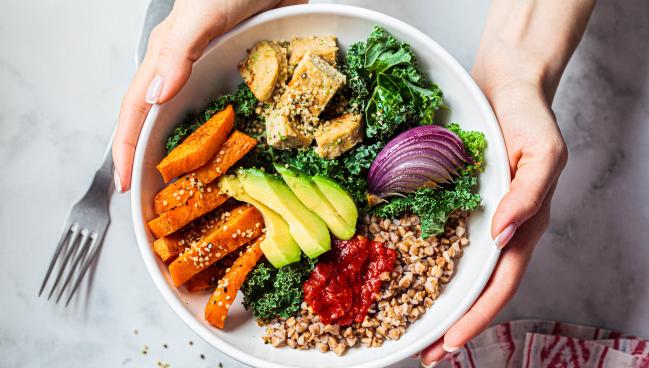
Sticking to a healthy dietary pattern is a key component of preventing and managing cardiovascular disease, according to a new scientific statement from the American College of Cardiology (ACC).
That includes limiting ultraprocessed foods, added sugar, excess sodium, and saturated fats while prioritizing “plant-forward eating,” specifies the document, which was published online earlier this week in JACC.
Following a healthy diet and ensuring proper nutrition are critical when it comes to the management of CVD, cardiovascular-kidney-metabolic (CKM) syndrome, type 2 diabetes, obesity, and chronic kidney disease, the writing group says.
“We know that nutrition science has evolved considerably in the last two to three decades. We have largely moved away from focusing primarily on individual nutrients like total fat or carbohydrates to thinking more broadly about foods, dietary patterns, food processing, and overall diet quality,” Frank Hu, MD, PhD (Harvard T.H. Chan School of Public Health, Boston MA), who chaired the document, told TCTMD.
At the same time, other issues have come into play, including the emergence of effective weight-loss medications like glucagon-like peptide-1 (GLP-1) receptor agonists.
“We felt that it’s timely to bring the evidence together and provide updated guidance for cardiovascular disease prevention and care,” Hu said.
The scientific statement synthesizes published evidence on the impact of nutrition and food-based interventions—like “Food Is Medicine” programs—on cardiovascular health, with the authors providing various recommendations.
Heart-healthy eating is not about a single nutrient or food or the latest dietary trend. What matters most is the overall diet quality. Frank Hu
“The main message is actually pretty simple—heart-healthy eating is not about a single nutrient or food or the latest dietary trend. What matters most is the overall diet quality, which is a consistent pattern of healthy food choices that supports cardiovascular or cardiometabolic health and also can be sustained over time,” Hu said.
What that means in practice is a focus on foods from plant sources. “It doesn’t mean that it has to be vegetarian or vegan. It just means that [there should be] more emphasis on minimally processed plant foods, such as fruits and vegetables, whole grains, legumes, and nuts, and also healthy sources of fats, especially unsaturated fats from plant oils like olive oil,” Hu explained, adding that these types of diets can also include fish and other sources of protein that largely replace saturated fats with unsaturated fats.
Strong evidence, the statement notes, supports the Mediterranean diet and the Dietary Approaches to Stop Hypertension (DASH) diet for CVD prevention.
What people drink is another aspect that should be considered, according to the guidance. Consumption of water and unsweetened beverages should be preferred while limiting sugar-sweetened beverages. Moderate amounts of coffee and tea are okay for most individuals, whereas alcohol should be limited. “The overall balance of evidence does not support regular alcohol use for health benefits,” Hu et al write.
Hu addressed the interplay between nutrition and medications like GLP-1 receptor agonists that are effective at reducing body weight and cardiovascular risk. “Many people may say, ‘Oh, we don’t need nutrition anymore. We don’t need healthy eating. And patients can just take a GLP-1, statins, and other medications to improve their cardiovascular health,’” he said. “But this is certainly not true. We know that these medications cannot replace the need for a healthy diet.”
Comparison With Federal Guidelines
Earlier this year, the US government released an update to the Dietary Guidelines for Americans (DGAs), which are refreshed every 5 years. At the time, the ACC and the American Heart Association highlighted areas where the new guidance was consistent with their recommendations for CVD prevention, and where it diverged. Similar discrepancies are seen when considering the new ACC scientific statement.
Advice is aligned between the DGAs and the ACC guidance in terms of recommendations to limit consumption of ultraprocessed foods, added sugars, and refined grains and to eat minimally processed plant foods.
Disagreement exists, however, around the role of foods high in saturated fats. “Even though the DGAs recommend no more than 10% of calories from saturated fats, it recommends some foods which actually contain a high amount of saturated fats, such as full-fat dairy products, red meat, and also animal fats like butter,” Hu said. “I think that’s an area where we need more nuanced recommendations. It doesn’t mean that we should completely avoid saturated fat. I think a healthy dietary pattern should have moderate consumption of high-saturated-fat foods.”
Some discordance between the documents is seen around advice on protein intake. “We put more emphasis on different food sources of protein, not just emphasizing the total amount of protein in the diet,” Hu said.
The overall message of the two documents, however, is “not too different,” he said. “Both guidelines emphasize an overall healthy eating pattern—eat more minimally processed foods and reduce higher consumption of ultraprocessed food. I think that’s really fundamental for any healthy eating pattern.”
Make Nutrition Part of Routine Care
Asked how the cardiology community can do a better job at focusing on nutrition for the prevention and management of CVD, Hu said “the first step is to make nutrition part of routine clinical care.”
Clinicians should ask patients about their usual eating habits and identify areas in which positive changes can be made, he suggested. “Diet is much more complicated than many other behaviors, but if a cardiologist can ask patients about their usual eating patterns and then discuss one or two areas for improvement, I think that can make a big difference.”
It’s also important to understand barriers to healthy eating, which can include cultural preferences and food affordability, access, and insecurity, Hu said, acknowledging that those issues “are much more challenging than individual behavior changes.”
Ultimately, this new scientific statement should raise awareness of the key role nutrition can play in managing cardiovascular risk, Hu indicated. He highlighted, however, that many clinicians require additional education to handle these discussions.
“Nutrition education is very limited in medical schools,” he said. “That’s why we need to have more nutrition education for health professionals so that they can be equipped with the knowledge and the skills to counsel their patients.”

Todd Neale is the Associate News Editor for TCTMD and a Senior Medical Journalist. He got his start in journalism at …
Read Full BioSources
Hu FB, Beleslin B, Blaha MJ, et al. Food and health: nutrition for prevention and management of cardiovascular disease: 2026 ACC scientific statement. JACC. 2026;Epub ahead of print.
Disclosures
- Hu reports no relevant conflicts of interest.
Related News



Comments