AMUNDSEN: Early PCSK9 Inhibition Provides Big Drop in LDL After Acute MI
Starting evolocumab in the cath lab before PCI did not, however, result in better clinical outcomes in the first year.

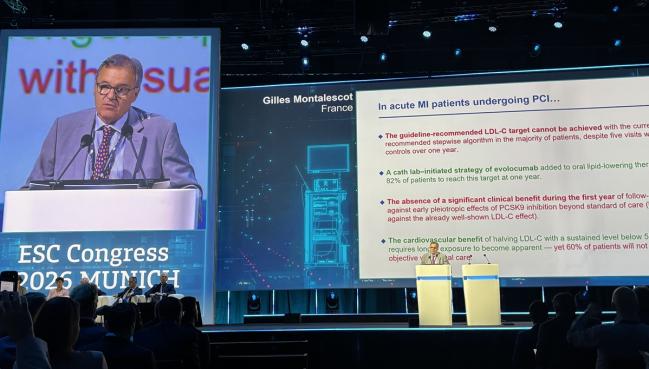
Among patients with acute MI, initiating PCSK9 inhibitor therapy in the cath lab before PCI markedly improves control of LDL cholesterol over the first year compared with standard care alone, according to the results of the AMUNDSEN trial.
The rate of control—ie, a level below 55 mg/dL, as recommended in European dyslipidemia guidelines, and at least a 50% drop between baseline and 1 year—was 82% among those who received early treatment with evolocumab (Repatha; Amgen) and 40% among those treated with standard care, which included high-dose statins and PCSK9 inhibition as a second- or third-line option.
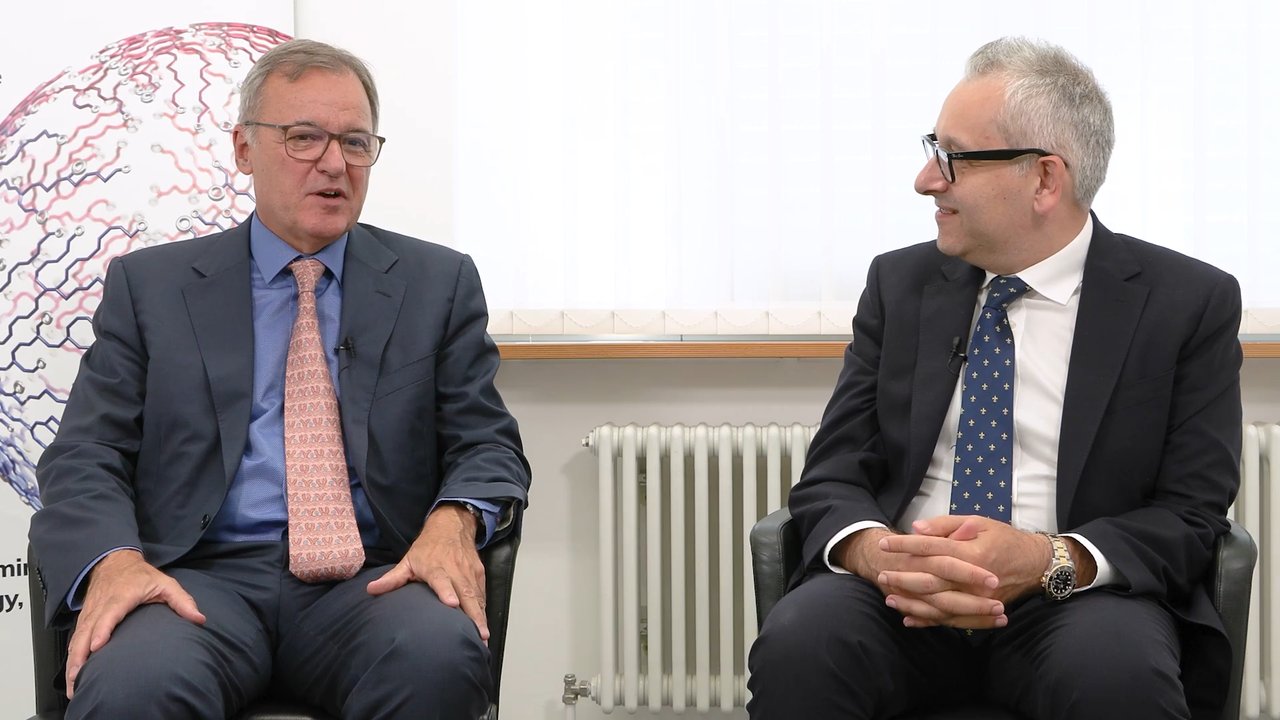
The rate of all-cause death or unplanned CV hospitalization at 1 year, however, was not significantly different between the intensive- and standard-care groups (14.6% vs 15.4%; adjusted OR 0.94; 95% CI 0.73-1.19).
Published simultaneously in JAMA, the study shows that “the majority of patients cannot reach this ESC-recommended LDL target with the ESC-recommended stepwise treatment approach,” which was used in the standard-care arm, Montalescot said in a media briefing.
He added that “reaching the guideline recommended LDL target is possible with more aggressive strategies—here an early use of evolocumab from the first day. Developing intensive preventive strategies and delivering them early remains an imperative for these very high-risk patients.”
Nevertheless, the trial failed to show a difference in clinical outcomes. “On top of high-dose statin, we do not observe clinically meaningful pleiotropic effects during the first few months, during the first year of treatment,” Montalescot said.
Robert Giugliano, MD (Brigham and Women’s Hospital, Boston, MA), who was not involved in the trial but who has helped lead studies of PCSK9 inhibitors, pointed to the 1-year duration of follow-up in AMUNDSEN when speculating on why a difference in clinical outcomes wasn’t observed.
“I think the most important likely explanation, or largest contributor, was the fact that the trial just didn’t go on long enough,” he told TCTMD. “If you lower somebody’s cholesterol today, you’re not going to prevent their death tomorrow, or probably even next week, or the next month. It likely takes at least a year, if not years.”
Even so, the degree of LDL cholesterol reduction achieved with early initiation of evolocumab is a headline-worthy result, Giugliano said. “The fact that patients achieved a median LDL cholesterol of 16 mg/dL is groundbreaking—a terrific result.”
The AMUNDSEN Trial
AMUNDSEN was designed with two main objectives, Montalescot said. The first was to see whether early initiation of PCSK9 inhibition in the cath lab could improve LDL-cholesterol control a year later, he said, noting that observational studies have shown that only about one-third of patients with acute MI achieve control over that span.
The second related to prior research indicating that PCSK9 inhibitors may have pleiotropic effects beyond LDL cholesterol-lowering, much like what was seen with statins, he said. “We wondered whether we would see an early clinical benefit with the early use of PCSK9 inhibitors like it was tested in MIRACL, for example, 25 years ago.”
AMUNDSEN, an open-label, phase IV trial conducted at 48 sites in six countries, enrolled 2,161 adults (mean age 67 years; 79% men) who were at least 55 years old and had either a STEMI (58%) or an invasively managed NSTEMI with at least one additional high-risk characteristic (42%). They were randomized to receive evolocumab 140 mg subcutaneously every 2 weeks for 1 year, with the first injection delivered before PCI, on top of standard care, or to receive standard care alone.
Mean LDL cholesterol at baseline was 116 mg/dL. On the day of randomization, 94% of patients were taking a statin and 28% ezetimibe. During follow-up, 3.8% of patients in the control group were treated with a PCSK9 inhibitor consistent with guideline indications.
The primary endpoint was guideline-recommended control of LDL cholesterol at 1 year, which was significantly more likely in the intervention versus control arm (adjusted OR 5.54; 95% CI 4.50-6.82). A higher control rate was seen in the intensive-treatment group as early as 6 weeks (91% vs 34%), at which point median LDL cholesterol was 16 mg/dL among patients treated early with evolocumab and 56 mg/dL in those treated with standard care alone.
Though the rate of the main clinical endpoint of all-cause death or unplanned CV hospitalization at 12 months did not differ between groups in the intention-to-treat analysis, a prespecified per-protocol analysis suggested that early initiation of PCSK9 inhibition could provide a clinical benefit (10.2% vs 14.3%; adjusted HR 0.72; 95% CI 0.55-0.96).
That is, however, only “hypothesis-generating,” Montalescot said. The ongoing EVOLVE-MI trial is further exploring this concept with a longer follow-up planned out to a median of 3.5 to 4 years.
Importance of Efficient LDL-Lowering
In an accompanying editorial, Kausik Ray, MD, and Christophe Stevens, PhD (both from Imperial College London, England), explore multiple potential reasons for the lack of an impact on clinical outcomes in AMUNDSEN. It’s possible that there are no pleiotropic effects associated with PCSK9 inhibitors; follow-up may not have been long enough for a benefit to emerge; the composite endpoint may not have contained the optimal outcomes; or the trial may have been underpowered, they say.
Ultimately, they write, “the AMUNDSEN trial shows that for patients with MI, the benefits from LDL cholesterol-lowering are a marathon, not a sprint, and that a rapid . . . reduction at 7 days with a PCSK9 monoclonal antibody will take years to translate into meaningful clinical benefits.”
Giugliano said the editorialists “did a very nice job of explaining how difficult it is for a lipid-lowering therapy to achieve a reduction in clinical cardiovascular events when a trial has only 1 year follow-up and event rates are rather low.” As it stands, the trial would have needed a much larger population, tens of thousands of patients, to show a statistically significant difference, he said.
If you lower somebody’s cholesterol today, you’re not going to prevent their death tomorrow, or probably even next week, or the next month. Robert Giugliano
Despite the clinical outcome results, Giugliano stressed that lowering LDL cholesterol as quickly as possible after acute MI remains a worthy goal.
“Although there are challenges in some hospitals, particularly in the US, to initiate PCSK9 inhibitor therapy during the hospitalization, it makes very good sense to do so and we should try,” he said. “The key is to get the LDL down very low and very quickly.”
AMUNDSEN further supports that message, Giugliano said, adding that “we believe based on imaging studies such as YELLOW III that the effects on the plaque and on the lesion probably start to occur in the first several weeks to months.”
The message, according to Giugliano, is that “you should start lipid-lowering therapy earlier and treat patients who’ve had an MI aggressively. This is another piece of data that builds the story of early intensive lipid-lowering therapy in high-risk patients.”

Todd Neale is the Associate News Editor for TCTMD and a Senior Medical Journalist. He got his start in journalism at …
Read Full BioSources
Montalescot G, Ferrari E, Souteyrand G, et al. LDL cholesterol lowering with evolocumab before percutaneous coronary intervention for acute myocardial infarction: the AMUNDSEN randomized clinical trial. JAMA. 2026;Epub ahead of print.
Ray KK, Stevens CAT. A marathon, not a sprint—AMUNDSEN and LDL-C lowering after myocardial infarction. JAMA. 2026;Epub ahead of print.
Disclosures
- The trial was supported by an unrestricted grant from Amgen and by the ACTION Study Group.
- Montalescot reports receiving personal fees from Abbott, Amgen, AstraZeneca, Boehringer Ingelheim, Celeco Therapeutics, Cell Prothera, Corflow, GSK, Medpace, MSD, Novo Nordisk, Sanofi, Sahajanand Medical Technologies, and Viatris outside the submitted work.
- Giugliano reports being co-principal investigator of the VESALIUS-CV trial sponsored by Amgen, working on prior Amgen-sponsored studies, and receiving honoraria for lectures and advisory board participation from the company; he also has worked with Sanofi, which makes another PCSK9 inhibitor (alirocumab).
- Ray reports receiving grants from Amarin, Sanofi, Daiichi Sankyo, and Ultragenyx to Imperial College London within the last 24 months; personal fees from Novartis, Daiichi Sankyo, Esperion, Novo Nordisk, MSD, Lilly, Silence Therapeutics, NewAmsterdam Pharma, CLEERLY, SCRIBE Therapeutics, Novartis, AZ, Amarin, Sanofi, Amgen, USV Pharma, and Torrent Pharma; and stock options in NewAmsterdam Pharma, SCRIBE Therapeutics, MONCYTE Health, and PEMI31 outside the submitted work.
- Stevens reports receiving grants from Sanofi, Novartis, Daiichi Sankyo, and Ultragenyx outside the submitted work.
Related News

Comments