Beyond CV Events, Evolocumab Lowers All-Cause Mortality: VESALIUS-CV
It’s unlikely a lipid-lowering agent can directly reduce infection or malignancy, but some argue it could stop a domino effect.


The PCSK9 inhibitor evolocumab (Repatha; Amgen) reduces not only major adverse cardiovascular events as a whole but also offers better overall survival when added to lipid-lowering therapy, according to a newly released analysis of the VESALIUS-CV trial.
The trial enrolled patients with elevated lipids who had not yet had an MI or stroke, including those with high-risk diabetes or atherosclerosis. The main VESALIUS-CV results, released last year, showed that the medication reduced the absolute risk of death from coronary heart disease, MI, or stroke by 1.8% (HR 0.75; 95% CI 0.65-0.86) at a median follow-up of 4.6 years.
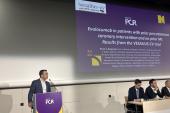
Researchers say these new findings, presented recently at the European Society of Cardiology Congress 2026 and simultaneously published in Circulation, show that a major cardiac event doesn’t need to be the only trigger for aggressive treatment of lipids.
All-cause mortality was lower among those assigned to the study drug compared with placebo (7.9% vs 9.7%; HR 0.80; 0.70-0.91), with the benefit emerging after about 1.5 years of treatment. There were consistent benefits observed across CV and non-CV death rates, and those in the study arm also saw fewer infections and malignancies, potentially attributable to less frailty brought on by CV events.
“The great news for patients is here now is evidence that you don’t have to wait until you’ve had a heart attack or stroke or peripheral arterial event,” lead author Robert P. Giugliano, MD (Brigham and Women’s Hospital, Boston, MA), told TCTMD. “We can prevent those first events, and we can reduce your mortality.”
Unfortunately, he added, “waiting is the way the majority of the patients are treated.” With some primary care physicians reluctant to prescribe PCSK9s to this population for a variety of reasons, Giugliano said it’s likely evolocumab is not the only lipid-lowering drug that would bring about better survival “It’s about lowering the cholesterol count—[PCSK9] medicines are highly effective to do that, but I think what we observed would be true of any potent lipid-lowering medicine,” he explained.
In an accompanying editorial, Fatima Rodriguez, MD (Stanford University, Palo Alto, CA), and Michael D. Shapiro, DO (Wake Forest University School of Medicine, Winston-Salem, NC), agree that earlier treatment is warranted but “must still be selective.” The findings “do not justify evolocumab for every patient with diabetes or modest LDL-cholesterol elevation,” they argue. Rather, the results apply most directly to patients meeting the enrollment criteria.
Still, “we should not require an MI or stroke to certify that an already high-risk patient deserves intensive LDL cholesterol lowering,” Rodriguez and Shapiro say. “Nor should fixation on confirmatory total mortality obscure a therapy’s ability to prevent the events that accumulate into disability and death.”
After all, they add, “prevention should alter the trajectory of disease before the first major event, not merely respond more forcefully after prevention has failed. Perhaps the best way to prevent the last event is to prevent the first.”
Data Point to Broad Benefit
For the analysis of VESALIUS-CV, Giugliano and colleagues delved deeper into death rates among the 12,257 patients (median age 66 years; 43% women) enrolled in the trial. All had atherosclerosis or high-risk diabetes without previous MI infarction or stroke as well as elevated lipids (LDL cholesterol ≥ 90 mg/dL, non-HDL cholesterol ≥ 120 mg/dL, or apolipoprotein B ≥ 80 mg/dL).
In total, 7.9% of patients died, with causes adjudicated as 36% cardiovascular, 51% noncardiovascular, and 13% undetermined. Patients who died during the study were more likely to be older and male, had a higher prevalence of high-risk diabetes and kidney dysfunction, and had lower use of high-intensity statin therapy and ezetimibe.
The most frequent causes of CV death were sudden cardiovascular death, heart failure, acute MI, and stroke, while the most frequent causes of non-CV death were infection and malignancy. Notably, sudden cardiac death represented more than two-thirds of coronary heart disease deaths, nearly half of which were unwitnessed deaths in patients seen healthy and stable in the prior 24 hours.
You don’t have to wait until you’ve had a heart attack or stroke or peripheral arterial event. Robert P. Giugliano
In landmark analyses, there was no reduction in mortality in the first 1.5 years of the study (HR 0.99; 95% CI 0.78-1.25), but a significant gap between patients assigned to evolocumab versus placebo appeared thereafter (HR 0.73; 95% CI 0.63-0.85; P for interaction = 0.039).
Evolocumab resulted in lower risks of death for the subcategories of CV death (2.8% vs 3.6%; HR 0.79; 95% CI 0.64-0.98) and undetermined death (1.1% vs 1.4%; HR 0.64; 95% CI 0.45-0.92), with a strong trend observed for non-CV death (4.2% vs 5.0%; HR 0.85; 95% CI 0.71-1.01).
Subgroup analyses showed consistent results regardless of age, sex, region, race, qualifying atherosclerosis or high-risk diabetes, baseline LDL, or background lipid therapy.
Lastly, nonfatal MIs, ischemic strokes, and ischemia-driven arterial revascularizations that occurred after randomization were linked to a higher risk of non-CV death within the next 4 years, with most of these deaths happening during the first year after the event.
‘Compelling Survival Signal’
Rodriguez and Shapiro highlight that VESALIUS-CV was designed and powered for cardiovascular endpoints and not mortality. “These findings require statistical discipline but not statistical amnesia,” they say. “The appropriate conclusion is neither proof nor dismissal, but a compelling survival signal that deserves to influence how the parent trial is understood.”
The FOURIER trial showed no survival benefit with evolocumab, and the current analysis cannot precisely pinpoint when the mortality benefit in VESALIUS-CV begins, they note.
However, “the parent trial also exposes a persistent flaw in clinical practice. We frequently wait for an MI or stroke before becoming aggressive about risk-factor control,” the editorialists write. “The event transforms treatment urgency, insurance approval, clinician behavior, and patient acceptance. But it also marks the failure of prevention.”
“The really interesting part was understanding how a drug could reduce noncardiovascular death,” Giugliano said. “What we found is it doesn’t make your infection less severe or cancer less severe. But if you had after enrollment, say, an MI or you had to have a very long, complicated arterial revascularization, or you had a stroke, you then became more frail [and less] robust to recover from an event.
“If you got a bad pneumonia; if you had cancer and now had to get chemotherapy and your cell counts are down; or if you had a long, complicated arterial revascularization procedure and then you’re intubated, admitted to the ICU, and bleeding, and then you aspirate; if you had those types of events, which were more common with placebo, [and] you are more frail, you are less likely to survive a new infection or a new diagnosis of cancer requiring treatment,” he continued.”
Frailty is not the only issue here, though, Giugliano said. “If you have an MI or a stroke, bad things can happen,” such as losing the ability to swallow properly, something that can potentially lead to choking and being intubated as a result. “Does evolocumab prevent you from becoming septic and in respiratory failure on a ventilator? Not directly, but indirectly, it can,” he commented.
Access Issues
At the core of this prevention conversation is access, argue Andrew Oseran, MD, and Rishi Wadhera, MD (both Beth Israel Deaconess Medical Center, Boston, MA), in another accompanying editorial.
“VESALIUS-CV marks an important advance in cardiovascular prevention, but its population impact will be defined not only by the magnitude of the treatment effect of the trial, but also by whether that benefit reaches the patients who need it,” they write.
Several problems exist within the US healthcare system preventing “broad and sustained” access to effective medications like PCSK9 inhibitors, the editorialists say. Notably, cost is still a “formidable barrier,” and insurance coverage is laden with “considerable administrative friction” in the form of prior authorization requirements and formulary restrictions. Additionally, “access to any prescription therapy depends on affordable access to care itself, which remains out of reach for millions of adults, particularly those who are low-income, uninsured, or living in rural communities,” they point out.
Oseran and Wadhera call for systemic policy reform to move beyond “patchwork” fixes and toward a “comprehensive strategy.”
“It’s true that the access to these new drugs has been challenging from whence they were first approved a decade ago,” Giugliano acknowledged. However, “it’s gotten considerably better” with more competition and better insurance coverage, he added. “They’re still expensive; part of it is the monoclonal antibodies are just expensive to make.”
With the oral PCSK9 inhibitor enlicitide (Lipfendra; Merck) now approved and some injectables coming off of patent in about another 3 years, “prices will come down and the access will get better,” he predicted.

Yael L. Maxwell is Senior Medical Journalist for TCTMD and Section Editor of TCTMD's Fellows Forum. She served as the inaugural…
Read Full BioSources
Giugliano RP, Bohula EA, Bellavia A, et al. Effects of evolocumab on mortality outcomes in patients without previous myocardial infarction or stroke: a prespecified analysis of the VESALIUS-CV randomized clinical trial. Circulation. 2026;Epub ahead of print.
Oseran AS, Wadhera RK. The last mile of cardiovascular prevention: evidence, access, and policy. Circulation. 2026;Epub ahead of print.
Rodriguez F, Shapiro MD. Preventing the first event … and the last? Lessons from VESALIUS-CV. Circulation. 2026;Epub ahead of print.
Disclosures
- The VESALIUS-CV trial was sponsored by Amgen.
- Giugliano reports receiving personal fees from Amgen, Daiichi-Sankyo, Dr Reddy’s Laboratories, Inventiva Pharma, Medical Education Resources, Novartis, Pfizer, Sanofi, and Summeet.
- Wadhera reports being the principal investigator of grants from the National Heart, Lung, and Blood Institute and the National Institute of Nursing Research at the National Institutes of Health; the American Heart Association established investigator award; and the Donaghue Foundation. He also reports serving as a consultant to Abbott Vascular and Chambercardio.
- Oseran reports receiving research support from the National Heart, Lung, and Blood Institute and the American Heart Association; and serving as a consultant to Agilon Health.
- Shapiro reports receiving research grants to his institution from Amgen, Boehringer Ingelheim, Cleerly, Novartis, Ionis, Lilly, Merck, New Amsterdam, AstraZeneca, and Alnylam; serving on the advisory boards of Amgen, Ionis, Esperion, Novartis, Regeneron, Lilly, and Merck; and serving as a consultant to Merck, Esperion, AstraZeneca, Ionis, Novartis, Novo Nordisk, Alnylam, ZipBio, Cleerly, and Coursera.
- Rodriguez reports receiving consulting fees from Novartis, Esperion Therapeutics, Edwards Lifesciences, Arrowhead Pharmaceuticals, HeartFlow, iRhythm, Amgen, and Cleerly Health.
Related News

Comments