Claims Data Lend Support to Tirzepatide’s CV Effects in Patients With Diabetes
By emulating the SURPASS-CVOT trial, researchers sought to pin down the “tangible magnitude of benefit.”

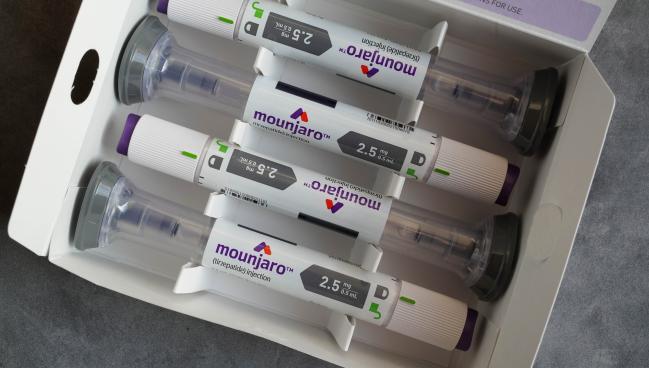
Tirzepatide (Mounjaro; Lilly) appears to reduce major cardiovascular events beyond what can be achieved with placebo for patients who have type 2 diabetes and established atherosclerotic cardiovascular disease (ASCVD), a new study suggests.
Investigators say their cohort study, which leveraged administrative claims databases benchmarked against prior trials, fills a key gap in the literature. The findings were published online this week in the BMJ.
Increasingly, randomized trials of new glucagon-like peptide-1 (GLP-1) receptor agonists are being designed to compare them against their GLP-1 predecessors, lead author Nils Krüger, MD, Dr Med (Brigham and Women’s Hospital and Harvard Medical School, Boston, MA), told TCTMD. While this shift is in some ways a good thing—for instance, with head-to-head trials, patients don’t miss out on receiving a standard therapy with known benefits—it also has drawbacks.
This approach “leaves room open for uncertainty because the more active-comparator trials that are conducted, the more the baseline disappears,” he explained. “In that setting, it becomes difficult both for regulators such as the FDA as well as clinical guideline committees to talk about the absolute effect that the newest treatment, in this case tirzepatide, would add to the background therapy if it was compared to a placebo.”
Most notable among the existing trials in patients with diabetes and known ASCVD is SURPASS-CVOT, which compared tirzepatide with dulaglutide (Trulicity; Lilly), another GLP-1 receptor agonist. That 13,299-patient study found, over a median of 4 years, that tirzepatide was noninferior to dulaglutide (P = 0.003), but not superior (P = 0.09), for preventing MACE, defined as cardiovascular death, MI, or stroke.
It’s not that there was doubt over whether tirzepatide would offer CV benefits, Krüger specified. “It’s more a matter of showing it and also quantifying the absolute effect and putting a number behind it.” An RCT comparing tirzepatide’s cardiovascular impact to placebo in patients with diabetes and ASCVD isn’t likely to happen, he added, though the ongoing SURMOUNT-MMO trial is looking at this question in patients with obesity who either have or are at high risk of developing ASCVD.
In an editorial, Sourbha S. Dani, MD, Arjun Jayakumar, MBBS, and Sarju Ganatra, MD (all from Lahey Clinic, Burlington, MA), agree that SURPASS-CVOT left an “unresolved question” in its wake—“how much cardiovascular benefit [tirzepatide] might add over a glucose-lowering strategy with neutral cardiovascular effects.”
But due to the new study’s “rigorous” yet observational design, they say, ultimately it shows “a credible signal, not a causal verdict.”
Tirzepatide is a dual agonist of the GLP-1 and glucose-dependent insulinotropic polypeptide (GIP) receptors. It has outperformed GLP-1 receptor agonists in several trials, including semaglutide (Wegovy; Novo Nordisk) in SURMOUNT-5. Unlike semaglutide, however, tirzepatide’s ability to reduce CV events has not been tested against placebo in diabetic patients and it is not yet approved for that indication.
Tirzepatide vs Placebo Proxy
The researchers used healthcare claims from two national US databases, Optum Clinformatics and Merative MarketScan, to perform a cohort study that emulated the design and eligibility criteria of SURPASS-CVOT. Within those datasets, they identified 52,971 patients ages 40 and up with type 2 diabetes and established ASCVD who started either tirzepatide (n = 35,353) or sitagliptin (n = 17,618) between May 2022 and May 2025. Sitagliptin, an antidiabetic drug that inhibits dipeptidyl peptidase-4 (DPP-4), was chosen as a neutral comparator to serve as a proxy for placebo.
After propensity-score weighting to balance baseline characteristics, there were 7,444 patients in each group. Mean age was 69.8 years, and 50.8% were female. Most (85.2%) were on statin therapy, while 21.1% took a sodium-glucose cotransporter 2 inhibitor and 18.1% used insulin.
At 1 year, major adverse cardiovascular events—a composite of MI, ischemic stroke, and all-cause mortality—were less common in the tirzepatide versus sitagliptin groups. Both MI and all-cause mortality, as individual endpoints, were reduced with tirzepatide, yet stroke rates didn’t differ.
Weighted 1-Year Risk
| Tirzepatide | Sitagliptin | HR (95% CI) |
MACE | 2.9% | 4.4% | 0.68 (0.58-0.80) |
MI | 1.1% | 1.9% | 0.67 (0.52-0.87) |
Death | 1.3% | 2.1% | 0.55 (0.42-0.72) |
Stroke | 0.7% | 0.7% | 0.91 (0.64-1.28) |
The number needed to treat (NNT) to prevent one MACE was 70, with NNTs for MI and all-cause death of 130 and 122, respectively. For stroke, the NNT reached 2,500.
Additionally, patients who started tirzepatide were less likely to experience infections requiring hospitalization (HR 0.64; 95% CI 0.55-0.75; NNT = 48) or infection-related mortality (HR 0.40; 95% CI 0.26-0.61; NNT = 200). They also had a lower risk of infection in any care setting (HR 0.83; 95% 0.78-0.87) and fewer urinary tract infections (HR 0.83; 95% CI 0.76-0.91) but not fewer GI adverse events.
Beyond atherosclerotic mechanisms, “infection-related pathways may account for a substantial share of the observed survival benefit” with tirzepatide, the researchers note. “These findings support a plausible hypothesis that will need to be substantiated.”
The fact that CV event curves began to diverge within 3 months “suggests mediators beyond weight reduction. Such early effects may reflect improvements in systemic and vascular inflammation that act independently of metabolic benefit,” they write.
Support for Shared Decision-making
Reassuringly, the findings are in line with those of SURPASS-CVOT, Krüger and colleagues say.
For clinicians, they may inspire a rethink of incretin drugs as being not just agents for glucose or weight control but also therapies conferring early vascular protection, they say. “From a patient perspective, framing the protective effects in absolute terms such as the difference in event risk if tirzepatide is added to treatment versus maintaining standard background treatment may help communicate the tangible magnitude of benefit and support shared decision-making.”
Going forward, said Krüger, it’s important to study how the drug works “because a lot of this hasn’t been fully uncovered yet. We know more about the glycemic effects and the weight-loss effects and their mechanisms than we do in other areas such as the cardiovascular benefits.” It will be interesting to dig deeper into noncardiovascular mortality as well as the various infection-related outcomes, he noted.
The editorialists assert that the new analysis can’t replace randomization. Thus, while inspiring confidence in what tirzepatide might offer in routine care, it “does not establish a mortality indication or define the best sequence of cardiometabolic therapy,” they say. “Longer follow-up, randomized and pragmatic comparisons, and more studies of additive benefit on contemporary background treatment are needed.”
But without addressing cost, authorization barriers, supply challenges, and drug discontinuation, whatever cardiovascular efficacy tirzepatide does impart will not be able to benefit the population as a whole, Dani and colleagues caution.

Caitlin E. Cox is Executive Editor of TCTMD and Associate Director, Editorial Content at the Cardiovascular Research Foundation. She produces the…
Read Full BioSources
Krüger N, Schneeweiss S, Wang SV. Tirzepatide and the risk of atherosclerotic cardiovascular events: population based cohort study. BMJ. 2026;394:e100011.
Dani SS, Jayakumar A, Ganatra S. Tirzepatide and cardiovascular outcomes: a credible signal, not a causal verdict._BMJ._ 2026;394:e100366.
Disclosures
- Krüger reports receiving support from the German Heart Foundation for the submitted work.
- Dani, Jayakumar, and Ganatra report no relevant conflicts of interest.
Related News


Comments