David Taggart, Cardiac Surgeon and ‘Staunch Truthteller,’ Dies at 69
Known for his honesty and for igniting controversy, Taggart will be remembered for always putting patient interests first.
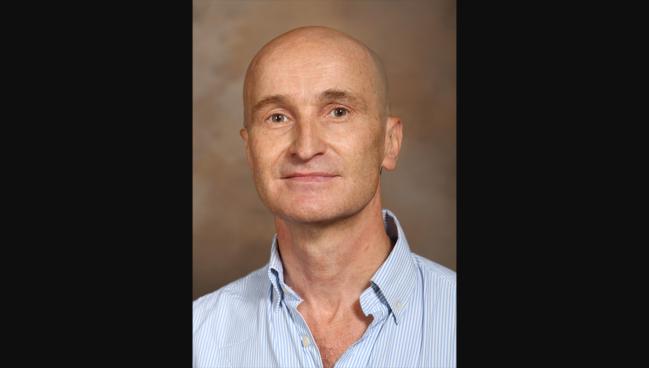
Photo Credit: Cardiovascular Research Foundation
David Paul Taggart, MD, PhD, who infamously withdrew his name from the EXCEL trial over data manipulation, died Saturday from esophageal cancer at age 69. News of his death was confirmed by colleagues and his institution.
Before the EXCEL hubbub, Taggart had been long known as a persistent champion of the truth. Clad in his signature Oxford shirt sans tie and jacket, he sometimes ruffled feathers but often spurred engaged conversations and renewed collaboration, especially between surgeons and cardiologists.
“He had a reputation in particular for being a staunch truthteller: he will tell it the way he sees it to whoever, no matter what,” said John Puskas, MD (Emory Healthcare, Atlanta, GA). “He will speak truth to power unabashedly and unapologetically, and sometimes that’s gotten him in hot water. But every time he’s done it, there’s been a significant faction of our profession that’s thought, ‘Bully for you. Someone needed to say that.’”
While they weren’t always in lockstep—and once fell into a tributary of the Thames River together following a disagreement over the Arterial Revascularization Trial (ART)—Puskas told TCTMD, they “have always been respectful friends.”
He added: “You don’t have to agree with someone on every single thing to be a friend. If you felt that was the criteria for friendship, one would soon have no friends. I feel I’ve been blessed to have been perhaps David’s closest professional colleague and friend over these two-plus decades.”
“David was larger than life in many ways and really brought a level of scientific rigor to the discussion of the optimal way to perform coronary revascularization, whether it was different surgical techniques or whether it was comparison of bypass surgery to percutaneous coronary intervention,” David Cohen, MD (St. Francis Hospital & Heart Center, Roslyn, NY, and Cardiovascular Research Foundation, New York, NY), told TCTMD. “He was rigorous and highly committed to evidence, a formidable debater, and someone who I enjoyed speaking with on many occasions. It’s a great loss for the field both from the standpoint of scientific progress as well as philosophy.”
Coronary Bypass Advocate
Born in 1958, Taggart was raised with eight siblings in Scotland. He graduated from Glasgow University in 1981 and earned his MD with honors in 1989 for his work on the effects of hypothermia on the metabolic response to cardiac surgery. He then trained at the Royal Brompton Hospital (London, England) and was appointed consultant cardiac surgeon at the John Radcliffe Hospital (Oxford, England) in 1995. While there, Taggart earned his PhD from the University of Strathclyde (Glasgow, Scotland) for studying the inflammatory response during cardiac surgery. In 2004, he was appointed Professor of Cardiovascular Surgery at the University of Oxford.
Unhappy with perceived stagnation in the field of coronary bypass surgery, Taggart dedicated his life to rigorous research, especially pertaining to arterial grafting and off-pump surgery. He authored more than 300 peer-reviewed scientific papers and was the primary investigator of ART, which randomized more than 3,000 CABG patients to single or bilateral internal mammary artery grafts.
He served as president of the Society for Cardiothoracic Surgery in Great Britain and Ireland from 2010 to 2012, chair of the European Society of Cardiology Cardiovascular Surgery Working Group, and lead for cardiothoracic research at the Royal College of Surgeons of England. Taggart was a member of the Adult Domain of the European Association for Cardio-Thoracic Surgery (EACTS), the American Association for Thoracic Surgery, and the Society of Thoracic Surgeons. Along with Puskas, Taggart founded, in 2015, the International Coronary Congress, which has educated more than 10,000 surgeons in coronary bypass to date. The pair also co-authored a textbook dedicated to CABG.
In 2019, Taggart publicly revoked his authorship from the EXCEL trial, for which he chaired the surgical committee. He doubled down on criticisms of the trial, calling on investigators to publish MI rates using the prespecified Universal Definition of MI, among other core issues. This eventually led to EACTS pulling out its support for the 2018 European guidelines for left main coronary artery disease, an internal review of the trial, and a subsequent appraisal of the recommendations.
The controversy he spurred “made us better surgeon-scientists—understanding better how trials are designed and how to interpret them,” said EACTS Secretary General Patrick Myers, MD (Lausanne University Hospitals, Switzerland). “He’s always been a very vocal speaker and proponent of coronary bypass surgery in patients who could benefit from it and really showing the evidence that backs it up.”
What Myers most learned from Taggart is the need to “speak your mind when in the best interest of the patient and based on real data,” he told TCTMD. “If you don’t have the data, you need to design and run the study to answer that question.”
“He was a force of nature, just a strong character with a lot of knowledge and knowhow for coronary bypass, extremely wise, and very honest intellectually,” recalled Gianluca Torregrossa, MD (Cleveland Clinic, OH). “It’s more and more difficult to find an individual like that. He was always someone that was fierceful in an open conversation and in a debate, fighting for his point. When the meeting was finished, [he’d] invite his opponent to have a beer together or to sit in a bar to chat more.”
‘A Thorn in the Sides of Interventional Cardiologists’
Earlier this year, Taggart was awarded the Master of the Masters Award, usually reserved for cardiologists, at TCTAP 2026. In a video celebrating this award, Sripal Bangalore, MD (NYU Langone Medical Center, New York, NY), spoke highly of Taggart’s contributions to the field. “It’s been a privilege to debate you over the last many years on PCI versus CABG,” he said. “Those debates were not just spirited, they were entertaining, and I must point out they were sharpening moments for everybody in the room. Your rigor, clarity, and willingness to challenge conventional wisdom has definitely pushed the field forward and ultimately benefited our patients.”
Likewise, Spencer King III, MD (Emory University, Atlanta, GA), called Taggart “a thorn in the sides of interventional cardiologists.” However, King added, the debate he inspired only improved the field. “You pointed out some of our shortcomings and the value of bypass surgery, and, even though you’re controversial or maybe because you’re controversial, you’ve been enormously valuable . . . over many, many years,” he said.
Speaking with TCTMD, Torregrossa said the biggest lesson he learned from Taggart relates to honesty and integrity. “In this business, there is always the risk that the interests of others can go ahead of your own interest or the interest of your patients,” he said. “He was one of the very few that I know that has always placed patients as the first and foremost important part of every research [project] that he’s done.”
“David’s legacy will be to . . . bring attention to the importance of advancing the state of the art in coronary surgery,” Puskas said. “And that the status quo is never good enough. We’ve got to keep improving it, even if the status quo is the way most heart surgeons make their living, and even if advancing the status quo requires retraining and maybe techniques that are too difficult for every single surgeon to do.”
Taggart loved snowboarding, seeking out a good pub, and spending time with his wife, Kathleen, whom he wed this past June in a small intimate ceremony in the Cotswolds of England.

Yael L. Maxwell is Senior Medical Journalist for TCTMD and Section Editor of TCTMD's Fellows Forum. She served as the inaugural…
Read Full BioRelated News


Comments