Fibrinolysis for Rural STEMIs: Some Gains in Quality Metrics but Not Outcomes
Twenty years of data from New England highlight geographical challenges, which some say may merit a rethink of STEMI care.

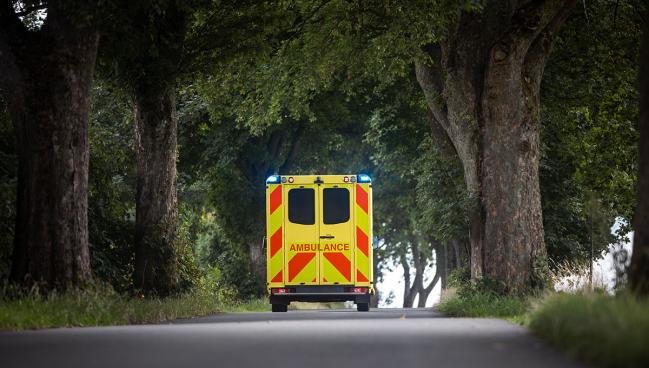
A pharmacoinvasive strategy is still a reality for many STEMI patients living in geographically remote regions—but while care delivery metrics have improved over the past two decades, rates of major in-hospital adverse events haven’t followed suit, according to new data from New England.
“This presents a target for future strategies to improve cardiovascular care in rural patient populations,” say investigators led by Eric Rothstein, MD (Dartmouth-Hitchcock Medical Center, Lebanon, NH). Among 4,683 consecutive STEMI patients who presented to their center over a 20-year period ending in 2020, slightly fewer than half received fibrinolytic therapy.
They detail their STEMI network’s experience in a paper published in the July issue of JSCAI. The in-hospital outcomes in the rural setting are “in sharp contrast to previously published data demonstrating a decline in STEMI mortality over the past 20 years in the United States and around the world,” the investigators write.
Speaking with TCTMD, Rothstein pointed out that amid conversations on dual antiplatelet therapy duration, stent type, and other matters often discussed at major cardiology conferences, there tends to be very little said about fibrinolysis.
“[Some] people actually don’t know well what’s going on in certain parts of the country” where a pharmacoinvasive strategy remains an integral part of STEMI care, Rothstein said. Given the lack of literature on how the topic plays out in real-world settings, he noted, it’s important to document what modern rural STEMI care looks like.
Amir Lofti, MD (University of Massachusetts Chan Medical School-Baystate, Springfield), and Aravdeep Jhand, MD (Geisinger Medical Center, Danville, PA), point out in an editorial that there are several possible reasons for the “lack of demonstrable outcome gains in terms of mortality and MACE” observed in the study.
Among those possibilities is survivorship bias. In short, it may be that “improved prehospital care allows patients who previously died before hospital arrival to be captured in the registry, and the rural emergency medical services network’s inability to transport refractory cardiac arrest patients may amplify this beyond urban settings,” they write. “This may, therefore, reflect a sicker captured population rather than true deterioration.”
Anecdotally, this seems to be true, Rothstein agreed, adding that “there is a signal in the data that we’re seeing sicker patients making their way in.
“So that’s the positive side of it,” he continued. “The negative side is that we may be reaching the maximum limit for our current STEMI systems.” When constrained by geography, well-established metrics like the 90-minute door-to-balloon time may be less applicable, added Rothstein. “It may be time to not just rethink metrics like that but rethink the system in general.”
With current approaches, it can often feel “like we’re kind of putting a square peg in a round hole with a system that works amazingly for urban settings. When looking at STEMI databases all over the country that are urban-based and suburban-based, not only are the metrics getting better, but the outcomes are getting a lot better,” Rothstein observed.
Modern vs Premodern Eras
For their retrospective analysis, Rothstein et al looked at all STEMI patients treated with a pharmacoinvasive strategy within the Dartmouth Health regional STEMI network between 2001 and 2020. All were treated at Dartmouth-Hitchcock Medical Center, a rural academic tertiary care center with a STEMI catchment area that includes 30 smaller hospitals across northern New England.
The researchers stratified the 2,228 individuals who received fibrinolysis into two groups: the premodern era (2001-2012) and the modern era (2013-2020).
STEMI patients in the modern era presented at an older age (mean 62.5 vs 60.5 years; P < .001) and were more likely to have diabetes (21.9% vs 17.6%; P = 0.05) and atrial fibrillation (6.3% vs 4.2%; P = .03) than those in the earlier era.
Otherwise, “despite an increase in the global burden of cardiovascular comorbidities over the past two decades, comorbidities remained constant in this patient population over time,” they write, with no differences in smoking status, history of coronary and peripheral artery disease, or baseline kidney function.
In both time periods, more than 99% of patients presented to a non-PCI-capable facility before being transferred to Dartmouth-Hitchcock Medical Center.
Fibrinolytic therapy initially involved a mix of tenecteplase (69%) and reteplase (27%), sometimes given as a half dose, but almost entirely consisted of tenecteplase (99%) in the latter era, during which full doses were the norm. Additionally, patients were increasingly apt to receive preloading with a P2Y12 inhibitor (rising from 59% to 84%) and were more likely to undergo fibrinolysis within the recommended 30-minute door-to-needle time (rising from 25% to 42%). A facilitated PCI strategy involving transfer for immediate cardiac catheterization within 2 hours of presentation grew as well (rising from 36% to 59%; P < 0.001 for all comparisons).
Once in the cath lab, patients were more likely to be treated using radial access in the second decade of the study (47.2% vs 1.3%; P < 0.001). Patients also were more likely to present with TIMI flow 0 or 1 in the infarct-related artery (30.1% vs 26.0%; P = 0.007). There were small but significant increases in STEMI presentations that had no obstructive coronary artery disease and the prevalence of left main disease, but a decrease in three-vessel disease. Mechanical circulatory support was used in 8.2% of premodern cases and 9.7% of modern cases, a nonsignificant difference.
Hospital stays, on average, grew shorter in the modern era compared with the premodern era (mean 3.2 vs 4.1), as did mean door-to-transfer-to-device time, which dropped from 413 to 218 minutes thanks to routine immediate PCI on transfer (P < 0.001 for both).
Rothstein highlighted that their study didn’t track death on arrival at the presenting hospital or during transfer, but rather focused on the patients that ultimately were treated at Dartmouth-Hitchcock Medical Center.
There, the rate of in-hospital MACE (death, recurrent MI, ischemic stroke, and hemorrhagic stroke) for patients treated with a pharmacoinvasive strategy was 6.9% in the modern era and 7.2% in the premodern era (P = 0.76), with no imbalances in death, recurrent MI, or hemorrhagic stroke. No differences were seen in bleeding or vascular complications, which occurred at rates of 7.0% and 8.0%, respectively (P = 0.40). There was, however, a lower rate ischemic stroke in the latter period compared with the premodern era (0.1% vs 1.4%; P = 0.002), a difference that remained significant after adjusting for patient age, sex, and race (OR 13.8; 95% CI 1.8-104.1).
“Regardless of etiology, our data clearly fails to demonstrate significant improvement with regard to in-hospital outcomes, presenting a target to further evaluate and better focus development of treatment strategies for this patient population,” the investigators conclude. “Additionally, these data highlight a need to understand the true prevalence of STEMI in rural settings given concerns that the increased distances from medical care may lead to survivorship bias and a skewed understanding of the true problem.”
We should be looking at the system as a whole and saying, ‘How can this be modified and improved for rural healthcare?’
Eric Rothstein
Lofti and Jhand, in their editorial, suggest several ways to improve upon current practices in rural STEMI care.
To start, “prospective registries with 30-day and 1-year follow-up are the most pressing need,” they say. “Current data cannot confirm that today’s process gains translate to durable benefit. Better pharmacoinvasive versus primary-PCI decision support is also required; modeling suggests [fibrinolysis] may be preferred when transfer times are prolonged.
“Prehospital investment,” they continue, “also merits attention: paramedic-administered fibrinolysis, enhanced field triage, and telemedicine linkage between rural emergency physicians and interventional cardiologists could compress first-medical-contact-to-device times in geographically isolated communities.”
Rothstein echoed those ideas but cautioned that while there’s a lot of excitement around telemedicine and artificial intelligence for remote communication, these may be hard to apply in rural areas. “Unfortunately, [for] a lot of these places, cell phone signals aren’t even necessarily possible and even satellite coverage can be a challenge,” he said. “So really my thought is that if [better STEMI care] is a priority, then we should be looking at the system as a whole and saying, ‘How can this be modified and improved for rural healthcare?’”
One option is to optimize STEMI care through mobile forms of mechanical circulatory support, because “it’s the cardiogenic shock population that we think is driving the negative outcomes here,” he said, noting that they’re exploring that strategy at their center as well as looking at a potential role for sonothrombolysis.

Caitlin E. Cox is Executive Editor of TCTMD and Associate Director, Editorial Content at the Cardiovascular Research Foundation. She produces the…
Read Full BioSources
Rothstein E, Ali T, Christensen J, et al. An evaluation of the use of fibrinolytic therapy for treatment of STEMI in Northern New England over two decades. JSCAI. 2026;5:105390.
Lofti A, Jhand A. Sixteen years after TRANSFER-AMI, rural STEMI in-hospital outcomes remain unchanged: confronting the pharmacoinvasive paradox. JSCAI. 2026;5:105453.
Disclosures
- Rothstein, Lofti, and Jhand report no relevant conflicts of interest.
Related News



Comments