July 2026 Dispatch for the CV Team
This month: online GLP-1 concerns, psychological impact of wearables, sexual and gender minority health insights, and more.


Every month, Section Editor L.A. McKeown curates a roundup of recent news beyond our regular TCTMD coverage, with tidbits from journals and medical meetings around the globe that are of special interest to heart teams and allied cardiovascular professionals.
Cognitive behavioral therapy (CBT) delivered via an online program with built-in support from psychologists may help relieve stress and anxiety in patients who have myocardial infarction with nonobstructive coronary arteries (MINOCA), according to the multicenter eSMINC study. Compared with patients who did not participate in the 9-week program, those who did were more likely to have normalized stress and anxiety levels at 10 to 12 weeks after randomization, although the difference was not statistically significant. Those with Takotsubo syndrome experienced a greater benefit overall, the authors write in the Journal of the American Heart Association.
 Being born in a country other than the United States may confer a lower risk of stroke in Black individuals, according to study published recently in Neurology. An analysis of the National Health Interview Survey, which included adults aged 25 to 74, found that stroke rates were 4.3% in US-born Black adults compared with 1.5% in those born in the Caribbean, South America, and Central America and 0.8% in those born in Africa. The researchers say this suggests a “healthy immigrant” effect that may be the result of “differences in stroke risk factors such as high blood pressure or stress.” People who had immigrated within 15 years of the survey had 73% lower odds of stroke.
Regulatory oversight of online prescribers offering glucagon-like peptide-1 (GLP-1) receptor agonists has been described as a “grey zone,” where advertising practices may not be illegal, but patients often don’t get adequate education about what they are buying or adequate support when using it. In a research letter published in JAMA, investigators describe how they created a fake patient profile and were able to obtain a GLP-1 prescription from 92% of the websites they contacted. The vast majority did not require communication with a clinician and gave little, if any, indication to consumers that the compounded medications have never been tested in clinical trials or been reviewed by the US Food and Drug Administration.
A review article published in Circulation takes a look at key milestones over the last 40 years in the understanding and treatment of pulmonary artery hypertension as well as future perspectives. The writers say earlier detection, personalized therapy, “and treatments that improve long-term survival to one that approaches a normal life expectancy with normal quality of life” are ongoing goals.
The CARDIO-TTRansform trial investigators have announced that the phase 3 study of eplontersen (AstraZeneca) in patients with transthyretin-mediated amyloid cardiomyopathy (ATTR-CM) did not meet its primary efficacy endpoint. Compared with placebo, the drug was well tolerated and resulted in sustained reductions in transthyretin but did not reduce the composite outcome of CV death and recurrent CV clinical events up to week 140. The investigators say the finding may reflect the inability of the drug to add benefit in contemporary ATTR-CM patients already on a transthyretin stabilizer. Results are set to be presented at the upcoming European Society of Cardiology Congress in Munich.
Some CVD patients who use wearable devices for CV rehabilitation, rhythm monitoring, or long-term self- management may experience negative psychological and/or behavioral effects, a Chinese study published in BMC Nursing suggests. “By making physiological signals visible and continuously available, these technologies may alter how patients perceive, interpret, and respond to bodily sensations. This is particularly important after cardiovascular events, when patients may already be highly alert to symptoms and fearful of recurrence,” the authors write. They emphasize the importance of using wearables as part of broader clinical assessment rather than as a stand-alone indicator, and the need to counsel patients about seeking timely professional consultation when warning signs occur.
Published in the Journal of the American Heart Association, the PRIDE study takes an important initial step toward enhanced understanding of CV health among sexual and gender minority adults living in the United States. In examining Life's Essential 8 scores they found: a high prevalence of unfavorable body mass index (BMI) scores in cisgender women and gender‐expansive people assigned female at birth, unfavorable nicotine scores in gender‐expansive people assigned male at birth and transgender men, and unfavorable sleep scores in transgender men and transgender women.
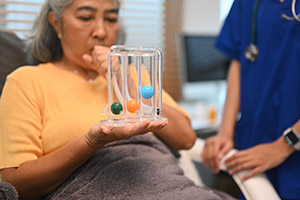 In elderly patients scheduled for cardiac surgery, a 3-week physiotherapist-supervised respiratory training program can improve forced vital capacity (FVC). Writing in Physiotherapy Research International, the investigators say preoperative respiratory training should be explored further to see if it is associated with reductions in postoperative pulmonary complications or if it has the potential to improve functional recovery and patient-reported outcomes after surgery.
In a viewpoint published in JACC: Advances, researchers synthesize current evidence on the menopause transition and offer a comprehensive integrated framework that emphasizes multidisciplinary, empowerment-centered, and technology-enabled care. A key component that holds the model together is health equity, which the authors say is important to ensure that the framework serves all women, particularly those historically underserved.
News Highlights From TCTMD:
US Ischemic Heart Disease Deaths Point to Problem With Risk Factor Control
AI Assistant Helps Prepare Patients for Cardiac Cath
DOAC Prescribing for Primary and Secondary Prevention: ACC Offers Advice
Watching a Video Ahead of CCTA Could Improve Image Quality
BMI Appears to Carry Less Weight as Medical Therapy Improves

L.A. McKeown is a Senior Medical Journalist for TCTMD, the Section Editor of CV Team Forum, and Senior Medical…
Read Full BioRelated News



Comments