Military Cardiac Screening Presents ‘Excellent Opportunity,’ European Cardiologists Say
A new statement makes the case for identifying recruits at risk of sudden cardiac death and older personnel at risk of CVD.

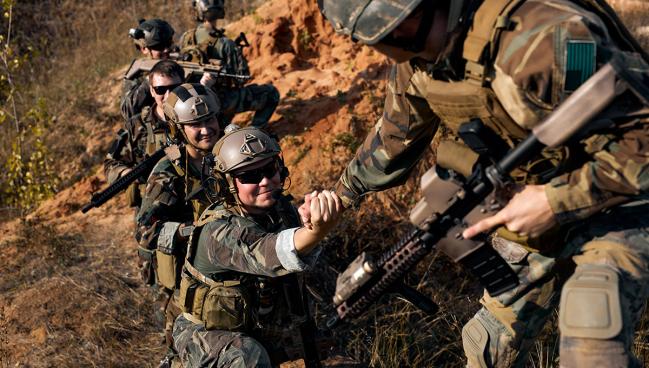
The time has come to think strategically about cardiac screening as an “excellent opportunity” to identify military personnel who might be vulnerable to sudden cardiac death and other forms of cardiovascular disease, according to a new statement released by the European Association of Preventive Cardiology (EAPC).
The paper was published earlier this month in the European Journal of Preventive Cardiology.
Professional-level and young athletes can have cardiovascular conditions that, though rare, manifest during physical activity, but as the EAPC writing group points out, members of the military face different levels of risk. For athletes younger than 35 years, the incidence of sudden cardiac death is approximately one to two cases per 100,000 athlete-years. Data from the US military, on the other hand, have shown an incidence as high as 10.8 per 100,000 person-years.
Lead author Mark Abela, MD (University of Malta, Msida, and Medical Centre, Armed Forces of Malta Headquarters, Luqa), said that one reason for this gap is that while both athletes and military recruits tend to be young and active, people joining the military are “subjected to extreme environments in a short time frame, so obviously they don’t have time to acclimatize.”
“Competitive athletes may occasionally encounter challenging environmental conditions,” the authors explain in their paper. “These are, however, typically regulated events [that] can be modified, delayed, or cancelled to ensure participant safety. In contrast, military personnel are duty-bound to perform in inhospitable environments, regardless of weather, terrain, or operational adversity.
“This fundamental difference in duty and exposure” they continue, “may result in a markedly broader and more sustained spectrum of cardiovascular and environmental stressors for military personnel, exposing these individuals to heightened acute physiological responses.”
Importantly, too, the potential consequences for safety and morale extend not only to the individual but also to others on their mission, said Abela. In a military context, decisions tend to be ”command directed” rather than made through the traditional shared decision-making approach that’s common with athletes, he observed. “Medical back-up is guaranteed in a sporting arena. This is often not a guarantee when individuals are deployed on a military operation. The operational context is important.”
It’s high time that there is some uniformity. Mark Abela
Last year, in preparation for their statement, the authors surveyed national societies affiliated with the European Society of Cardiology to gauge current CV screening practices in militaries across the world.
As Abela told TCTMD, much is unknown about which approaches are being used. “One of the main problems is that obviously no one [publicizes] what they do, because there is a lot of geopolitics behind it,” he said.
“It was very important to establish at baseline understanding of if and how cardiac screening is carried out in military personnel,” said Abela. “Surprisingly, despite the strong evidence now supporting screening athletes, some military institutions do not have structured cardiac screening programs in place. The screening algorithms also vary substantially. Not all institutions systematically carry out a resting ECG in their military recruits.”
In data obtained from 17 physicians in 14 countries across four continents, 79% reported conducting preparticipation CV screening in all their recruits, with the majority of those obtaining a health questionnaire as well as physician exam and resting 12-lead ECG. Overall, though, just 71.4% of the countries implemented ECG-based screening. Practices also differed according to the individual’s age.
Abela acknowledged that, with the statement, the author group cannot enforce cardiac screening in militaries. But “it’s high time that there is some uniformity,” he argued, adding that the screening program should factor in the country’s budget, infrastructure, and expertise available. “A scientific statement endorsing such an approach will hopefully incentivize entities to push screening policy forward.”
Takeaways and Barriers
Abela and colleagues sum up the acute cardiovascular impacts of temperature, altitude, gravitational forces, and other factors unique to military service. The document covers approaches to screening among military recruits, those in particularly high-hazard occupations, and older personnel, with advice on how practices might be improved.
One of the main messages the authors wanted to convey, said Abela, is that screening programs can offer a degree of reassurance to militaries, which invest financial and other resources when subjecting their recruits and in-service personnel to rigorous training regimens.
Most conditions that either preclude entry into military service and/or would require exercise restriction after enrollment are picked up on ECG. Beyond ensuring safety for personnel, it’s in the institution’s own best interests to think ahead, Abela emphasized. “From a military perspective, it is never ideal to [have to] redirect personnel to alternative roles because of medical reasons.”
Current evidence indicates it may be appropriate to conduct cardiac screening in all asymptomatic new military recruits, the authors say. What this screening should include isn’t certain, though they suggest that the algorithm include a health questionnaire (personal and family history), physical examination and a resting 12-lead ECG. It may also be appropriate to focus screening mainly on personnel who will engage in high-risk duty occupations.
On the other hand, “symptomatic individuals or those with an abnormal screening should undergo a comprehensive evaluation,” Abela et al suggest. This may include echocardiography, stress ECG, and other exams as clinically appropriate.”
The statement stresses a multidisciplinary approach, with the necessary infrastructure and resources, to evaluate abnormal screening outcomes. Periodic reevaluation is warranted for those with abnormal results who otherwise meet the military forces’ entry criteria.
For individuals age 40 or older, there’s robust published evidence supporting CV risk assessment using validated calculators, the authors note. “Those with a high or very high cardiovascular risk profile should undergo further evaluation.”
Going forward, the diversity of military roles will make it challenging to implement screening, the authors point out. “Whilst 200 years ago, Armed Forces could more or less be divided into infantry, artillery, cavalry, and navy, all acting on the battlefield or the ocean, personnel nowadays have very different tasks, including information technology, cyberwarfare, etc.” Miliary health budgets also may be a barrier in certain nations with fewer resources.
Importantly, “the yield of screening in military cohorts remains to be fully determined,” they add.

Caitlin E. Cox is Executive Editor of TCTMD and Associate Director, Editorial Content at the Cardiovascular Research Foundation. She produces the…
Read Full BioSources
Abela M, Borjesson M, Broekhuizen L, et al. Cardiac evaluation in the armed forces: a statement of the European Association of Preventive Cardiology of the ESC. Eur J Prev Cardiol. 2026;Epub ahead of print.
Disclosures
- Abela reports no relevant conflicts of interest.
Related News



Comments