Outcomes Steady as Hearts Donated After Circulatory Death Rise in the US
The data support the scalability of the strategy—still, an editorial urges that ethical concerns among the public can’t be ignored.

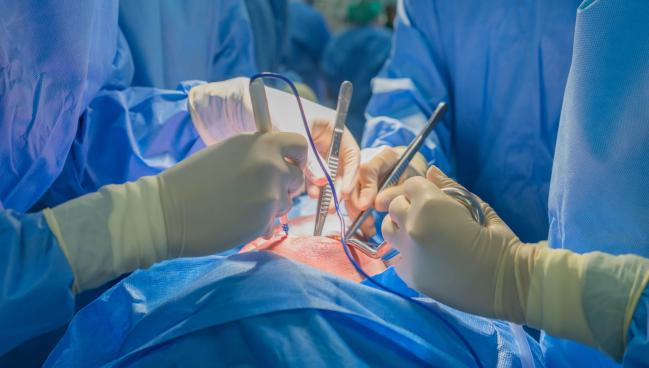
Heart transplants obtained through donation after circulatory death (DCD) are on the rise in the United States, with stable early outcomes through this rapid expansion, data from the United Network for Organ Sharing (UNOS) registry suggest.
Together with the fact that results have stayed consistent amid shifting recipient risk profiles, the analysis supports “the scalability of this strategy,” Kazuhiro Ueno, MD, PhD (Thomas Jefferson University, Philadelphia, PA, and Oita University, Japan), and colleagues report in the September 2026 issue of the Journal of Cardiac Failure.
“DCD heart transplantation has emerged as an important strategy to expand the donor pool amid persistent organ shortages,” the authors note. “After its reintroduction into clinical practice in the United States, advances in donor management, ex vivo perfusion technologies, and recipient selection have facilitated a rapid increase in DCD heart use.”
While prior observational studies have supported the method’s safety and feasibility in comparison to donation after brain death (DBD), the DCD approach was “perceived as technically complex and potentially associated with inferior outcomes during its initial implementation,” they add, noting that many assumed outcomes would improve as experience grew and workflows solidified.
“Given the increasing complexity of candidates with advanced heart failure, understanding the stability of outcomes during expansion is clinically important,” the investigators say.
Ashish Correa, MD (Mount Sinai Fuster Heart Hospital, New York, NY), and Aditi Nayak, MD (Baylor University Medical Center, Dallas, TX), agree it’s valid that transplant centers are turning to DCD hearts as a way improve access to much-needed organs.
“However, as centers newly embark on DCD transplantation, they are confronted with questions that extend beyond simple comparisons of DCD and DBD outcomes,” they write in an editorial. “They must also grapple with issues of learning curves, implementation, and scalability. Can we do this successfully? Can we achieve outcomes comparable with those reported by established and experienced DCD programs? And can this strategy be safely extended to a broader spectrum of transplant candidates, including those with higher-risk profiles?”
The research by Ueno et al addresses these questions of “dissemination, scalability, and growth,” Correa and Nayak say. “Essentially, the study set out to examine the democratization of DCD transplantation across the nation.”
Compared with the more traditional DBD approach, the use of DCD hearts is still far less common and has sparked debate over ethical concerns, both within the medical field and among the broader public. That said, as reported by TCTMD, several studies have now shown the feasibility of using these hearts as well as satisfactory longer-term outcomes, though not all data have been positive.
Shifting Patients, Stable Outcomes
For the current study, investigators used the UNOS registry to identify 1,489 DCD recipients, comparing the 303 who underwent transplantation in 2019-2021 (early era) with 1,186 who underwent transplantation in 2022-2024 (late era). Over time, the use of DCD expanded across a higher number of transplant centers as well, rising from 22 to 67 centers.
Recipients in the late era were at a similar age to those in the early era (approximately 57 years), though they had lower body mass index (BMI) and were more likely to be Hispanic/Latino, less apt to be white, and more apt to be female. Additionally, they tended to have greater functional impairment. Hemodynamic profiles differed as well, with recipients in the later era featuring greater prevalence of pretransplant pulmonary hypertension and advanced heart failure physiology.
“Similarly, donor characteristics evolved over time, with donors in the later era being older and more frequently female, which may reflect growing confidence in donor selection and perioperative management,” the researchers point out.
The transplantations done in the later years involved greater use of inotropes, intra-aortic balloon pumps, extracorporeal membrane oxygenation, and temporary left ventricular assist device support but less use of durable ventricular assist device or total artificial heart support.
Yet between the early and late eras, there were no significant differences in treatment weight-adjusted lengths of stay or dialysis before discharge, and no differences in 1-year retransplantation, mortality, or graft failure.
Outcomes of DCD Transplantation
| 2019-2021 | 2022-2024 | Adjusted P Value |
Median Length of Stay, days | 16 | 17 | 0.63 |
Dialysis Before Discharge | 19% | 18% | 0.68 |
1-Year Retransplantation | 0.7% | 0.3% | 0.142 |
1-Year Mortality | 6.9% | 5.8% | 0.67 |
1-Year Graft Failure | 7.6% | 6.1% | 0.99 |
Results were similar across high-risk subgroups, including those with impaired functional status, pulmonary hypertension, and preoperative mechanical circulatory support. An exploratory analysis looking at 2-year overall survival also showed no significant difference (HR 1.47; 95% CI 0.94-2.31). Moreover, apart from an increase in renal replacement therapy, outcomes were equivalent between centers that were early versus late adopters of DCD transplantation.
“Collectively, these results indicate that the expansion of DCD heart transplantation in the United States has not been associated with deterioration in early outcomes, supporting the procedural maturity and reproducibility of this strategy beyond its initial adoption phase,” Ueno et al conclude.
They point out that performance did not evolve gradually. Instead, “our data support the concept that standardized procurement protocols and shared national expertise facilitated the immediate and reproducible delivery of high-quality outcomes, even as the strategy was rapidly adopted across a broader clinical landscape,” the authors note, also crediting “advances in donor management, recipient selection, and perioperative care.”
In their editorial, Correa and Nayak agree that the “findings reinforce that the enthusiasm for DCD heart transplantation is grounded in the scalability and reproducibility of the procedure across recipient and center profiles.”
Moreover, “excellent and reproducible outcomes” emerged early in the DCD experience, they point out. “This result is particularly remarkable given the complexity of the DCD enterprise, which requires the coordinated participation of numerous stakeholders, including donor hospital personnel responsible for withdrawal of life-sustaining therapies and declaration of death, organ procurement organizations, procurement teams (which are now frequently outsourced to commercial vendors), and transplant centers.”
But, “the story of DCD has not been one solely of soaring highs,” the editorialists stress. “Paralleling its successes have been several challenges: troubling media reports of problematic DCD cases, evolving federal oversight, and perhaps most concerning, an erosion of public trust in the transplant process.
“The long-term success of the transplant enterprise depends on the continued confidence of the public in the integrity, transparency, and ethical standards that underpin organ donation and transplantation,” they conclude.

Caitlin E. Cox is Executive Editor of TCTMD and Associate Director, Editorial Content at the Cardiovascular Research Foundation. She produces the…
Read Full BioSources
Ueno K, Kelley D, Shuto T, et al. Stable outcomes of donation after circulatory death heart transplantation from early adoption to national expansion. J Card Fail. 2026;32:1517-1525.
Correa A, Nayak A. The DCD juggernaut: how donation after circulatory death is transforming the cardiac transplant ecosystem. J Card Fail. 2026;32:1526-1528.
Disclosures
- Ueno reports no relevant conflicts of interest.
- Correa reports research support from Procyrion, Tectonic Therapeutic, and Nuwellis.
- Nayak reports being an external consultant for Alira Health; being a clinical advisory board member for Pumpinheart; and receiving speaking honoraria from Abbott.
Related News



Comments