Ting-Yu (Tintin) Wang, MD
Originally from Taiwan, this fellow shifted gears from chemistry to cardiology after shadowing physicians in college.
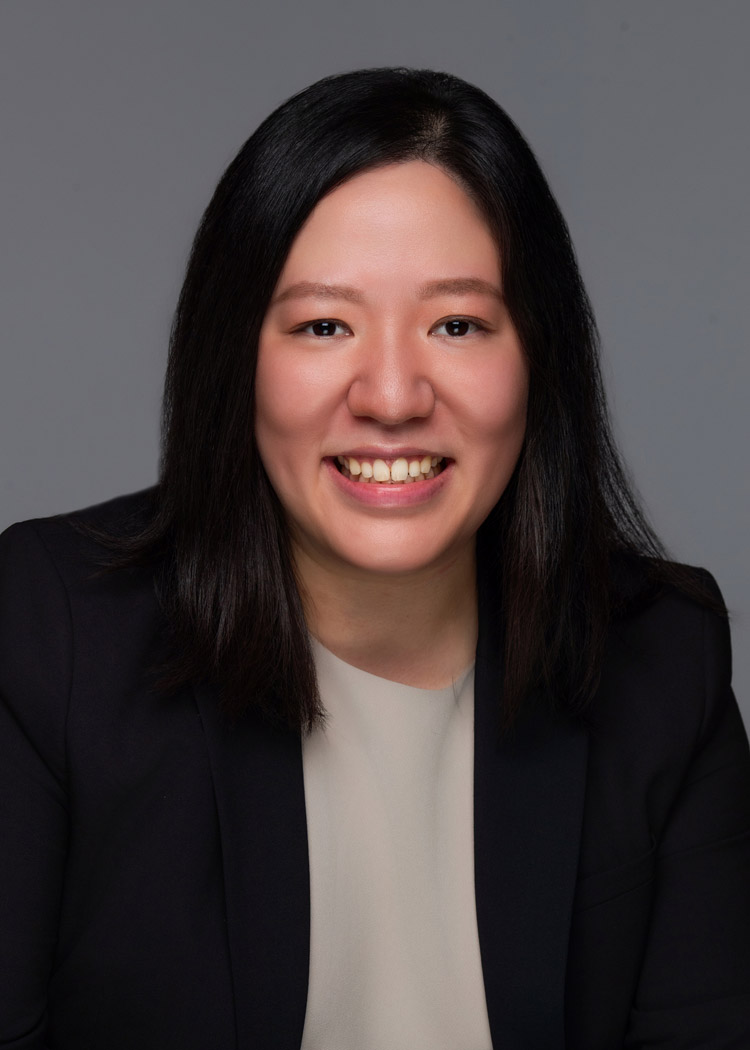 Ting-Yu (Tintin) Wang, MD, is an interventional cardiology fellow at Brown University Health (Providence, RI). Originally from Taiwan, she earned her medical degree at Stony Brook University School of Medicine (Stony Brook, NY), where she also completed her internal medicine training before completing her cardiology fellowship at the Scripps Clinic (San Diego, CA). Wang would like to pursue a career in academic interventional cardiology where she is able to provide excellent clinical care while also teaching and participating in outcomes research. In her free time, she enjoys attending theater, playing violin and guitar, and doing Pilates and yoga.
Can you tell us a bit about your journey so far?
I didn’t always know that I wanted to go into medicine or become a doctor. I spent the first 18 years of my life in Taiwan, and I always thought that I was going to be a chemist. Chemistry and math were my favorite subjects in school growing up; I thought it was so cool that different chemical reactions can happen and that so many things in life can be explained by chemistry and physics. I had a great chemistry teacher in high school who supported, inspired, and encouraged me to keep pursuing it, and I eventually majored in chemistry in college.
My parents always knew that I would eventually pursue an education or work in the United States, but we never expected that journey to begin as early as college. I attended a high school in Taiwan that had a bilingual department–while I followed the Taiwanese curriculum, students in the bilingual program received an American-style education. As part of the Taiwanese school system, we had a dedicated 25-minute “nap time” every day, all the way through 12th grade. While that may sound appealing now, I decided to skip it one day and got permission to attend a college fair in the bilingual department, where representatives from many major US universities were present. It was one of the coolest things I’d seen. I walked around and talked to people and learned about all the different opportunities that were available and the majors I could pick. Taiwan is a relatively small and homogeneous country, but in the US, people come from all kinds of backgrounds, and it truly feels like a melting pot. In that moment, I knew right away that I wanted to attend college here. My parents were incredibly supportive, and the very next week, they transferred me to an international school in the same city, where I could transition into an American-style curriculum geared toward preparing students for college in the US.
I ended up at Carnegie Mellon in Pittsburgh, where I continued to develop my passion for chemistry. I especially enjoyed wet lab research and was fortunate to have excellent mentors along the way. In the summer between sophomore and junior year, I stayed in Pittsburgh to do research in a biochemistry lab, but realized I needed a more exciting and dynamic experience beyond the day-to-day routine of lab work. I remembered receiving an email from the pre-med student group advertising an opportunity to shadow physicians at the University of Pittsburgh Medical Center and thinking how cool it would be to see what doctors and nurses did in hospitals. I had been fortunate not to have needed hospitalization or extensive medical care, so I had little understanding of what went on in hospitals. I submitted my application, returned to the lab without thinking much about it, and a month later received an email saying I had been accepted into the program and been paired with two physicians. I was suddenly nervous, but it turned out to be an incredible opportunity. I attended their conferences, spent time in the ICU, and observed resuscitations, and I was struck by the teamwork and clarity of purpose, with everyone knowing exactly what to do to stabilize and care for patients. That experience really shifted my perspective. I knew the training would be rigorous, but I saw how directly each skill translated into helping improve someone’s health in a way that felt more immediate than chemistry research.
From there, I decided to take some pre-med classes, including physiology the following semester, and quickly realized how much I enjoyed it. The cardiovascular system, in particular, always made the most sense to me. I knew shortly thereafter that I wanted to pursue medicine.
It sounds like you learned the value of mentorship early on. Did you stay in contact with any of the physicians you shadowed?
Yes, thankfully. At every turning point in my life, I’ve been fortunate to have great mentors and strong role models who guided, supported, and encouraged me as I made important decisions. One of the resident physicians I shadowed in college wrote me a strong recommendation letter for med school. She urged me to pursue medicine, and I continued to shadow her before she left Pittsburgh for further training. Throughout my training, whenever I moved into residency or fellowship, or faced important life decisions about where I wanted to go, she was one of the people who I would email for advice, along with a few others. She’s now a critical care cardiologist in Minnesota, so it feels like a full-circle moment that we’re both in cardiology.
How did you decide on interventional cardiology?
I always knew that I wanted to do something procedural. I liked both my surgery and medicine rotations in medical school. One of my mentors from med school and residency is an interventional cardiologist. I worked with her on TAVR research, and even though I’d see her arriving at the hospital very early and leaving very late, I never once heard her complain. She clearly loved what she did, and she spoke about it with real enthusiasm. In the back of my mind, I always saw interventional cardiology as a path I might pursue because of her, and that interest gradually solidified as I progressed through my general cardiology fellowship.
During my general cardiology fellowship, I found the cath lab to be one of the most exciting places to be–it’s highly unpredictable, and you never quite know what will happen next. At the same time, it’s very structured, with clear algorithms to guide you, and when things don’t go as expected, you adapt and adjust your approach to move forward.
What appeals to you about conducting research?
I’m most drawn to outcomes research, which is also the area I’ve had the most exposure to so far. What I enjoy most is the ability to translate clinical work into meaningful improvements in patient care. During med school and residency, I worked with Puja Parikh, MD (Stony Brook University School of Medicine), and examined sex-specific outcomes following TAVR, which was still a relatively new procedure at that time. It was exciting to contribute to a field that was rapidly evolving. Most recently in general cardiology fellowship, I worked with Curtiss Stinis, MD (Scripps Clinic), evaluating outcomes after elective coronary angiography in patients on baseline oral anticoagulation. Our retrospective analysis found no significant difference in bleeding or stroke complications between patients who stopped versus continued oral anticoagulation, suggesting that continuing oral anticoagulation peri-procedurally may be a safe and reasonable alternative to what current guidelines recommend, which is to hold it. This was particularly interesting and highlighted for me the impact outcomes research can have on practice.
How do you see the field changing in the next 5 years?
I think the field is evolving very rapidly across all areas, with new technologies, techniques, and clinical trials continually emerging. Even in the short time I’ve been in medicine, I’ve seen significant change, and I expect that pace to continue or even accelerate over the next 5 years. What excites me most is how dynamic the field is, with ongoing advances that continuously refine practice and improve patient outcomes, and I am very lucky I get to be a part of it.
What would you say is the biggest challenge facing interventional cardiology fellows today?
I think there are a few key challenges. The first is balancing the many demands of interventional fellowship. This includes refining technical skills in the lab, developing clinical judgment for complex decision-making, and learning how to navigate difficult procedural situations. All of these have steep learning curves.
At the same time, there’s the challenge of balancing research involvement and personal life while adapting to a rigorous training environment. An attending once told me that if you don’t end most days feeling tired but having learned a lot, you’re probably not pushing yourself enough. While this was said humorously, it really captures how busy this stage of training can be. This year flies by quickly, and every skill we learn and every tool we add to our toolbox is invaluable.
Finally, there’s the nuanced judgment of when to intervene and when to walk away. It’s about understanding not only how to fix a problem, but also when not to, and recognizing that fine line between doing things for a patient versus doing things to a patient. Earlier this year, Dr. J. Dawn Abbott (Brown University Health), told me after a case: “The best interventional cardiologist is the one who knows when to stop.” That has stayed with me ever since. Developing that judgment is, to me, one of the most important ongoing challenges.
How do you find balance between your learning, your clinical duties, your research, and your life outside of medicine?
I don’t think there’s ever a point where every part of life is perfectly balanced at 100%, so for me it’s about actively adjusting and prioritizing over time. Outside of training, I rely a lot on music and the arts to reset. I grew up playing the violin and piano and singing in choirs with my sisters, and that’s always been something I can return to when I need to clear my mind. I also picked up the guitar in college, which has been really fun. I enjoy museums and the performing arts, so whenever I can, I try to go to live performances as well. More recently, I’ve also started doing Pilates and yoga, which have been a game changer. They force me to be fully present, because at that moment, not falling over is the main priority over everything else!
What her nominator, J. Dawn Abbott, MD, says:
Dr. Wang is a role model for the cardiology community because she pairs academic excellence and technical skill with uncommon emotional intelligence and humility. She consistently elevates those around her—nurses, technologists, trainees, and physicians—by recognizing individual strengths, expressing gratitude, and fostering a collaborative, respectful culture in the cath lab. Despite the intensity of interventional training, she brings optimism, professionalism, and her best self to patient care at every hour. Dr. Wang exemplifies the mindset busy physicians should strive for: excellence without ego, resilience without complaint, and leadership grounded in kindness.
To nominate a stellar cardiology fellow for the Featured Fellow section of TCTMD’s Fellows Forum, click here.

Yael L. Maxwell is Senior Medical Journalist for TCTMD and Section Editor of TCTMD's Fellows Forum. She served as the inaugural…
Read Full Bio
Comments