AI-Enabled Virtual HF Care May Help Boost GDMT, Stabilize Weight
The approach could help clinicians who are “burdened with information overload” manage their patients, one expert says.

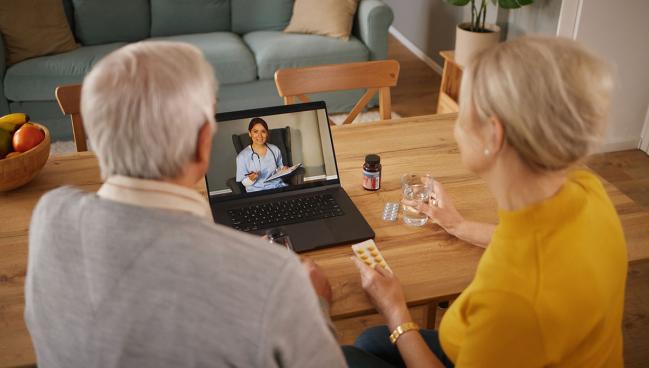
BOSTON, MA—A program that involves using artificial intelligence (AI) to distill biometric data obtained remotely from patients with heart failure (HF) then triage them through a digital platform is a promising approach to improving care, a nonrandomized study suggests.
The strategy was associated with increases in the proportion of patients on each of the four pillars of guideline-directed medical therapy (GDMT), as well as a reduction in body weight fluctuations, Trejeeve Martyn, MD (Cleveland Clinic, OH), reported here at THT 2026.
All of the alerts generated by the program were handled by nurses and advanced practice providers (APPs), with none requiring escalation to an HF cardiologist.
“The deployment of an AI algorithm-enabled heart failure platform coupled to a remote care team improved GDMT initiation and weight stability,” Martyn told meeting attendees, adding that “thousands of physiologic alerts were handled by a collaborative partner without increasing the workload of a longitudinal group of cardiologists.”
There is a growing burden of HF around the world, and in the United States, researchers have estimated that 11.4 million people will have HF by 2050. Though there is robust evidence from trials like STRONG-HF that getting patients on GDMT early improves outcomes, the “stark reality,” Martyn said, is that many patients are not seeing cardiologists in a timely fashion for their HF.
Studies evaluating how remote patient monitoring may help in the management of patients with HF have provided mixed results, although most have been device-focused, with limited information on who is involved in handling the influx of data and responding, Martyn noted. He added, however, that trials like VITAL-HF and IMPLEMENT-HF demonstrated that using a dedicated team to focus on GDMT optimization helps get more patients on the necessary medications.
Thousands of physiologic alerts were handled by a collaborative partner without increasing the workload of a longitudinal group of cardiologists. Trejeeve Martyn
The aim of the current study was to assess whether a virtual HF care team using a digital platform (ISHI Health) could improve the GDMT use and stabilize volume status without increasing the burden on HF cardiologists. Six community cardiology practices with 747 patients (mean age 75.8 years; 37% women) were included. Nearly half of patients (48.8%) had an LVEF ≤ 40% and 46.3% had an LVEF > 40%.
Patients sent data on blood pressure, heart rate, body weight, pulmonary artery pressure, and some diagnostics from implantable devices to the digital platform, where an AI algorithm provided a data and chart summarization and issued alerts indicating low (green), moderate (yellow), or high (red) risk. The alerts were triaged in an escalating fashion, with the initial assessment performed by licensed vocational nurses (LVNs) and RNs. The alerts were then escalated, as needed, to advanced practice providers and pharmacists for medication adjustments and further evaluation. HF cardiologists were involved for complex and severe cases.
During a median enrollment time of 124 days, there were 2,013 red alerts, mostly sparked by blood pressure (58%) and heart rate (30%).
Nearly all alerts (99.26%) were reviewed within 48 hours, with 81% handled at the first step by ISHI Health LVNs/RNs. The remaining 19% were resolved after escalation to the advanced practice providers and pharmacists, with none requiring the involvement of an HF cardiologist.
The program was associated with an increase in the proportion of patients on various components of GDMT (P < 0.001 for all):
- Beta-blockers (36.0% to 51.1%)
- ACE inhibitors/ARBs/angiotensin receptor-neprilysin inhibitors (33.9% to 46.5%)
- Sodium-glucose cotransporter 2 inhibitors (14.9% to 28.4%)
- Mineralocorticoid receptor antagonists (19.5% to 22.0%)
Also, the number of acute weight gain events, as well as variability in body weight, declined, which provides “encouraging data around stability in volume status over time,” Martyn said.
Overall, these are “exciting initial data,” he said, acknowledging that the study was limited by the nonrandomized, pre-post design. Researchers plan on expanding the program to several academic medical centers later this year for further evaluation.
Sophia Airhart, MD (Baystate Health, Springfield, MA), who moderated the abstract session at which Martyn presented the results, noted that there are multiple similar platforms currently under development.
“It’s an exciting direction,” she said. “The question is: how’s it going to work when you get to the logistics?”
Still, Airhart told TCTMD, such an approach could be “incredibly empowering, especially because . . . we’re burdened with information overload basically. So it helps process it in a way that’s patient care-focused, and it gives us more tools to help optimize patients.”
The technology is there, and the next step “is how to operationalize it and fine-tune it and then make it accessible to more patients,” she commented, adding that questions remain about who will pay for these platforms.

Todd Neale is the Associate News Editor for TCTMD and a Senior Medical Journalist. He got his start in journalism at …
Read Full BioSources
Martyn T. Optimization of guideline-directed medical therapy and volume stability using an AI-enabled virtual heart failure care platform across community cardiology practices. Presented at: THT 2026. March 2, 2026. Boston, MA.
Disclosures
- Martyn reports receiving grant/research support from AstraZeneca, BridgeBio, Fire1, and the Heart Failure Society of America; receiving consulting fees/honoraria from Novo Nordisk, AstraZeneca, Edwards Lifesciences, BridgeBio, Pfizer, Dyania Health, Fire1, Ensho Health, Acorai, and Bayer; and receiving individual stocks/options from Apricity Robotics and Kilele Health.
- Airhart reports receiving consulting fees/honoraria or speaking for CVRx and United Therapeutics and being an independent contractor for Alleviant.
Related News



Comments