Ashraf Alazzoni, MD
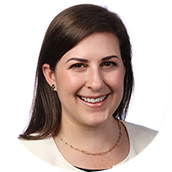
 Ashraf Alazzoni, MD, is currently in his first year of interventional cardiology fellowship at Hamilton General Hospital at McMaster University in Ontario, Canada. A graduate of the University of Jordan, Dr. Alazzoni completed his medical and general cardiology training at McMaster University. He has co-authored at least 10 peer-reviewed journal articles—including the recently published Radiation Protect study—and was awarded “Best Resident 2015” at McMaster University’s 26th Annual Research Day. Dr. Alazzoni plans to pursue his own clinical coronary practice after fellowship while maintaining an active career in research.
Why did you decide to go into interventional cardiology?
I still remember my first day in the cardiology wards. We saw a patient who presented with STEMI and he was really in pain—suffering and very short of breath. We started the necessary medical therapy and the patient was immediately transferred to the cath lab. I saw how the interventional cardiologist went in, found the blocked artery, opened it, and relieved the patient’s pain and suffering. That moment was the trigger that made me very interested in this field where we really can make a big difference in patients’ lives within a few minutes. I saw the relationship that evolved between the patient and his physician—the sense of gratitude—and that was an amazing moment to witness. My dream from then on was to be a good interventional cardiologist who would be able to help people in that situation.
What has surprised you most about becoming an interventional cardiologist?
Two things. Number one was the hard work required to become a good interventional cardiologist. We spend many hours and nights in the hospital learning every single aspect of every technique. Number two is how rapidly the field is evolving. All of the new technologies really change the field and make it very interesting. But this dynamic environment also makes it necessary for us to work hard and keep up with the updates. It really never ends. You need to be studying all the time, attending conferences, and working with a group where everyone is an expert in his or her field.
How do you see the field changing in the next 5 years?
Technology is evolving to make our treatments more efficient and more durable. The other aspect of it is that more interventional cardiologists are becoming involved with structural heart disease. Look at TAVR, for example, and compare what they are doing now with what they were doing 5 years ago. The same thing is happening now with MitraClip. Interventional cardiology is really placing itself as one of the main domains within cardiology and it will continue to evolve.
What are you most looking forward to after you finish fellowship?
I’m certainly looking forward to starting my own practice and working with a supportive, interesting group. At the same time, I want to start doing larger randomized controlled trials that will answer very important clinical questions.
If you weren’t an interventional cardiologist, what else could you see yourself doing and why?
I probably would have been a mechanical engineer as I’ve been interested in engineering since I was in high school. There are many similarities between this field and interventional cardiology. Part of it is how we do everything in a systematic way. And a large part of what we do is dependent on the engineers and scientists who design all the tools we use—the catheters that need to reach certain points and the guides that give support during procedures. So I have always had a good appreciation for all of that.
What his nominator, Sanjit S. Jolly, MD, MSc, says:
It is rare for a fellow to be able to design, carry out, and publish a randomized trial during his or her training. It requires dedication and hard work, and Ashraf has clearly shown that in the publication of the Radiation Protect study. If every interventional fellow were able to do this, imagine the amount of science we could create.
* To nominate a stellar cardiology fellow for the Featured Fellow section of TCTMD’s Fellows Forum, click here.

Yael L. Maxwell is Senior Medical Journalist for TCTMD and Section Editor of TCTMD's Fellows Forum. She served as the inaugural…
Read Full Bio
Comments