Baduanjin, a Traditional Chinese Practice, Lowers BP
The effects were greater than those with self-directed exercise alone and similar to those with brisk walking.

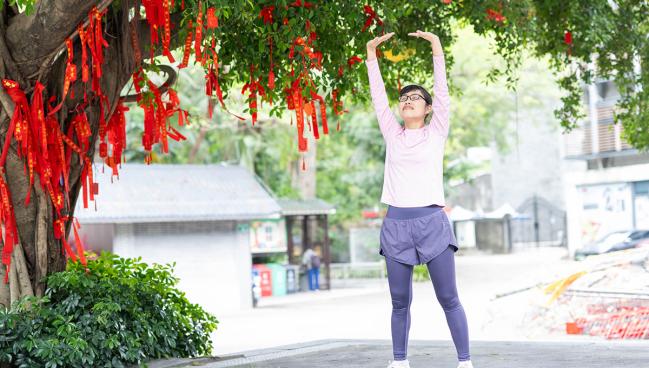
Baduanjin, a mind-body practice that has been performed in China for more than 800 years, is superior to self-directed exercise alone and similar to brisk walking when it comes to lowering blood pressure in patients with stage 1 hypertension, according to results of the randomized BLESS trial.
Compared with exercise alone, baduanjin provided a 3.1-mm Hg greater reduction in 24-hour ambulatory systolic BP by 12 weeks (P = 0.036) and 3.3-mm Hg greater reduction by 52 weeks (P = 0.031), researchers led by Boxuan Pu, BMed, and Lihua Zhang, MD, PhD (both from Fuwai Hospital, Beijing, China), report in a paper published online this week in JACC. There were also greater reductions in office systolic BP with baduanjin.
The practice, which “integrates gentle movements, coordinated breathing, and meditation, potentially reducing sympathetic tone and fostering relaxation,” had similar BP-lowering effects when compared with brisk walking.
“Brisk walking is recommended by guidelines for BP and CVD reduction,” the authors note. “Both baduanjin and brisk walking require no equipment or cost and thus are accessible and adherable as community interventions. Coaching is a small barrier for practicing baduanjin, but it can be overcome by a standardized training video.”
Yuan Lu, ScD (Yale School of Medicine, New Haven, CT), an executive associate editor of JACC, told TCTMD that “this study shows a simple, culturally rooted, movement practice can actually meet the modern standard of clinical evidence.”
The key to baduanjin’s impact “is the sustainability of and adherence to this intervention,” Lu added. “We always say that the most powerful intervention is the one that people can actually continue doing. So the strength of this trial is not just that baduanjin works, but that it appears sustainable.”
The BLESS Trial
International guidelines recommend exercise as part of the approach to lowering BP and CVD risk in people with a systolic reading of 130 to 139 mm Hg and/or a diastolic reading of 80 to 89 mm Hg, defined as stage 1 hypertension in the US guidelines and as high-normal BP in others.
However, “constraints in space, [coaching], equipment, weather, financial cost, and safety concerns are common barriers for exercise to achieve [a] long-term BP-lowering effect,” the authors note.
Baduanjin, a common form of qigong, may help overcome some of these obstacles. “Because baduanjin is simple, low-to-moderate intensity, and requires only a flat area (2.5 m2), it is easy to learn and adhere to,” the investigators say.
To assess the practice’s impact on BP, they designed the BLESS trial, which was conducted at six community health centers and one tertiary hospital in Beijing. They recruited 216 participants who were at least 40 years old, had an office systolic BP of 130 to 139 mm Hg and/or diastolic BP of 85 to 89 mm Hg, had not received a formal diagnosis of hypertension, and were not taking antihypertensive medications. The mean age of the participants was 57.3 years, and 64.8% were women. At baseline, mean office BP was 134.6/81.9 mm Hg and mean 24-hour ambulatory BP was 123.1/78.2 mm Hg.
The participants were randomized 2:1:1 to the baduanjin intervention (starting with a 4-hour training course), self-directed exercise (with the type chosen by the participant), or brisk walking. Those in the two control arms were instructed to get at least 150 minutes of moderate-intensity aerobic exercise per week, in line with guideline recommendations. All participants received education about preventing hypertension and general exercise guidance.
The primary outcomes were changes in 24-hour ambulatory systolic BP from baseline to 12 and 52 weeks, with baduanjin providing greater reductions relative to self-directed exercise. The between-group differences in office systolic BP at those two time points were -5.4 mm Hg (P = 0.006) and -5.2 mm Hg (P = 0.014), respectively.
The magnitude of these changes in BP is similar to what has been shown with the ACE inhibitor ramipril, “a benchmark antihypertensive medication that reduces risk of death, myocardial infarction, and stroke,” the investigators note.
Lu said that on an individual level, the BP reductions may not seem large, “but at the population level, even a 2- to 3-unit reduction in systolic blood pressure is associated with a meaningful reduction in stroke and cardiovascular risk. The small, scalable shift in blood pressure across a large population can translate into a substantial public health impact.”
Baduanjin did not, however, provide a significantly greater reduction in 24-hour systolic BP compared with brisk walking (between-group difference -0.7 mm Hg; P = 0.683). There were no differences in other BP measurements either.
The findings were generally similar across subgroups, although there was a significant interaction (P = 0.036) suggesting less impact of baduanjin versus self-directed exercise in patients with a body mass index of 28 kg/m2 or higher.
Rates of adverse events were low overall, with none considered related to the intervention or the control exercises.
How Does It Work?
The researchers theorize that baduanjin may have both physiological and psychological effects.
“Explorative studies suggested multiple effects related to BP-lowering of baduanjin, including improvements in vascular endothelial function, inflammation, cardiorespiratory fitness, oxidative stress, autonomic nervous system balance, and stress,” they write.
Lu said each of the components of baduanjin, which combines aerobic, isometric, flexibility, and mind-body elements, likely contribute to reduced blood pressure.
Though the generalizability of the findings still needs to be confirmed in non-Chinese populations, she said baduanjin is “a good option for people in other countries, especially in low-resource settings, to adopt it because it requires minimal facility and . . . very minimal instruction.”
Showing results that are comparable to brisk walking is important, too, Lu said, because baduanjin may provide a less-intensive alternative to older patients or those who have established CVD.

Todd Neale is the Associate News Editor for TCTMD and a Senior Medical Journalist. He got his start in journalism at …
Read Full BioSources
Pu B, Zhang L, Sun Y, et al. Effect of baduanjin on blood pressure among individuals with high-normal blood pressure: a multicenter, open-label, blinded-outcome randomized controlled trial. JACC. 2026;Epub ahead of print.
Disclosures
- Pu and Zhang report no relevant conflicts of interest.
Related News
Comments