ENGULF Novel PE Thrombectomy Device Minimizes Blood Loss
The small-profile device expands to capture clots like large-bore systems while offering good reduction in RV/LV ratio at 48 hours.

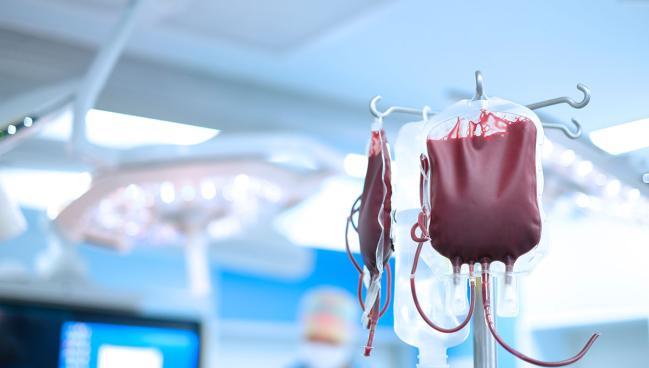
A small-profile thrombectomy device for the treatment of pulmonary embolism (PE) that suctions out and macerates the clot, allowing the blood to return to the patient at the procedure’s end, has met its primary endpoint in the pivotal ENGULF trial.
The mean reduction from baseline in RV/LV ratio at 48 hours, a measure of cardiac strain, was 25.1% and there were no device-related hemodynamic deteriorations or deaths in this real-world cohort study.
Andrew Klein, MD (Piedmont Heart Institute, Atlanta, GA), reported the findings in a late-breaking trial presentation this week at VIVA 2025.
A key feature of the investigational thrombectomy device (Hēlo; Endovascular Engineering) is the potential for minimal blood loss through the device’s novel blood-return system. “We’re not talking about just returning a bunch of red stuff to the patient,” Klein said. “It’s actually returning high-quality blood as evaluated by not only hemolysis labs, but also blood chemistry and [assessment for] cellular integrity.”
Unlike early large-bore devices for PE thrombectomy that were associated with significant blood loss, the median estimated blood loss for most of the ENGULF patients was 340 mL, said Klein. It was just 10 mL in the 15 patients treated with a newer iteration of the device that included the blood return system.
The smaller profile of the device compared with large- and intermediate-bore catheters also offers the potential for less vascular trauma during the procedure while still allowing it to move from one pulmonary artery to another without a wire, he said.
Klein acknowledged that while the pulmonary embolism landscape is ripe with catheter-based devices entering or preparing to enter the market, the smaller size of this device may be appealing to many operators who “are a little bit nervous about bringing large-bore catheters across the RV.”
The Hēlo, which can move flexibly from side to side, combines a 15-Fr catheter with a funnel tip that expands up to 24 Fr for large clot capture and an internal orbital agitator, with suction provided by a standard vacuum pump. As the embolism is suctioned onto the funnel, Klein said the agitator “chews up the clot,” breaking it down into blood that can be filtered and returned to the patient.
As the ENGULF investigators refined their technique throughout the trial, providing feedback that also led to modifications to the device, they were able to give complete return of blood through the system to the final 15 patients. Additionally, no instances were seen of clots being stuck, or “corking” the top of the funnel, Klein noted.
Following the presentation, panelist Misty D. Humphries, MD (UC Davis Health, Sacramento, CA), asked whether there is a way to do the suction and blood return simultaneously, “almost like a flow reversal, so they’re not getting as much embolization that then would go through a filtration system.”
While something like that would be ideal, Klein said, “all the systems to date return blood, filter it, and then you draw it back out with a syringe and give it back into the side port. That’s where we are with this system as well.”
ENGULF Pivotal Trial
For the single-arm trial, Klein and colleagues enrolled 105 patients (mean age 62.7 years; 43% women) with acute intermediate-risk pulmonary embolism from 19 sites in the United States. The 40 operators spanned multiple specialties, including interventional cardiology, interventional radiology, and vascular surgery. Nearly half of patients had hyperlipidemia, one-third had a prior deep vein thrombosis, and 14% had a prior pulmonary embolism. To be inclusive of real-world patients, the investigators also allowed those with cancer into the trial, accounting for 23% of the population.
The major adverse event rate at 48 hours was 0.95%. The single event consisted of worsening cough that was treated with high flow oxygen therapy.
The mean pulmonary artery systolic pressure was 49.5 mm Hg prior to the procedure and 41.3 mm Hg after. The modified Miller score, used to quantify the amount of thrombus, was 15.1 preprocedure and 12.8 at 48 hours, amounting to a 16.2% reduction.
The all-cause mortality rate at 30 days was 2.85%, which Klein said is in line with similar thrombectomy devices. One of the deaths was cancer-related.
Clot locations were bilateral in 60% of patients, and clot chronicity was mixed/chronic in 70.5%. The average number of passes per patient was 1.3.
“This means that once that device is delivered to the main [pulmonary artery], it does not need to traverse the right heart again,” Klein said.
Slightly more than one-third of patients required an ICU stay, coming from the unit for the procedure and returning to it afterward. The average procedure time was 39 minutes, which Klein acknowledged is a vast improvement over the multiple-hour procedures that were required not so long ago for this type of therapy.
Panelist Michael Jolly, MD (OhioHealth Riverside Methodist Hospital, Columbus), commenting on the device’s ease of use, noted that “it’s a luxury [that] we’re at a point in PE intervention where we can even talk about speed.” He wondered whether this usability or seasoned operators most contributed to the good outcomes in the trial.
“Obviously, these are experienced operators, but [they are] novel operators to this device,” Klein said. “I think it’s a combination of A: experienced operators that know how to handle stuff in the pulmonary space, but B: it’s a very easy device to move from side to side.”

L.A. McKeown is a Senior Medical Journalist for TCTMD, the Section Editor of CV Team Forum, and Senior Medical…
Read Full BioSources
Klein A. Novel thrombectomy system for acute intermediate-risk pulmonary embolism. Presented at: VIVA 2025. November 3, 2025. Las Vegas, NV.
Disclosures
- Klein reports no relevant conflicts of interest.
Related News



Comments