ESTREL: Levodopa Doesn’t Boost Rehab Benefits After Acute Stroke
(UPDATED) The trial’s findings will dampen enthusiasm for the drug in stroke recovery, though research questions remain, one expert says.

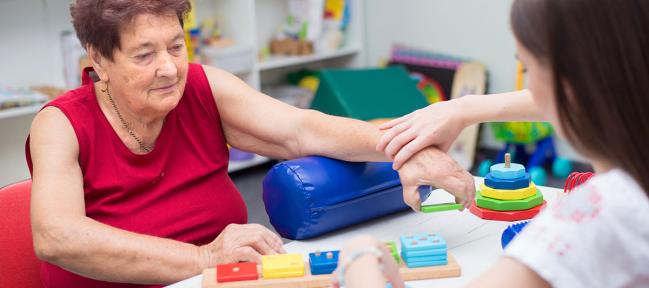
The addition of levodopa doesn’t improve motor function among patients receiving inpatient rehabilitation therapy after an acute stroke, according to the results of the placebo-controlled ESTREL trial.
Overall, motor function increased at 3 months for all patients enrolled, with no difference seen between study and control groups, lead author Stefan Engelter, MD (University of Basel, Switzerland), and colleagues report in a paper published online this week in JAMA.
Secondary outcomes were unaffected by adjunct levodopa as well.
“What we showed is that this should not be given because it’s futile just giving it to unselected patients. I think that that’s safe to say,” Engelter told TCTMD.
He added that improvement in stroke rehabilitation remains “an unmet clinical need” and left open the possibility that levodopa could still have a benefit in certain patients. “On the group level, it was a neutral result, but there might be some patients benefiting while others have had harm by this medication,” said Engelter. “But we do not know that yet.”
Steven Cramer, MD (University of California, Los Angeles), who wasn’t involved in the study, called the results disappointing.
“The biggest impact is that which never happened,” he told TCTMD. “We were hoping this would be positive. And we were hoping that we could start doing this at a larger scale for more patients with greater evidence, but that’s not going to happen. The impact is the dream that will never come to be more so than disrupting a widespread practice currently.”
The ESTREL Trial
Levodopa is a dopaminergic drug that stimulates neuroplasticity, thought to potentially help the brain heal after an acute stroke. A small 53-patient trial published in 2001 demonstrated a benefit for motor recovery when combined with physiotherapy but subsequent trials didn’t replicate those results. Still, levodopa is used in some stroke rehabilitation centers despite the lack of robust efficacy evidence.
“There’s a lot of arguments that dopamine is involved in motor recovery and giving additional dopamine should make recovery more effective,” Engelter said.
ESTREL was conducted at 13 stroke units and centers, along with 11 collaborating rehab centers in Switzerland between June 2019 and August 2024. The researchers enrolled 610 patients (median age 73 years; 41.3% female) who had had an acute ischemic or hemorrhagic stroke within the last 7 days and had clinically meaningful hemiparesis, defined by a score of 3 or more on three NIHSS items: motor arm, motor leg, and limb ataxia.
Patients were randomized to levodopa 100 mg/carbidopa 25 mg or placebo administered orally three times daily for 39 days, in addition to standardized rehab therapy designed to improve motor function. After excluding patients who died before 3 months, there were 582 patients available for the primary analysis.
The primary outcome was the between-group difference in the Fugl-Meyer Assessment (FMA) total score—which ranges from 0-100, with lower scores indicating poorer motor function—at 3 months. At baseline, median FMA total score was 34 points and at follow-up, it was 68 points in the levodopa group and 64 in the placebo group. The mean difference between groups of -0.90 points was not significant (P = 0.54).
A similar number of serious adverse events were seen in the two groups (126 with levodopa and 129 with placebo). The most common was infection.
Final Word?
Engelter pointed to a couple of potential explanations for the neutral trial result. It’s possible, he said, that dopamine levels in the body are already sufficient and that boosting them doesn’t have additional benefits. Or, perhaps the added dopamine is not enough to overcome the structural damage created by the stroke.
His team leaves room for additional research on the impact of levodopa in stroke rehab, however. “To better understand the trial results in the context of the current evidence, subgroup analyses using individual participant data, including previous trials and analyses on recovery trajectories, would be valuable,” they write.
For Engelter, this trial hints at a bright future. “This could be the beginning of a new era looking at stroke rehabilitation on an individualized level, showing that the one-size-fits-all approach was not helpful,” he said.
Cramer, too, indicated an opportunity for further studies of levodopa as an adjunct in stroke rehab and its effect on increasing dopamine. “There’s a lot of reasons to think if you turn that up to 11, that somebody will like the rehab more, somebody will learn more, somebody will have more brain rewiring, and to some extent that works well in animals,” he said.
With the ESTREL trial failing to replicate the benefits seen in the earlier small trial, “a lot of us in the field let out a sad sigh,” Cramer said, adding that “we have one less therapeutic candidate for which we had high hopes.”
We were hoping this would be positive. Steven Cramer
Over the short term, these results are likely to dampen enthusiasm for levodopa used in stroke recovery, but it’s not the end of the line overall, he indicated. Though it’s possible the drug simply doesn’t work in this setting, it’s also possible that other issues—like treatment timing and the type of rehab used—could have influenced the results, he said.
“We don’t know quite enough about the training regimen here,” Cramer said. “No doubt it was good, but was it intense enough? That’s at least a thought when asking the question: is it possible that this might work in a different population or in a different protocol?”
There will be additional studies looking at use of levodopa in different populations and in conjunction with various types of training.
“The authors are to be congratulated for designing and completing and analyzing a very large study,” Cramer said. “This was a major effort that was meticulously done, and the team deserves our congratulations and gratitude.”

Todd Neale is the Associate News Editor for TCTMD and a Senior Medical Journalist. He got his start in journalism at …
Read Full BioSources
Engelter ST, Kaufmann JE, Zietz A, et al. Levodopa added to stroke rehabilitation: the ESTREL randomized clinical trial. JAMA. 2025;Epub ahead of print.
Disclosures
- The study was funded by the Swiss National Science Foundation (SNSF).
- Engelter reports receiving an investigator-initiated research grant to his institution from the SNSF during the conduct of the study.
Related News

Comments