FASTEST Hints at Benefits of Hemostatic Therapy for Acute ICH in Select Groups
Though recombinant factor VIIa didn’t improve outcomes overall, treating very early and in those with a spot sign on CT may help.

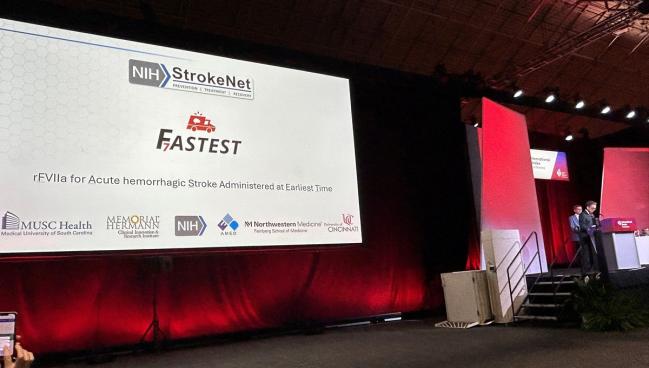
NEW ORLEANS, LA—Recombinant factor VIIa slowed hematoma growth in patients with a spontaneous intracerebral hemorrhage (ICH) when administered within 2 hours of onset, but treatment significantly increased the risk of life-threatening thromboembolic complications and failed to improve functional outcomes, according to the overall FASTEST findings reported here at the International Stroke Conference.
In subgroup analyses, there were suggestions of better clinical outcomes and greater impacts on limiting bleeding expansion when the hemostatic therapy was administered very early after ICH onset (within 90 minutes) and in patients with a positive spot sign—a biological marker of ongoing bleeding—on CT angiography.
“The enhanced biological effect in stopping bleeding in these two subgroups was associated with efficacy at 90 days . . . and borderline efficacy at 180 days,” said Joseph Broderick, MD (University of Cincinnati, OH), who presented the findings along with Kazunori Toyoda, MD, PhD (National Cerebral and Cardiovascular Center, Osaka, Japan).
Broderick noted that the FASTEST Part 2 trial is evaluating recombinant factor VIIa in patients treated within 90 minutes or, in those who have a positive spot sign, within 120 minutes. “We think we now have a very clear road map to the first hemostatic therapy for intracerebral hemorrhage,” he said.
Steven Greenberg, MD, PhD (Massachusetts General Hospital, Boston), who commented on the study for TCTMD, pointed out that its logistics were demanding and that getting all patients enrolled and treated within 2 hours of ICH onset was “remarkable.” The signal of benefit in the subgroups also appears to be a reasonable finding.
“Sometimes when people do subgroup analyses, it’s kind of suspect because it seems like they’ve sliced and diced the data to find something that had a positive result, but I think here . . . the analysis was very thoughtful,” he said.
Having indications of benefit in patients treated within 90 minutes and those with a positive spot sign “makes sense because you’re getting the process when it’s most active or earliest,” Greenberg said.
He added, “the way it correlates with the amount of enlargement that you’re preventing supports that mechanism that if we can find a subgroup where we’re not preventing just a slight enlargement of bleeding but a sizable enlargement of bleeding, that’s going to show up as a clinical benefit.”
The FASTEST results were published simultaneously online in the Lancet.
Stopping Bleeding Early
In spontaneous ICH, nearly all the bleeding expansion occurs in the first 2 to 3 hours, Toyoda said. Prior studies have shown that recombinant factor VIIa stems bleeding when given within the first 3 hours, with even greater effects when it’s administered in the first 2 hours.
The phase III FASTEST trial, conducted at 103 sites in the United States, Japan, Canada, Spain, Germany, and the United Kingdom, was designed to evaluate the treatment’s impact when administered early after acute ICH onset. Investigators enrolled patients who were ages 18 to 80 years, had a baseline ICH volume of 2 to 60 mL, and had no or small volume of intraventricular hemorrhage. All were treated within 2 hours of stroke onset or when they were last known to be well, with the time to drug administration shortened through the use of mobile stroke units and other measures.
The initial plan called for 860 patients, but the study was stopped for futility after the second interim analysis. The data and safety monitoring board, however, recommended reconfiguring the trial to enroll only those with a positive spot sign on CT angiography.
Ultimately, 626 patients (mean age 61 years, 35% women) were randomized to intravenous recombinant factor VIIa at a dose of 80 µg/kg (maximum dose 10 mg) or placebo on top of best standard therapy (including a target systolic blood pressure of 140 mm Hg); the mean time from ICH onset to administration of study drug was 100 minutes. At baseline, mean ICH volume was 16.7 mL, mean IVH volume was 1.5 mL, and median NIHSS score was 13.
The primary outcome—the distribution of ordinal modified Rankin Scale scores at 180 days—was not significantly different between the treatment and control arms (adjusted common OR 1.09; 95% CI 0.79-1.51).
There was no impact on functional outcomes despite the hemostatic therapy leading to smaller increases from baseline to 24 hours in ICH volume (mean 3.68 mL less) and ICH plus IVH volume (mean 5.23 mL less; P = 0.0011 for both) compared with placebo.
On the safety side, use of recombinant factor VIIa increased the rate of life-threatening thromboembolic complications during the first 4 days (4.6% vs 1.3%; relative risk 3.41; 95% CI 1.14-10.15), with no significant differences in other endpoints, including 180-day mortality (6.1% vs 7.4%; RR 0.83; 95% CI 0.46-1.48).
Eyeing an Eventual ‘Big Step Forward’
The increase in thromboembolic events with recombinant factor VIIa is very real, and not trivial, but ideally that risk can be offset by a therapy that will improve long-term functional outcomes, said Greenberg.
“The hope is that we get to that point. We’re obviously not there yet,” he acknowledged.
Overall, the findings are encouraging and provide a good rationale for continuing with FASTEST Part 2, he said, indicating, however, that there’s a need for other potential therapies as well. “We’ve got to get much better. This can’t be our only treatment for bleeding strokes,” Greenberg said. “But if we get to the point where we’ve got a hemostatic therapy that benefits patients, it’s [going to be] a big step forward.”

Todd Neale is the Associate News Editor for TCTMD and a Senior Medical Journalist. He got his start in journalism at …
Read Full BioSources
Broderick JP, Naidech AM, Elm JJ, et al. Recombinant factor VIIa versus placebo for spontaneous intracerebral haemorrhage within 2 h of symptom onset (FASTEST): a multicentre, double-blind, randomised, placebo-controlled, phase 3 trial. Lancet. 2026;Epub ahead of print.
Disclosures
- FASTEST trial is funded by the US National Institute of Neurological Disorders and Stroke (NINDS) and the Japan Agency for Medical Research and Development (AMED). The trial infrastructure for FASTEST in the US also was supported by the NINDS through NIH StrokeNet. Novo Nordisk supplied the study medication and financial support for temperature monitoring and enrollment of participants outside of business hours.
- Broderick reports receiving consulting fees related to a Roche pediatric stroke trial and consulting for Basking Bioscience, outside of the submitted work.
- Toyoda reports grants and contracts from SoftBank Group, consulting fees from Janssen Pharmaceuticals, and honoraria for lectures from Otsuka Pharmaceutical, outside of the submitted work.
Related News



Comments