Fish Oil Halves CV Risk in Patients on Dialysis: PISCES
With such a large reduction, coupled with general skepticism around PUFAs, experts would like to see the trial replicated.

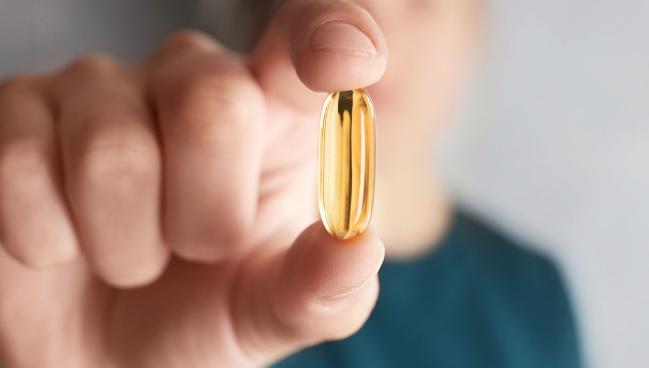
Fish oil supplements cut the likelihood of serious cardiovascular events by almost half among patients who regularly receive hemodialysis, according to the PISCES trial.
Over 3.5 years of follow-up, the risk of the primary composite endpoint—including sudden and nonsudden cardiac death, fatal and nonfatal MI, peripheral vascular disease leading to amputation, and fatal and nonfatal stroke—was significantly lower in the group assigned to receive 4 g of omega-3 polyunsaturated fatty acids (PUFAs), including 1.6 g of EPA and 0.8 g of DHA, or corn-oil placebo daily (HR 0.57; 95% CI 0.47-0.70).
The PISCES “results are quite striking,” lead author Charmaine Lok, MD (University Health Network, Toronto, Canada), told TCTMD. “Patients who are on hemodialysis have the lowest levels of omega-3 fatty acids recorded in the medical literature,” she said. “Perhaps one of the effects is that we’re able to bring it up to baseline or even above, and then to allow for those cardioprotective effects.”
Lok hypothesized that the fish oil used in the study may have improved both traditional and nontraditional risk factors often present in a hemodialysis population, including atherogenic lipids, inflammation, and oxidative stress. It’s possible the supplements also reduced the risk of acute thrombotic events, too. More work needs to be done to look at these potential mechanisms, though, she added.
As for the type of fish oil used, Lok does not recommend just any pills. The PUFA dose used in PISCES was “quite high” and pure, she said. “I don’t know that you would have the same effect if you just bought something over the counter.”
The results, published online Friday in the New England Journal of Medicine, stand in contrast to findings from previous randomized trials examining the efficacy of prescription fish oil in a more general population—specifically for patients with elevated triglycerides and low HDL cholesterol in STRENGTH. Although REDUCE-IT notably did find an advantage in statin-treated patients at high CV risk as well as in patients with high triglycerides, questions were raised over the formulation of fish oil used in the trial.
STRENGTH primary investigator Steven Nissen, MD (Cleveland Clinic, OH), was “dumbfounded” by the PISCES results, which he called “implausibly good.”
“I’ve never seen a hazard ratio of 0.57 with any therapy—the most powerful statin and the most powerful PCSK9 inhibitor,” he told TCTMD. “I mean nothing, nothing has ever produced anything like this. I don’t know what to make of it. It just seems almost too good to be true.”
Without data on any of the biochemical effects of the fish oil in PISCES, including its effects on lipids and inflammatory markers like high-sensitivity C-reactive protein (hs-CRP), it’s hard to understand the mechanism of action, he added, noting that the trial will need to be replicated to be believed.
PISCES Findings
The study enrolled 1,228 patients (mean age 64.3 years; 62.2% male) receiving maintenance hemodialysis for a mean duration of 3.7 years, randomizing 610 to the fish oil and 618 to placebo at 16 sites in Canada and Australia between 2013 and 2019.
Just over one-third had a history of a cardiovascular event, and mean baseline LDL cholesterol and triglyceride levels were 1.9 mmol/L and 1.3 mmol/L, respectively. Slightly more than half were on statins at baseline.
When noncardiac death was added to the primary endpoint, the risk of events still appeared lower in the fish-oil group (HR 0.77; 95% CI 0.65-0.90). Additionally, all individual endpoints significantly favored supplementation over placebo:
- Cardiac death (HR 0.55; 95% CI 0.40-0.75)
- Fatal and nonfatal MI (HR 0.56; 95% CI 0.40-0.80)
- Peripheral vascular disease leading to amputation (HR 0.57; 95% CI 0.38-0.86)
- Fatal and nonfatal stroke (HR 0.37; 95% CI 0.18-0.76)
- First cardiovascular event or death from any cause (HR 0.73; 95% CI 0.61-0.87)
There were differences in adherence to the trial regimen between the study groups, and the results were maintained in patients with and without a previous cardiovascular event.
Rates of total bleeding were 4.8% in the fish-oil group and 7.6% in the placebo arm, and there were no differences reported between the groups in any other serious adverse event.
Lastly, an analysis showed that the fish oil supplements used in PISCES effectively raised blood concentrations of omega−3 PUFAs.
Needs Replication
In an accompanying editorial, Finnian Mc Causland, MBBCh, MMSc (Brigham and Women’s Hospital, Boston, MA), and David Charytan, MD (NYU Langone Health, New York, NY), also seem baffled by the new data.
“How can such remarkable results be explained when so many other interventions have failed—and with an intervention that has yielded heterogeneous results in different populations?” they ask.
The confidence intervals suggest the findings are not due to chance, the editorialists write. While clinicians might feel justified to use the data to support prescribing fish oil to these patients now, “contemporary medicine is replete with examples in which potentially practice-changing, outsized results of early trials have failed to be replicated. This situation suggests that we should pause before accepting such remarkable results as gospel.”
Lok maintains that the findings should change practice despite not fully understanding the mechanism of action. “These are hard endpoints, and there was a dramatic reduction,” she said. “This is something that was done in a very rigorous way with very clinically important endpoints for clinicians and patients.”

Yael L. Maxwell is Senior Medical Journalist for TCTMD and Section Editor of TCTMD's Fellows Forum. She served as the inaugural…
Read Full BioSources
Lok CE, Farkouh M, Hemmelgarn BR, et al. Fish-oil supplementation and cardiovascular events in patients receiving hemodialysis. N Eng J Med. 2025;Epub ahead of print.
Mc Causland FR, Charytan DM. Fish oil for patients receiving hemodialysis — red herring or great catch? N Eng J Med. 2025;Epub ahead of print.
Disclosures
- Lok and Nissen report no relevant conflicts of interest.
- Mc Causland reports receiving research grants from Novartis, Lexicon, AstraZeneca, NIH, and Vera Therapeutics; consulting fees from Aquapass, GSK, and Zydus Therapeutics; and payment for expert testimony from Ruben-Anders Scientific.
- Charytan reports receiving research grants from Boehringer Ingelheim, Eli Lilly, AstraZeneca, Novo Nordisk, and Medtronic and consulting fees from Aquapass; and serving on a board for Fresenius, CSL Behring, Boehringer Ingelheim, Eli Lilly, AstraZeneca, GSK, Merck, LG Chem Pharma, Allena Pharma, and Alentis Therapeutics.
Related News

Comments