Impella Support in High-Risk PCI Doesn’t Help, Might Harm: CHIP-BCIS3
The results challenge the rapid growth of Impella support during high-risk PCI. Investigators say a reckoning is needed.

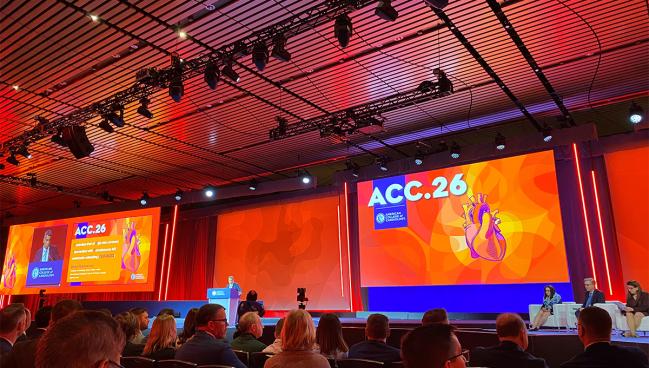
NEW ORLEANS, LA—The Impella CP percutaneous left ventricular assist device (pLVAD) does not reduce major adverse events when used in the setting of high-risk PCI, according to the CHIP-BCIS3 trial.
Among 300 patients with severe left ventricular dysfunction and extensive coronary artery disease randomized to undergo PCI with or without elective unloading with Impella CP (Abiomed), standard care came out ahead with regard to the primary composite endpoint of all-cause death, disabling stroke, spontaneous MI, hospitalization for cardiovascular causes, or periprocedural myocardial injury during follow-up.
Moreover, the risk of cardiovascular death was significantly higher in the Impella group.
“There’s been a huge growth in what’s been termed ‘protected PCI,’ and although we have very good data in cardiogenic shock, probably more than 75% of all implants have been in the high-risk PCI setting rather than in shock [when] looking at registry data,” Divaka Perera, MD (St. Thomas’ Hospital, London, England), who presented the CHIP-BCIS3 results today at the American College of Cardiology (ACC) 2026 Scientific Sessions, told TCTMD. “These results will give pause for thought in that we need to reconsider routine use of it.”
Roxana Mehran, MD (Icahn School of Medicine at Mount Sinai, New York, NY), the discussant for the study, called it “an important and long-awaited randomized clinical trial that addresses a question that many of us face daily in the cath lab.” Though the “intuitive” idea that LV unloading “should improve hemodynamic stability, allow for more complete revascularization, and ultimately improve outcomes” has pervaded interventional practice, said Mehran, “until now, we have lacked definitive randomized evidence against true contemporary standard.”
CHIP-BCIS3 “tells us that there is no benefit and possibly some harm,” she continued. As such, “routine use of this strategy cannot be recommended.”
This trial of mostly stabilized patients, many with ACS, stands in contrast to DanGer Shock, where Impella CP support did show a survival benefit in STEMI patients with cardiogenic shock. “What this is telling us is that unloading can help us perform the procedure, but in stabilized patients that may not be enough to improve outcomes,” Mehran added.
This is the second trial emerging from the 2026 ACC meeting to show no benefit to using Impella in patients undergoing PCI. In the STEMI Door-to-Unload study, investigators hoped that LV unloading would reduce infarct size in patients undergoing PCI for anterior MI. The therapy was ineffective, however, and was associated with a significantly higher risk of bleeding and vascular complications.
CHIP-BCIS3 Findings
For CHIP-BCIS3, which was simultaneously published in the New England Journal of Medicine, Perera and colleagues enrolled 300 patients (mean age 73 years; 82.7% male; 62.7% ACS) who were scheduled to undergo complex PCI and had LVEF ≤ 35% (or ≤ 45% in the presence of severe mitral regurgitation) plus extensive CAD. Patients were treated at one of 21 hospitals throughout the United Kingdom between 2021 and 2024. The baseline median LVEF was 27%.
Almost all patients (97.3%) assigned to Impella CP support had the device placed successfully, with obstructive peripheral vascular disease preventing its use in two individuals. A total of nine patients (6.0%) received bailout mechanical circulatory support (MCS), including an intra-aortic balloon pump in eight and a microaxial flow pump in one. More patients in the pLVAD arm received complete revascularization during the index PCI compared with in the standard-care arm (60% vs 50%), but this evened out after the final procedure (67% vs 67%).
Over a median follow-up period of 22 months, a pairwise analysis of more than 22,000 comparisons favored standard care more often than LV unloading for the primary endpoint (43.0% vs 36.6%; win ratio 0.85; 95% CI 0.63 to 1.15; P = 0.30).
In sensitivity analyses looking at the time until first event, the risk of the primary endpoint trended higher in those receiving Impella compared with standard care (79.3% vs 73.6%; HR 1.24; 95% CI 0.94-1.62), and this was maintained when periprocedural myocardial injury was excluded (45.3% vs 45.4%; HR 1.06; 95% CI 0.75-1.49).
Lastly, the risk of cardiovascular death was almost doubled in the pLVAD group compared with those who received standard care (26.7% vs 14.5%; HR 1.91; 95% CI 1.11-3.30). There was no significant difference in major bleeding before discharge (8% vs 7.3%; RR 1.48; 95% CI 0.71-3.09).
Rethinking Protection
In an accompanying editorial, Brahmajee K. Nallamothu, MD, MPH, and Brett L. Wanamaker, MD (both University of Michigan, Ann Arbor), write that the “tangible consequences” of expanding mechanical circulatory support in high-risk PCI, including “large-bore access-site injuries, bleeding, limb ischemia, hemolysis, and acute kidney injury in patients already near the limits of physiological reserve” have been tolerated by operators thinking they were getting a benefit from the device.
“The CHIP-BCIS3 investigators provide sufficient data to encourage a more selective approach to the use of mechanical circulatory support in high-risk PCI, particularly in the absence of clear hemodynamic instability,” they write.
The ongoing PROTECT IV trial, which will enroll more than 1,200 patients, should provide clearer answers in this space. But until then, “this trial reminds us that the price of protection is not borne by those who prescribe it but by the patients who receive it,” Nallamothu and Wanamaker argue. “Whether the protection being offered is theirs, or ours, remains the central question yet to be answered.”
Commenting during a media briefing, Ajay J. Kirtane, MD (NewYork-Presbyterian/Columbia University Irving Medical Center, New York, NY) said nomenclature is important here as the term “protected PCI” might be doing a disservice and “PCI with hemodynamic support” might be better.
“Everything we do has a risk and a benefit,” he said. “By saying it’s protected, that’s an implication that everything you’re doing is protective. And there are cases where you simply could not do the case without a hemodynamic support device, but the decision to put that device in is a careful consideration of risks, as you’ve shown, and potential benefits, which at present remains somewhat unproven.”
Mehran agreed. Also, she added, it’s hard to interpret why there was no benefit despite the fact that more patients in the pLVAD arm received more extensive and complete revascularization in the index procedure than those randomized to standard care. “That’s supposed to help the patients and instead it didn’t,” she said. “Does that mean that they went way too far? That there were other things that happened when you feel like you’re protected, so you do more?”
“Whether that’s a mindset and a paradigm that we need to change, which may or may not be related to MCS use, might be something that we need to think about for PCI in general,” Perera replied.
Kirtane said this needs to be addressed going forward. “Judicious interventionalists know that stopping doing what you’re doing after the index procedure and staging the rest is often not only a time effective way of doing things, it’s often better for the patient,” he said. “What is potentially attributed to the device in this study might not necessarily be the device per se, it’s the way people acted when they had the device in place.”

Yael L. Maxwell is Senior Medical Journalist for TCTMD and Section Editor of TCTMD's Fellows Forum. She served as the inaugural…
Read Full BioSources
Perera D, Ryan M, Ezad SM, et al. Left ventricular unloading in high-risk percutaneous Coronary Intervention. N Engl J Med. 2026;Epub ahead of print.
Nallamothu BK, Wanamaker BL. Price of protection — microaxial flow pump in high-risk PCI. N Engl J Med. 2026;Epub ahead of print.
Disclosures
- Perera reports no relevant conflicts of interest.
- Nallamothu reports serving as a consultant to and holding stock in Angioinsight.
- Wanamaker reports serving as a consultant to Shockwave Medical, Boston Scientific, and Asahi Intec; receiving honoraria from Boston Scientific and Shockwave Medical; and receiving meals from Abiomed.
- Mehran reports receiving consultant fees/honoraria from Novartis and NovoNordisk and research grants from Abbott Laboratories, Alleviant Medical, Amgen, CERC, Chiesi, Concept Medical, Cordis, CPC Clinical Research, Daiichi Sankyo, Duke University, Faraday Pharmaceuticals, Idorsia, Janssen, MedAlliance, Medscape, Medtronic, Novartis, Population Health Research Institute, Protembis, RM Global, and Sanofi.
- Kirtane reports receiving consulting fees/honoraria from Neurotronic, SoniVie, Airiver, and Bolt Medical and research grants from Abbott Vascular, Amgen, Boston Scientific, CathWorks, Concept Medical, Cordis, Magenta Medical, Medtronic, Philips, ReCor, SoniVie, and Supira.
Related News



Comments