Most Patients Struggle With Monitoring BP on Their Own
Despite receiving devices, education, and support, only one-third regularly took morning and night BP measurements as required.

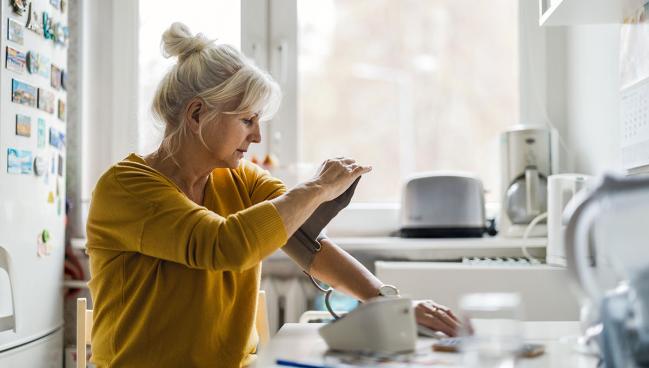
Patients grapple with accurately measuring their blood pressure at home even when cost, education, and accessibility barriers are removed, according to data from a program conducted at Mass General Brigham.
The findings, researchers say, underscore the need for new solutions in blood-pressure monitoring as accurate measurements are the cornerstone to ensuring quality care and treatment. Among patients enrolled in a remote hypertension program that provided free automated blood pressure cuffs and ongoing support and education, only about one-third consistently took measurements while another third never used the device at all.
Ozan Unlu, MD (Brigham and Women’s Hospital, Boston, MA), and colleagues shared their data in a brief report published online last week in JAMA Cardiology.
“Without home monitoring, doctors must rely completely on office measurements, which are often not accurate reflections of true BP status,” senior author Naomi Fisher, MD (Brigham and Women’s Hospital), told TCTMD in an email. “Patients who are unable to monitor their BP at home face an increased risk of misdiagnosis, which could lead to inappropriate treatment decisions, worse BP control, and increased cardiovascular risk.”
Additionally, she continued, “home BP monitoring engages patients in their own management. Patients who do not measure their BP at home may be less empowered in their medical care.”
Limited Interaction
The analysis included 3,390 patients with uncontrolled hypertension (median age 61 years; 57.8% female) who had a mean baseline systolic BP of 143 mm Hg. Most had comorbidities, including atherosclerotic cardiovascular disease in 40.4% and diabetes in 29.4%.
All patients were treated at Mass General Brigham between 2018 and 2022 and enrolled in the remote hypertension monitoring program, which provided access to BP monitoring devices, instructions and education for how to measure their BP at home, and messaging and telephone assistance with healthcare navigators. Medications were also titrated via electronically transmitted BP readings by pharmacists.
During the 7-day baseline period of the program, patients were instructed to take BP measurements at home twice each morning and evening before taking medications, aiming for at least 24 to 28 weekly readings, which was defined as high engagement.
Despite the resources available to patients in the program, only 34.8% had high engagement at baseline. Another 18.2% and 14.3% had intermediate and low engagement, respectively, which was defined as 12-23 and 1-11 measurements taken over the week. Nearly one-third—32.7%—had no measurements. This resulted in 47% of patients in the program not having sufficient measurements (< 12/week) to guide medication titration.
For those who did have high engagement at baseline, researchers reported that they continued to engage with the program and had success with medication titration in the weeks that followed. “These patients had the cards stacked in their favor,” Fisher said. Even so, “it became clear that many patients were unable to do what we asked when it came to measuring BP.”
Many people don’t fully understand the importance of measuring their BP at home—hypertension rarely causes symptoms, and it often gets less attention than needed. Naomi Fisher
While she wasn’t surprised by the results, they were “more dramatic” than she expected given the support provided. “I’ve worked with patients in a dedicated hypertension clinic for many years, and I ask all of them to use a validated home BP device to measure pressures at home just as the guidelines advise,” Fisher said. “Each patient receives a chart to fill out with detailed instructions we review together. I’ve seen firsthand that while some people can accomplish home BP monitoring as recommended, many cannot.”
The reasons for this are likely multifactorial and include some cost issues, though this barrier was removed in the study. “For many people, the process of sitting down twice a day for a week, fitting a cuff over their arm, and staying still for several minutes proves too much of a hassle,” Fisher said. “Some people hate the clutter of a bulky electronic apparatus on their desk. Parents may not have even a few minutes to spare in the morning.”
Also, some patients are alarmed by measuring their BP regardless of location. “For them, even the sight of a BP cuff or the sound of one inflating is enough to trigger a stressful internal response that raises their BP,” Fisher explained. “Sometimes there is anxiety related to the desire to do well and get a great ‘score,’ because it can feel like measuring BP is like taking a test. And perhaps most important, many people don’t fully understand the importance of measuring their BP at home—hypertension rarely causes symptoms, and it often gets less attention than needed.”
She’d like to see more work done on finding ways to measure BP that are not only more convenient for patients but also more reliable. “Inflating a cuff placed around the upper arm has been the clinical standard for measuring BP for well over a century,” Fisher said. “It is clearly time for innovative technologies that can capture BP measurements accurately and easily, without requiring placement of an inflatable arm cuff, and without annoying and potentially alarming people.”
Work on new wearable technology has shown to be able to collect BP data continuously without the wearer even realizing it, she noted. “Once validated, these cuffless devices hold the promise of providing extremely valuable data which can help lower pressure for millions of people with hypertension,” Fisher said.

Yael L. Maxwell is Senior Medical Journalist for TCTMD and Section Editor of TCTMD's Fellows Forum. She served as the inaugural…
Read Full BioSources
Unlu O, Zelle D, Cannon CP, et al. Patient engagement with home blood pressure monitoring. JAMA Cardiol. 2026;Epub ahead of print.
Disclosures
- Unlu reports no relevant conflicts of interest.
- Fisher reports receiving grants from Aktiia Healthcare and Recor Medical and personal fees from Aktiia Healthcare, Alnylam, AstraZeneca, Boston Scientific, and Recor Medical.
Related News


Comments