Recreational Adderall Causes Worrisome Spikes in BP, Heart Rate
The study should be the first of many helping to understand the negative CV effects of the drug in an illicit setting, say authors.

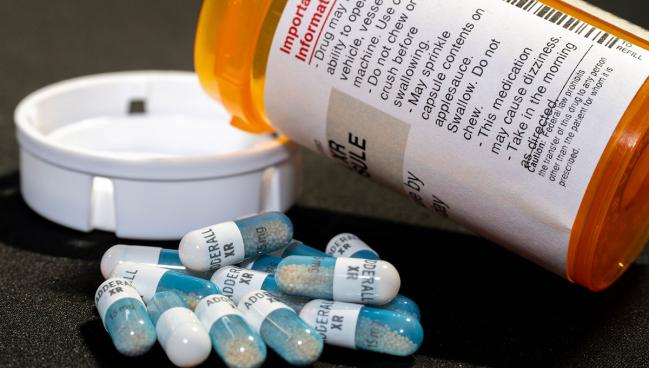
Unprescribed use of amphetamine-dextroamphetamine salts (Adderall) can cause sizeable increases in blood pressure, heart rate, and sympathetic activation after only a single pill, according to new data.
Among more than two dozen healthy individuals who were Adderall-naïve, a 25-mg dose of the drug was associated with a mean 10-mm Hg increase in systolic BP, a heart rate jump of 10 beats per minute, and an 86-pg/mL increase in plasma norepinephrine levels compared with placebo.
The findings have implications for understanding the mechanisms behind the harm caused by recreational use of the medication, say researchers.
“This study underscores the need for increased awareness among both providers and [the] public regarding the unrecognized hazards with recreational use of Adderall, as its illicit use can lead to severe cardiac complications,” senior author Anna Svatikova, MD, PhD (Mayo Clinic, Rochester, MN), told TCTMD via email. “As physicians, when we evaluate patients without traditional cardiovascular risk factors who present with episodic chest pain or arrhythmias, it is important that we ask them about possible use of stimulants like Adderall.”
Published online last week in Mayo Clinic Proceedings with first author Kiran R. Somers, DO (Mayo Clinic), the double-blind crossover analysis included 29 participants (mean age 27 years; 55.2% female) at rest who did not have attention-deficit/hyperactivity disorder (ADHD) and had abstained from caffeine and alcohol for at least 24 hours prior. They were monitored after consuming amphetamine-dextroamphetamine salts and placebo on separate occasions, with researchers measuring resting BP, heart rate, and plasma catecholamine levels at baseline and after 3 hours.
Compared with baseline, the drug increased systolic BP from 116 to 126 mm Hg on average, with no change observed following consumption of placebo (P for interaction < 0.001). Also, 6- and 7-mm Hg increases in diastolic and mean BP were noted, as was a mean jump in heart rate of 10 bpm with Adderall (all P < 0.01), with no similar changes with placebo.
On average, plasma norepinephrine levels increased from 215 to 301 pg/mL with the active medication, but this was not affected by placebo (P for interaction = 0.027).
Amphetamine-dextroamphetamine salts also had a significant effect on orthostatic measures. Before taking the drug, orthostatic BP increased by 5 mm Hg and heart rate went up by 19 bpm after standing. However, after taking the medication, orthostatic BP fell by 7 mm Hg and heart rate increased by 38 bpm (both P < 0.01). This was not seen after placebo (P for interaction < 0.01 for both).
Many Remaining Questions
Svatikova emphasized the growing use of recreational amphetamine-dextroamphetamine salts and the importance of understanding the effects.
“The prevalence of illicit Adderall use in Adderall-naïve individuals is high and rising,” she said. “This trend is driven largely by students and young professionals utilizing Adderall as a performance-enhancing agent. However, an increasing incidence of emergency room visits for cardiovascular events such as arrhythmias, heart attacks, and even sudden death has been linked to recreational Adderall use.”
While surprised by the “robust physiological response” triggered by the drug overall, she said the most unexpected finding involved the “dramatic” orthostatic changes. “These data demonstrate that the drug’s impact is far more potent than many recreational users might realize.”
The results cannot be extrapolated to the use of amphetamine-dextroamphetamine salts in people with ADHD or those who take the drug steadily, Svatikova stressed. “With long-term or regular use of Adderall, the body likely recruits cardiovascular responses that mitigate the acute effects seen after a single dose in a naïve individual,” she said. “While a first-time user may experience a ‘striking’ surge in blood pressure and heart rate, a regular user’s cardiovascular system may respond differently [or] likely adapt to the medication over time.”
Going forward, it will be important to look at the effects of amphetamine-dextroamphetamine salts when taking with “other stimulants such as energy drinks, nicotine, or alcohol, [given that] the combined cardiovascular sequelae . . . remain poorly characterized,” Svatikova said. “These combinations may lead to additive or intensified pressor and tachycardic responses, potentially increasing the risk of life-threatening arrhythmias or myocardial ischemia.”
She would also like to see more research looking at the effects of using amphetamine-dextroamphetamine salts in those with underlying cardiovascular disease, as “the cardiac risk of non-prescription Adderall is likely even more pronounced in these high-risk individuals.”

Yael L. Maxwell is Senior Medical Journalist for TCTMD and Section Editor of TCTMD's Fellows Forum. She served as the inaugural…
Read Full BioSources
Somers KR, Bock JM, Covassin N, et al. Acute cardiovascular responses to amphetamine/dextroamphetamine salts (Adderall) in Adderall-naïve young adults: a randomized clinical trial. Mayo Clin Proc. 2026;10:375-381.
Disclosures
- Somers and Svatikova report no relevant conflicts of interest.
Related News



Comments