SURPASS-CVOT Published: Large Trial Confirms CVD Efficacy of Tirzepatide
The drug was as good as a proven GLP-1, giving doctors another potent option for patients with type 2 diabetes and atherosclerotic cardiovascular disease.

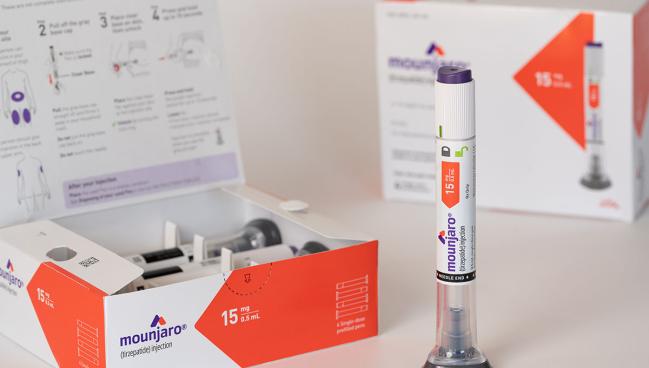
The SURPASS-CVOT trial—the large cardiovascular outcomes study that showed tirzepatide (Mounjaro) compared favorably with dulaglutide (Trulicity; both Eli Lilly) in patients with type 2 diabetes and atherosclerotic cardiovascular disease (ASCVD)—is now published in the New England Journal of Medicine.
Over a median follow-up of 4 years, the primary endpoint of death from cardiovascular causes, MI, or stroke occurred in 12.2% of patients treated with tirzepatide and 13.1% of patients treated with dulaglutide, a difference that met statistical criteria for noninferiority (P = 0.003) but not superiority (P = 0.09).
“The take-home message is that this validates the cardiovascular benefit of tirzepatide,” lead investigator Stephen Nicholls, MBBS, PhD (Victorian Heart Institute/Monash University, Australia), told TCTMD. “We now have more evidence to use this agent in a range of clinical settings and, importantly, our patients have greater choice. What we now need to do is translate these benefits into better access: we have the tools to help our patients [so] we just need to make sure they have access to use them.”
The top-line results were announced this past summer, and the trial was presented previously at the annual meeting of the European Association for the Study of Diabetes. Tirzepatide is a dual agonist of the glucagon-like peptide-1 (GLP-1) and glucose-dependent insulinotropic polypeptide (GIP) receptors. With its dual blockade, it is a potent weight-loss therapy, with the drug outperforming GLP-1 receptor agonists in several trials, including semaglutide (Wegovy; Novo Nordisk) in SURMOUNT-5.
Dulaglutide was selected as the active comparator in SURPASS-CVOT because of increasing evidence showing the benefits of GLP-1 receptor agonists in this patient population, said Nicholls. The REWIND trial, published in 2019, showed that dulaglutide was better than placebo for reducing CVD outcomes in high-risk patients with type 2 diabetes.
“We felt that given this would be a long trial, there would be increasing use of GLP-1 receptor agonists, and it was the right thing to do: an active comparator study,” said Nicholls. “Every patient gets an active drug, which we thought was good for patients and good for adherence.”
Jaime Almandoz, MD (UT Southwestern Medical Center, Dallas, TX), who wasn’t involved in the study, said that one of the challenges of interpreting SURPASS-CVOT is the use of dulaglutide as the comparator. However, he also believes the active-comparator design is appropriate and was a necessary choice “given the strong evidence that GLP-1–based therapies reduce cardiovascular events, making a placebo-controlled trial inconsistent with current standards of care and ethical clinical practice.”
From a clinical perspective, the results reinforce the concept that incretin-based therapies, such as GLP-1 receptor agonists, are cardioprotective, said Almandoz.
“As a result, treatment decisions are likely to be guided less by expectations of large differences in cardiovascular outcomes and more by other factors, including weight loss, glycemic control, tolerability, and patient preference,” he said. Treatment choices may also be influenced by other benefits beyond cardioprotection, such as the effects on metabolic dysfunction–associated steatohepatitis, obstructive sleep apnea, chronic kidney disease, and heart failure, “where certain therapies may offer added value for individual patients.”
More Weight Loss, Similar Outcomes
The trial included 13,299 patients (mean age 64 years; 29% female) with type 2 diabetes, a body mass index of at least 25 kg/m2, and ASCVD. At baseline, the mean glycated hemoglobin level was 8.4% and LDL cholesterol was 80 mg/dL. At enrollment, nearly all patients were treated with glucose-lowering medications, with 81.4% treated with metformin, 48.8% receiving insulin, 30.2% on a sodium-glucose cotransporter 2 (SGLT2) inhibitor, and 21.6% receiving a sulfonylurea.
In line with prior studies, the tirzepatide-treated patients had a larger reduction in body weight from baseline than did those treated with dulaglutide (-11.6% vs -4.5%). They also experienced larger reductions in glycated hemoglobin (-1.66% vs -0.88%) and greater declines in triglyceride levels.
We now have more evidence to use this agent in a range of clinical settings and, importantly, our patients have greater choice. Stephen Nicholls
The secondary endpoints aligned with the primary endpoint and confirmed that tirzepatide was noninferior to dulaglutide. Individual rates of cardiovascular death, MI, and stroke numerically favored tirzepatide, while an expanded MACE endpoint that included death from cardiovascular causes, MI, stroke, or coronary revascularization was significantly reduced with the newer medication (HR 0.88; 95% CI 0.88-0.96).
“All-cause mortality was also less likely to occur with tirzepatide, which seemed to be driven by a reduction in noncardiovascular death,” said Nicholls. “This highlights the fact that ASCVD patients with diabetes are at a risk of a whole host of adverse clinical complications and we are seeing benefits of tirzepatide in this group. When you combine these findings with the metabolic benefits—better weight reduction, glycemic control, and effects on blood pressure and lipids—it adds up to a favorable outcome for patients.”
Adverse events leading to drug stoppage were higher with tirzepatide (13.2% vs 10.1%), a difference that was largely driven by gastrointestinal side effects.
Personalized Care
With the better metabolic outcomes with tirzepatide, Nicholls said these data can help physicians make more personalized decisions when caring for patients with type 2 diabetes and obesity.
“Where I’m aiming for more weight loss or better glycemic control, on top of good cardiovascular effects,” he said, “I’m going to talk to my patients about [tirzepatide] being a better option for them.”
As to why the larger weight loss didn’t translate into better clinical outcomes, that’s a more complicated question, said Nicholls.
“If you look at the GLP-1 receptor agonist trials, whether they were in diabetes or overweight/obesity, the mediation analyses suggest the benefits are likely to due to a complex interaction of multiple benefits as opposed to simply more weight loss,” he said. “That being said, more weight loss is likely to translate to specific clinical benefits: better control of sleep apnea, less need for joint replacements, and so on. Again, it [speaks] to the ability for us to talk with our patients, so that a tailored approach will assist in shared decision-making.”

Michael O’Riordan is the Managing Editor for TCTMD. He completed his undergraduate degrees at Queen’s University in Kingston, ON, and…
Read Full BioSources
Nicholls SJ, Pavo I, Bhatt DL, et al. Cardiovascular outcomes with tirzepatide versus dulaglutide in type 2 diabetes. N Engl J Med. 2025;393:2409-2420.
Disclosures
- Nicholls reports consulting for Amarin, Arrowhead Pharmaceuticals, CSL Sequiris, Daiichi-Sankyo, Kinkisa Pharmaceuticals, Novo Nordisk, and Scribe Therapeutics and receiving grant/research support from Amgen, AstraZeneca, Cerenis, Cyclarity, Eli Lilly, Esperion, F. Hoffmann-La Roche, InfraReDx, LipoScience, NewAmsterdam Pharma, Novartis, Resverlogix, Sanofi-Regeneron, The Medicines Company, and Vaxxinity.
- Almandoz reports consulting for AbbVie, Amgen, Boehringer Ingelheim, Eli Lilly, Haleon, Kailera, Metsera/Pfizer, Novo Nordisk, Rivus, and Rhythm.
Related News


Comments