COVID-19: TCTMD’s Daily Dispatch for July Week 1
We’re curating a list of COVID-19 research and other useful content, and updating it regularly.


Since March 2020, TCTMD reporter Todd Neale has been writing up breaking news and peer-reviewed research related to COVID-19 every weekday. In July 2021, we transitioned to Mondays, Wednesdays, and Fridays. If you have something to share, tell us. All of our COVID-19 coverage can be found on our COVID-19 Hub.
July 9, 2021
Growing numbers of COVID-19 cases—driven by the spread of the Delta variant—continue to raise concerns around the world, according to several stories by Reuters. In England, COVID-19 prevalence rose to one in every 160 people in the week ending July 3 (up from one in every 260), a situation that may be exacerbated when crowds gather to watch their home squad face Italy in the Euro 2020 soccer finals on Sunday. South Korea has tightened restrictions in Seoul as cases reach new highs, and Australian officials are warning that a 3-week lockdown in Sydney may have to be extended as the city faces the biggest rise in cases of the year. Spanish tourist areas are asking the government to reinstitute curfews in response to rising cases in unvaccinated young travelers. And in the United States, case numbers are increasing, mostly among those who are unvaccinated.
 An Associated Press story details the situation in Asia, where several countries initially fared okay during the pandemic but are now going through their first major surges in cases. “Though overall numbers are nowhere yet near those seen during outbreaks in hot spots in Europe and the United States, the rapid rise set off alarm bells just as many Western countries with high vaccine rates began to breathe a sigh of relief.”
The safety committee of the European Medicines Agency (EMA) made several decisions regarding COVID-19 vaccine side effects. It concluded that “myocarditis and pericarditis can occur in very rare cases” after receipt of one of the mRNA vaccines from Pfizer/BioNTech or Moderna, recommending that the conditions be listed as new side effects in product information. The committee recommended that people who have had capillary leak syndrome should not receive the Janssen vaccine from Johnson & Johnson, following similar guidance regarding use of the Oxford/AstraZeneca vaccine. And although a definitive link has not been established, the committee recommended adding a warning to the product information for the Oxford/AstraZeneca vaccine detailing reports of Guillain-Barré syndrome in people who have received the shot.
Pfizer is preparing to ask the US Food and Drug Administration (FDA) to authorize a third, booster dose of its COVID-19 vaccine made with BioNTech, the Associated Press reports. A Pfizer doctor told the AP that early data from a booster study suggest that antibody levels increase five- to tenfold after a third dose. In a joint statement issued Thursday, however, the FDA and the US Centers for Disease Control and Prevention (CDC) said “Americans who have been fully vaccinated do not need a booster shot at this time,” adding that they are continuing to study the issue.
The US vaccination program has had a big impact, according to estimates from the Commonwealth Fund. The group projects that without vaccinations, there would have been about 279,000 additional deaths and up to 1.25 million additional hospitalizations by the end of June. “Additional new variants such as Delta will pose a special threat to unvaccinated populations in coming months,” it cautioned. “A renewed commitment to expanding vaccine access will be crucial to achieving higher levels of vaccination necessary to [get] control of the pandemic and prevent avoidable suffering, particularly for those in historically underserved groups and areas of the US with low vaccination rates.”
The effectiveness of the CoronaVac vaccine, made by the Chinese company Sinovac, has been called into question, but results of a phase III study conducted in Turkey indicate that it was 83.5% effective at preventing PCR-confirmed, symptomatic COVID-19. Adverse events were more frequent in the vaccine versus placebo group (18.9% vs 16.9%), but there were no fatalities or grade 4 (potentially life-threatening) events, researchers report in the Lancet. “The results of this interim analysis have shown that CoronaVac fulfills the critical or minimal requirement of vaccines for the indication of pandemic use, hitting above the minimum efficacy of 50% as specified by the WHO target product profile as an option for mass vaccination,” they say.
Cuba says its two-shot Soberana 2 COVID-19 vaccine, made by a government-run biopharmaceutical company, was 91.2% effective in late-stage trials when delivered with a booster called Soberana Plus, Reuters reports. Last month, the country reported that its three-shot Abdala vaccine was shown to be 92.3% effective. “While the Cuban efficacy claims have not been peer-reviewed, the results, if accurate, would catapult the US-boycotted Caribbean island nation into the select group of the United States, Germany, and Russia that produce vaccines with efficacy of more than 90%—Novavax, Pfizer/BioNTech, Moderna, and Sputnik V.”
 The CDC issued new school guidance on Friday underscoring the importance of returning children to in-person learning in the fall. The agency recommends masks for all students and adults ages 2 and older who are not fully vaccinated, as well as maintenance of at least 3 feet of space between students in classrooms. As noted by the New York Times, the CDC “also called on school districts to use local health data to guide decisions about when to tighten or relax prevention measures like mask wearing and physical distancing. Officials said they were confident this is the correct approach, even with the spread of the highly contagious Delta variant, and the fact that children under 12 are not yet eligible for vaccination.”
A study in the Annals of Internal Medicine concludes that “despite improvements in COVID-19 survival between March and August 2020, surges in hospital COVID-19 caseload remained detrimental to survival and potentially eroded benefits gained from emerging treatments.” Of the roughly 25,000 deaths included in the study, about one-quarter were possibly related to hospitals being strained by surging cases. “Bolstering preventive measures and supporting surging hospitals will save many lives,” the authors say.
 The international COVID-19 Host Genetics Initiative, launched just days after the World Health Organization declared the outbreak a global pandemic, “has revealed that an individual’s genetic inheritance can indeed influence their risk of infection and the severity of disease,” STAT reports, pointing to findings published Thursday in Nature. The research “reveals 13 loci . . . that are strongly associated with infection or severe COVID-19,” according to a press release. “The researchers also identified causal factors such as smoking and high body mass index.”
Men with low testosterone may have a heightened risk of becoming seriously ill or dying from COVID-19, suggests research presented at the European Association of Urology meeting this week. “We never expected to see such a high proportion of COVID patients with these extremely low levels of testosterone, in comparison to a similar group of healthy men,” a researcher said. “The relationship is very clear: the lower the testosterone, the higher the severity of the condition and likelihood of death. I've never seen anything like it in my 25 years in the field.”
July 8, 2021
The global COVID-19 death toll has topped 4 million as, the Associated Press notes, “the crisis increasingly becomes a race between the vaccine and the highly contagious Delta variant.” The story puts the number, believed to be an underestimate, into perspective: “The toll is three times the number of people killed in traffic accidents around the globe every year. It is about equal to the population of Los Angeles or the nation of Georgia. It is equivalent to more than half of Hong Kong or close to 50% of New York City.”
 In remarks given Wednesday, World Health Organization (WHO) Director-General Tedros Adhanom Ghebreyesus, PhD, noted the grim milestone and decried the problem of “inequitable vaccine production and distribution.” He said, “Vaccine nationalism, where a handful of nations have taken the lion’s share, is morally indefensible and an ineffective public health strategy against a respiratory virus that is mutating quickly and becoming increasingly effective at moving from human to human.”
Japanese Prime Minister Yoshihide Suga today declared a state of emergency in Tokyo and implemented restrictions aimed at stemming SARS-CoV-2 spread that will remain in place until August 22, Reuters reports. In response, organizers of the Summer Olympics, scheduled to take place there between July 23 and August 8, said no spectators will be allowed at events held in the city. “Venues outside the greater Tokyo metropolitan area would allow small numbers of spectators, and the policy for the Paralympics will be decided next month, the government said.”
A study conducted in Chile assessed the real-world effectiveness of the CoronaVac vaccine, made by the Chinese company Sinovac, finding an overall effectiveness of 66% for preventing COVID-19, much lower than the 93% effectiveness seen with the Pfizer/BioNTech shot. Effectiveness of CoronaVac was higher for the prevention of hospitalization (88%), ICU admission (90%), and COVID-19-related death (86%). The findings were reported in the New England Journal of Medicine. Questions have been raised about the efficacy of CoronaVac, with Singapore recently excluding those who received the shot from tallies of vaccinated residents.
Writing in a letter to NEJM, researchers describe the results of three cases of vaccine-induced immune thrombotic thrombocytopenia (VITT) after receipt of the Oxford/AstraZeneca vaccine that did not respond to initial treatment with anticoagulation and IV immune globulin (IVIG). Patients recovered after therapeutic plasma exchange was initiated, along with other therapies that included additional IVIG, glucocorticoids, and rituximab. “Up-front treatment remains anticoagulation and IVIG,” the authors say. “Although further validation is required, we suggest that therapeutic plasma exchange may be effective for the treatment of refractory VITT.”
 The more-infectious Delta variant first identified in India appears to be more resistant to neutralization by monoclonal antibody therapies, including bamlanivimab, and to antibodies present in the serum of people who have been vaccinated against or recovered from COVID-19, according to a study published in Nature. Of note, antibodies from recipients of just one dose of the Pfizer/BioNTech or Oxford-AstraZeneca vaccines “barely inhibited” the variant. Two doses appeared to provide a better response, albeit “with titers three- to fivefold lower against Delta than Alpha.”
Similarly, a NEJM letter indicates that the Delta (B.1.617.2) and Kappa (B.1.617.1) variants are less susceptible to antibodies found in serum samples from people who received one of the mRNA vaccines, although “all serum samples from vaccinated persons still had detectable neutralizing activity above the threshold of detection against both variants through 3 months after infection or after the second dose of vaccine,” researchers report. “Thus, protective immunity conferred by the mRNA vaccines is most likely retained against the B.1.617.1 and B.1.617.2 variants.”
Among patients with symptoms of an acute respiratory illness, those who tested positive for COVID-19 took longer to return to their normal resting heart rate and sleep and activity patterns measured by wearable devices than did those who tested negative, researchers report in JAMA Network Open. The difference was greatest for resting heart rate (average 79 days), followed by step count (32 days) and sleep quantity (24 days). “We found a prolonged physiological impact of COVID-19 infection, lasting approximately 2 to 3 months, on average, but with substantial intraindividual variability, which may reflect various levels of autonomic nervous system dysfunction or potentially ongoing inflammation,” the authors say. The New York Times has more on the study.
A systematic review in the International Journal of Clinical Practice compiles data on 42 COVID-19 patients with myocarditis from 41 studies. The median age of the patients was 43.4, and most (71.4%) were men. Hypertension was the most common comorbidity present, and the vast majority of patients had elevations of troponin (90%) and brain natriuretic peptide (87%). The authors say “a knowledge of this cardiac complication of COVID-19 disease is crucial for healthcare professionals.”
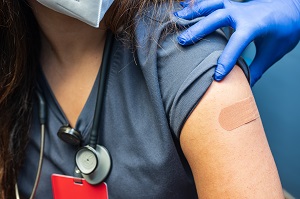 Becker’s Hospital Review is maintaining a list of hospitals and health systems that have mandated COVID-19 vaccines for their workers. As of Thursday afternoon, there were 26 entries, with the most-recent additions being University Hospital in Newark, NJ, Mercy in St. Louis, MO, and Trinity Health in Livonia, MI.
July 7, 2021
 COVID-19 outbreaks continue in various parts of the world, Reuters reports. Vietnam will implement tight restrictions—including a stay-at-home order, a ban on gatherings of more than two people, and a shutdown of public transportation—in Ho Chi Minh city starting at the end of the week to address a spike in cases. A surge in infections is straining healthcare workers and hospitals in Indonesia. In Germany, case numbers have risen again after 2 months of declines. And in France, a government spokesperson warned that the Delta variant could spoil summer plans if it sparks another wave of infections.
As expected, the Delta variant has become the dominant SARS-CoV-2 variant in the United States, NPR reports, citing new US Centers for Disease Control and Prevention (CDC) estimates indicating that it now accounts for 51% of infections. In some states, including Iowa, Kansas, and Missouri, the variant has caused more than 80% of new cases.
In tallying the number of people who have been vaccinated against COVID-19 in Singapore, government officials have excluded those who received shots made by the Chinese company Sinovac Biotech, citing uncertainty about their efficacy, Reuters reports. “We don't really have a medical or scientific basis or have the data now to establish how effective Sinovac is in terms of infection and severe illnesses on Delta,” the country’s health minister said Wednesday. Only people who received a vaccine from Moderna or Pfizer/BioNTech are included in the vaccinated list.
On Tuesday, the World Health Organization (WHO) issued a strong recommendation to use two interleukin-6 receptor blockers—tocilizumab (Actemra; Roche) and sarilumab (Kevzara; Sanofi)—to treat patients with severe or critical COVID-19. That came on the same day a meta-analysis came out in JAMA showing that use of these agents was associated with a lower risk of 28-day mortality compared with usual care or placebo. In response, Doctors Without Borders/Médecins Sans Frontières (MSF) urged tocilizumab’s maker Roche to lower the price of the medication and share proprietary information necessary for others to make, allowing for broader access, STAT reports.
 Cardiac rehabilitation incorporating exercise is associated with less mortality and fewer rehospitalizations at 4 months in patients with CVD and COVID-19 compared with no referral to rehab, according to a study in the European Journal of Preventive Cardiology. There were, however, no differences between groups in acute MI, stroke, or heart failure. “The provision of exercise rehabilitation for cardiovascular patients following a COVID-19 diagnosis is therefore a promising entity and warrants further investigation,” the authors say.
Although there was a decline in diabetes-related outpatient visits and testing in the United States during the pandemic, it did not appear to have a detrimental impact on medication fills or glycemic control, researchers report in JAMA Internal Medicine. “One explanation for these patterns could be the small increase in medication fill rates during the pandemic that may have protected against any disruptions in diabetes self-management during the pandemic and hence staved off detrimental effects on glycemic control,” the authors speculate, pointing also to the possible benefits of increasing use of telemedicine.
A small study published in JAMA Pediatrics indicates that COVID-19 vaccine-related mRNA—from the Moderna and Pfizer/BioNTech shots—is not found in the milk of breastfeeding mothers. “These results provide important early evidence to strengthen current recommendations that vaccine-related mRNA is not transferred to the infant and that lactating individuals who receive the COVID-19 mRNA-based vaccine should not stop breastfeeding,” the authors say.
Two cases described in Gut hint at the possibility that fecal microbiota transplantation may help resolve COVID-19 symptoms. The transplants were performed to treat Clostridioides difficile infection, but the patients developed symptoms of COVID-19 shortly after the procedures. Both quickly improved. “These data let us speculate that gut microbiome manipulation may merit further exploration as an immunomodulatory strategy in COVID-19,” the researchers write, noting that they are planning a clinical trial to explore that question.
 Zoos have begun vaccinating some of their animals against COVID-19, with those in Denver and Oakland recently deciding to do so, CBS News reports. Denver Zoo’s vice president of animal health stressed that these efforts will not take any vaccines away from people, as the shots are made specifically for animals. According to the CDC, animals are not believed to play a major role in spreading the virus, but there have been reports of pet cats and dogs, as well as tigers and gorillas in zoos, getting infected.
July 6, 2021
 Canada and the United States have begun easing pandemic-related restrictions across their shared border, the Associated Press reports. “Canadian citizens and permanent residents who have had a full dose of a coronavirus vaccine approved for use in Canada can skip a 14-day quarantine that has been a requirement since March 2020. Eligible air travelers also no longer have to spend their first 3 days in the country at a government-approved hotel.” A ban on nonessential travel will remain in place until at least July 21.
The US Centers for Disease Control (CDC) has updated its guidance on clinical considerations for use of COVID-19 vaccine to provide information about what clinicians should do about a second vaccine dose when someone develops myocarditis after the first. The agency states that it’s unknown whether such individuals have an increased risk of further adverse cardiac effects from a second dose. But, the CDC advises, “Until additional safety data are available, experts recommend that people who develop myocarditis or pericarditis after a first dose of an mRNA COVID-19 vaccine defer receiving the second dose.” The guidance includes a list of circumstances in which a second dose might be considered.
The Advisory Committee on Immunization Practices (ACIP), which provides guidance to the CDC, has released a summary of its June 23 meeting on reports of myocarditis after receipt of an mRNA COVID-19 vaccine, deliberations used by the CDC to update its vaccine guidance. ACIP’s conclusion, published in Morbidity and Mortality Weekly Report, is that “continued use of mRNA COVID-19 vaccines in all recommended age groups will prevent morbidity and mortality from COVID-19 that far exceed the number of cases of myocarditis expected. Information regarding the risk for myocarditis with mRNA COVID-19 vaccines should be disseminated to providers to share with vaccine recipients.”
Israel’s health ministry said Monday that it has seen decreased effectiveness of the Pfizer/BioNTech vaccine when it comes to preventing infections and symptomatic illness (falling to 64% over the past month) but that the shot remains highly effective (93%) at preventing serious disease, Reuters reports. “The ministry in its statement did not say what the previous level was or provide any further details. However ministry officials published a report in May that two doses of Pfizer's vaccine provided more than 95% protection against infection, hospitalization and severe illness.”
 A “living systematic review and meta-analysis” in the British Journal of Clinical Pharmacology affirms that cardiovascular drugs are not associated with worse COVID-19 outcomes, consistent with prior research during the pandemic. After adjustment, use of ACE inhibitors/ARBs was not associated with confirmed infection, hospitalization, disease severity, or all-cause mortality, with similar trends seen for other types of drugs.
Coming out of the long July 4th holiday weekend, roughly half of the United States is experiencing rising COVID-19 numbers, mostly blamed on the spread of the more-infectious Delta SARS-CoV-2 variant, USA Today reports. Alaska and Arkansas had case numbers more than double last week, with increases of more than 50% in Kansas and South Carolina. Missouri, where vaccination rates are low, has been particularly hard hit, with an increase of nearly 30% in the number of hospitalized COVID-19 patients over the weekend. “The Delta variant, first identified in India, is spreading rapidly throughout the state, straining hospitals in Springfield and raising fresh fears that the situation could soon grow worse as holiday gatherings seed fresh cases. Missouri leads the nation with the most new cases per capita in the past 14 days; 39.4% of residents there are fully vaccinated.”
Acute ischemic stroke disproportionately affects younger patients in the context of COVID-19 versus the pre-pandemic period, although outcomes remain tightly associated with age, according to a study in the Journal of the American Heart Association. Treatment rates were comparable across age groups, but mortality was significantly increased and the likelihood of a good functional outcome significantly decreased among older patients.
A study in JAMA indicates that before the pandemic, baseline thrombocytopenia was uncommon and heparin-induced thrombocytopenia and the presence of platelet factor 4/heparin antibodies were rare in patients with cerebral venous sinus thrombosis (CVST). The authors say the findings may provide insights into the ongoing investigations of the possible link between the Oxford/AstraZeneca and Johnson & Johnson COVID-19 vaccines and CVST with thrombocytopenia.
 Several US states have introduced lotteries to try to woo people who are reluctant to receive a COVID-19 vaccine. Initial reports indicated that vaccine uptake increased when Ohio did it, but that occurred around the same time the US Food and Drug Administration (FDA) expanded access to the Pfizer/BioNTech vaccine to include adolescents down to age 12. After accounting for that, it does not appear that the lottery incentive boosted adult vaccination rates in Ohio, according to another study in JAMA. “Further evidence supporting the effectiveness of lotteries as strategies for increasing vaccine uptake are needed prior to widespread and potentially costly adoption,” the authors say.


Todd Neale is the Associate News Editor for TCTMD and a Senior Medical Journalist. He got his start in journalism at …
Read Full Bio
Comments