Digital Data May Sway Intensive BP Treatment in the Elderly
In hypothetical situations, physicians chose intensive treatment more often if BP and mobility metrics were available.


The availability of digital health monitoring data may help overcome some of the clinical inertia that prevents prescribing antihypertensive therapies to target in elderly patients, according to a study of Australian physicians.
The insights into how prescribers think showed that while they were influenced by age, falls, frailty, and perceived benefit, having access to wearable tracking data and home BP increased the likelihood of selecting an intensive treatment option.
Lead researcher Edel O’Hagan, PhD (University of Sydney, Westmead, Australia), said the group performed the study as a discrete choice experiment (DCE) because it provides insights that go beyond what is obtainable from RCTs or surveys.
“Whereas an RCT tells you whether an intervention works and surveys tell you what clinicians choose, a DCE reveals why they choose it,” O’Hagan said in an email. “It quantifies the trade‑offs clinicians make and the relative importance they place on different attributes influencing prescribing decisions. This helps identify concrete levers that can be targeted in future interventions.”
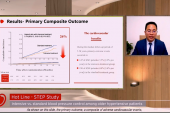
The STEP trial and a secondary analysis of the SPRINT trial have confirmed that older patients, even those with frailty issues, can see many of the same benefits from more intensive BP-lowering as younger patients, but clinical inertia has been identified as a significant barrier.
O’Hagan said while home self-monitoring has been demonstrated to improve BP control compared with usual care, the studies that support it rarely focus on older populations.
“In our hypothetical digital health intervention, we incorporated both BP and mobility metrics in older people, highlighting how integrating multiple data streams could meaningfully support clinical decision‑making and [that] older people should not be overlooked in digital health interventions as this could be a viable option for supporting their care,” she said.
Patient Characteristics, Pill Burden Affect Choices
The study, published March 4, 2026, in JACC, included 197 physicians (mean age 37 years; 60% women) who were primarily general practitioners (74%) and had been in practice for a mean of 7.6 years. Other specialties represented included nephrology, cardiology, geriatrics, and endocrinology, among others. The reported percentage of participants’ practice that included patients age 65 years or older with hypertension was 47%.
When participants were questioned about their attitude toward digital health, nearly 60% agreed or strongly agreed that wearable devices support the health of older people. Additionally, about half of participants agreed or strongly agreed that wearable devices provide accurate data for clinical decisions, 32% agreed or strongly agreed that they were confident in recommending wearable activity trackers to their older patients, and just under half said they themselves wore an activity tracker.
The DCE presented participants with a hypothetical patient scenario, including age, frailty level, history of falls, residual risk of a serious CV event after treatment, and availability of digital health. This was followed by 12 choice sets in which physicians were asked to choose an intensive or standard treatment target.
The intensive target was chosen more often than the standard target (OR 2.70; 95% CI 1.84-9.96; P < 0.01) overall. However, it was chosen less often when patients were over age 65, had a fall in the last year, or were moderately frail. CV risk also factored into the decision, with an intensive target being chosen less often when the patient’s residual CV risk after treatment was higher than 3%.
The availability of digital health data increased the likelihood of selecting the intensive treatment option but had no impact on choosing the standard treatment target.
The DCE also showed that physicians are concerned about how many pills their patients may need to take per day, with 46% of those willing to prescribe intensive treatment saying they would do so only if it meant not increasing the overall pill burden and if the regimen required no more than two tablets. That finding, the researchers say, supports the concept of single-pill combination therapy for hypertension, which was the subject of a recent scientific statement from the American Heart Association.
That’s not to say there aren’t barriers to using combination therapy. In a prior study, O’Hagan and colleagues found that the main ones were cost and access, which were consistently reported as problematic across both high‑ and low‑income countries.
O’Hagan said there also is evidence that clinicians may worry about reduced flexibility or the inability to identify which component of a single-pill combination is responsible if a side effect occurs.
Overall, the investigators say the “declared willingness” among clinicians to prescribe more intensive BP targets in selected older patients as seen in this study suggests that integrating remote monitoring data into clinical pathways via electronic medical records may help move the needle.
“Having this information available at the point of care could enhance decision‑making for older adults with hypertension,” O’Hagan noted. The group is currently working on developing a digital health intervention that integrates these data, with functionality to share directly with clinicians.

L.A. McKeown is a Senior Medical Journalist for TCTMD, the Section Editor of CV Team Forum, and Senior Medical…
Read Full BioSources
O’Hagan E, Livingstone A, Gadsden T, et al. Preferences for antihypertensive prescribing in older adults: a discrete choice experiment. JACC. 2026;Epub ahead of print.
Disclosures
- The study was funded by the National Health and Medical Research Council, Australia.
- O’Hagan reports no relevant conflicts of interest.
Related News


Comments