Get More Women to Cardiac Rehab, AHA Asserts
More focus is needed on female-specific barriers to enrollment and completion of programs that can improve their outcomes.

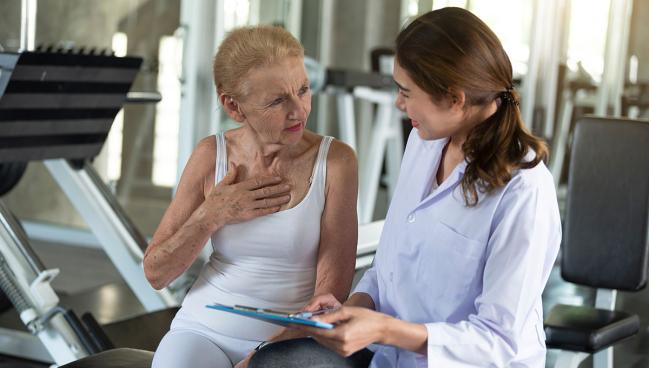
Despite evidence to support the role that cardiac rehabilitation can play in improving outcomes after serious cardiac events, fewer than one in five eligible women participate—a statistic the authors of a new scientific statement from the American Heart Association (AHA) hope to change.
“There are barriers at the referral level, at the enrollment level, at the participation and completion level, and many of these things are common in men and women,” Thais Coutinho, MD (Mayo Clinic, Rochester, MN), chair of the writing committee, told TCTMD. “But there are many unique aspects that make it even harder for women.”
These roadblocks vary by location and region. In the United States, data have shown that CV diagnoses needed to qualify patients for cardiac rehab are less common among women, and that women who are eligible tend to be older and have more medical and psychological comorbidities. Other evidence suggests that not only are women more likely than men to have transportation issues, lower educational attainment, and more social isolation as barriers to rehab, they also are more likely to cite family responsibilities as a reason for not being able to attend.
Bringing attention to these issues and others in the statement published recently in Circulation, Coutinho and colleagues say, increases the chances of making referral and participation rates more equitable.
“If clinicians want to start optimizing female participation in cardiac rehabilitation programs, we think the lowest-hanging fruit is implementing automated referral systems,” Coutinho noted. “There’s still a number of programs out there that rely on a physician or physician assistant or some other healthcare provider to formally write a prescription or a referral.”
Removing the human element from the equation and ensuring that cardiac rehab is an ‘opt out’ system may lift barriers for some women, including those who are younger and perceived as not needing to be enrolled in a program. Ironically, the committee points out that strength of physician recommendation is associated with greater participation in cardiac rehab among women, despite the fact that physicians are less likely to recommend it for their female patients.
Coupling automated referral with a case manager or liaison to help coordinate cardiac rehab efforts may further increase participation and completion rates, Coutinho added.
Women-Tailored Goals
Beyond exercise, the committee notes that data indicate that CVD in women is related to a greater likelihood of depression and psychosocial distress and lower health-related quality of life than it is in men. Mental stress-induced ischemia, in particular, has been shown to nearly quintuple the risk for cardiovascular events, which the committee says highlights the need to “systematically address mental health factors within [cardiac rehab] programs, especially for women.”
While rehab tailored to women remains an area of ongoing investigation, some studies have suggested that exercise prescriptions that include intensive strength training combined with high-intensity interval training (HIIT) is safe in women eligible for cardiac rehab and can improve peak V̇O2 and leg strength more than moderate-intensity aerobic exercise.
Another feature to be considered in women-tailored cardiac rehab, say Coutinho and colleagues, is addressing preferences for a broader range of exercise options than what is traditionally offered. This may include things such as dance, yoga, and tai chi and could possibly improve participation rates.
The lowest-hanging fruit is implementing automated referral systems. Thais Coutinho
Because certain cardiac diagnoses like spontaneous coronary artery dissection and ischemia with nonobstructive coronary arteries are more common in women than men, these should be taken into consideration when assessing women for cardiorespiratory fitness and overall function prior to rehab. Similarly, the committee says female patients with a prior breast cancer diagnosis or gynecologic malignancy should be evaluated differently, as well, to match cardiac rehab with their abilities and expectations.
Choice of setting in doing cardiac rehab is also discussed in the statement, with the committee noting that programs with virtual and/or hybrid options could ease the path for women, further increasing chances of participation and completion.
Some institutions responded to the COVID-19 pandemic by creating structured outpatient cardiac rehab that then continued to evolve, but others did not adapt as well and some have encountered reimbursement headaches with the nontraditional delivery models.
Coutinho said while there is some evidence supporting these rehab formats, more data are needed. “I think the potential is there, and certainly I’m excited to see the future development of this area of rehabilitation as we continue to evolve our virtual and hybrid techniques and options,” she added.

L.A. McKeown is a Senior Medical Journalist for TCTMD, the Section Editor of CV Team Forum, and Senior Medical…
Read Full BioSources
Coutinho T, Khadanga S, Adedinsewo D, et al. Cardiac rehabilitation in women: a scientific statement from the American Heart Association. Circulation. 2025;Epub ahead of print.
Disclosures
- Coutinho reports no relevant conflicts of interest.
Related News



Comments