Leaders in Cardiac CT Look Back on 20 Years of Growth Despite Challenges
A special session at SCCT was dedicated to the history of the field, but also explored future directions and unanswered questions.
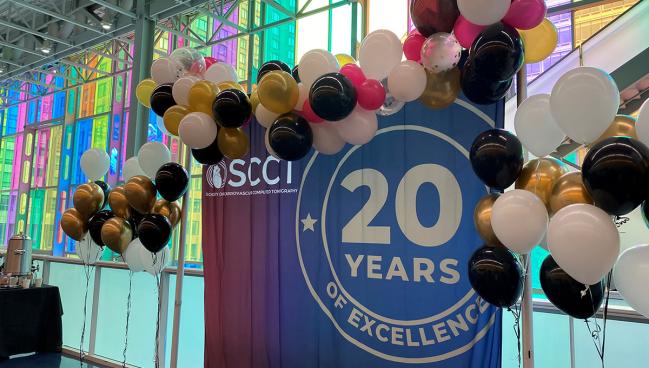
MONTREAL, Canada—Leaders in the field of cardiac CT celebrated 20 years of science, innovation, and overcoming challenges during a special session at the 2025 Society of Cardiovascular Computed Tomography (SCCT) meeting.
“What a ride we’ve had,” said former SCCT President Leslee Shaw, PhD (Icahn School of Medicine at Mount Sinai, New York, NY). “In any diagnostic test, we’ve never seen this acceleration in research and data and applications and new tools. I think it has to be unprecedented.”
Kavitha Chinnaiyan, MD (Corewell Health, Royal Oak, MI), who began her term as SCCT president during the meeting, told TCTMD that the field of cardiac CT faced “so much skepticism” in the beginning due to concerns over diagnostic accuracy, radiation exposure, cost, and the belief that “it did nothing for patients.”
However, “it brings to mind this idea that when you put enough pressure on carbon, it becomes a diamond,” she said. “It’s the same situation with cardiac CT because of the immense pressure that we faced by people that did not believe in this modality. . . . This field just exploded into proving the exact opposite.”
“When the society started out, I think all of us knew every single [cardiac CT] paper, and I don’t think that is possible today,” said former SCCT President Suhny Abbara, MD (Mayo Clinic, Jacksonville, FL). “We have multiple papers coming out each day, and they inform us about what we can do with information we are getting from these fabulous cardiac CT scans.”
[The research] has provided this immense playground for creative thinking outside of the modalities that existed. Kavitha Chinnaiyan
Landmark trials like SCOT-HEART and PROMISE made the field of cardiology pay closer attention to cardiac CT, according to Chinnaiyan. “[The research] has provided this immense playground for creative thinking outside of the modalities that existed,” she said. “Every modality we have is useful in specific clinical scenarios. It’s just that CT has really surpassed everybody’s expectations in especially the last 5 years or so [by] looking at novel things such as plaque morphology and characterization and what this means for a patient. Now with the explosion of AI-based tools, it’s really taken off.”
‘A Lot of Pushback’
SCCT was founded in 2005 following a merger of the Society of Cardiac CT and the Society of Cardiovascular CT and has been hosting annual symposia since 2006.
Initially, the organization had a membership of about 200 members, and today that figure is over 6,000, Ricardo Cury, MD (Baptist Health South Florida, Miami), a former president of the society, said in a talk about the history of the imaging modality.
“There were so many battles: the technology development, the radiation component, guidelines, [and] a lot of pushback from societies,” Cury said. “There were several challenges along the way, and it’s amazing. Just looking back from what the field was able to achieve and the society was really propelling forward, it’s been an amazing ride and we’re just lucky to be part of this.”
There were so many battles: the technology development, the radiation component, guidelines, [and] a lot of pushback from societies. Ricardo Cury
Stephan Achenbach, MD (University of Erlangen, Germany), who served as SCCT’s first president, agreed. “Thinking back to [20 years ago], I don’t think any of us were in it strategically planning that this would be great 15 years from now,” he said during the panel discussion. “We were in it because this was exciting and fun to do.”
The beginning chapters of the field were difficult, according to Achenbach. “It is really only in the past [few] years that everybody loves CT,” he said. “Back then everybody hated CT. The interventionalists didn’t like CT, and they were probably completely right because most of the CT scans that they saw were false positives. And the lipid people didn’t like CT very much. The radiologists didn’t like the cardiologists, and the cardiologists felt that the radiologists didn’t like them, which they didn’t like. . . . And nuclear medicine people certainly didn’t like the cardiac CT development either. Nobody was really a big fan except for a small group of enthusiasts.”
What helped incrementally move the field forward was not being “overexcited” about the technology and acknowledging and overcoming limitations, Achenbach added. “We were challenged every step of the way big time, and I’m glad we were.”
Past President Daniel Berman, MD (Cedars-Sinai Medical Center, Los Angeles, CA), also recalled many hurdles in the early days of SCCT. “We had a competitor from the field that I was involved in for many, many years who said: ‘Don’t form that society. If you do, we’ll eat you for lunch,’” he said during the discussion. “That was not from the whole society; it was a single individual. But that forced me to just say, ‘Well, that’s too shortsighted. We need to have a society dedicated to this wonderful technology that’s going be here for a long, long time.’”
All imaging modalities have limitations and drawbacks, Berman continued. Still, he said, “I challenge anybody to tell us 100 years from now that CT will not be the dominant technology in looking at atherosclerosis and in guiding us where the initial management needs to be done.”
The Future of the Field
Looking forward, Achenbach said what to do about “the prognostic value of CT angiography” remains an unanswered question in the field. “Whether we look at high-risk plaque features, whether we look at plaque burden, whether we add FFR or other artificial intelligence analysis, whether we should look at fat attenuation index and what CT angiography means in various subcohorts of patients—this is what the community is currently working on,” he said.
Also, what’s needed is a “prospective outcome trial that randomizes asymptomatic individuals to CT angiography or no CT angiography as a prognostic tool and then the decision to provide preventative therapy or not,” Achenbach said, adding that only retrospective data in this space suggest that patients with nonobstructive plaque might benefit from statin therapy.
The field awaits data from the SCOT-HEART 2 trial, which will give further insight into whether coronary CT angiography bests cardiac risk scores for preventing CAD events in asymptomatic patients.
We actually don’t know if we reduce noncalcified plaque, if we will do anything for that spontaneous myocardial infarction. Leslee Shaw
Shaw also pointed to the ongoing treatment trials—EVAPORATE, HEARTS, and ARCHITECT—that should provide more information. “Treatment trials are hard,” she said. “We have to be more sophisticated in considering endpoint selections and sample sizes, and we do have a huge, huge, huge challenge ahead of us. If we reduce plaque burden, does it improve outcomes? Everybody thinks so. I hear it all the time from some of you in the audience.
“We actually don’t know if we reduce noncalcified plaque, if we will do anything for that spontaneous myocardial infarction. We don’t,” she continued. “And that is the rate-limiting step that we have looking ahead of us.”
Risk scores also have to go and “the next wave of AI has to be much better than the first,” she argued.
“We need transformative care to target and treat and reduce atherosclerotic coronary disease,” Shaw concluded. “We need to see acute coronary syndromes as a treatment failure. We can do that together as a group, and I think that’s important for the field.”
Chinnaiyan echoed many of these sentiments, arguing that the field needs to “bring that skepticism internally” to think about sustainability, access to care, and appropriateness. “These are important questions we need to start asking ourselves,” she urged.

Yael L. Maxwell is Senior Medical Journalist for TCTMD and Section Editor of TCTMD's Fellows Forum. She served as the inaugural…
Read Full BioSources
Cury R. How it all started: early cardiac CT and the road to SCCT and its first meeting. Presented at: SCCT 2025. July 20, 2025. Montreal, Canada.
Achenbach S. The data that put cardiac CT on the map: landmark trials you should know. Presented at: SCCT 2025. July 20, 2025. Montreal, Canada.
Abbara S. Cardiac CT in clinical practice guidelines: where we are today and what is coming. Presented at: SCCT 2025. July 20, 2025. Montreal, Canada.
Shaw L. 20 years in the making and still fresh: looking to the future of SCCT. Presented at: SCCT 2025. July 20, 2025. Montreal, Canada.
Disclosures
- Cury reports serving as a consultant for, receiving honoraria from, and having an ownership interest in GE HealthCare.
- Shaw reports serving on the speaker’s bureau for Kowa, AstraZeneca, Johnson & Johnson, Ionis, and MedImmune.
- Achenbach, Abbara, Berman and Chinnaiyan report no relevant conflicts of interest.
Related News


Comments