Long-Awaited CREST-2 Results Bolster Stents for Asymptomatic Carotid Stenosis
Stenting, but not endarterectomy, significantly reduced stroke risk compared with intensive medical therapy alone.

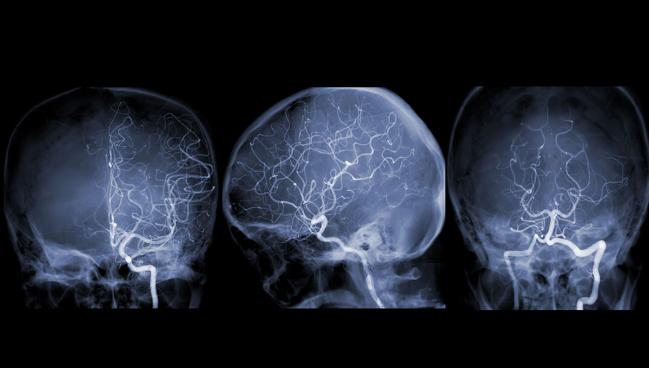
Adding stenting to intensive medical therapy significantly improves outcomes among patients with asymptomatic high-grade carotid stenosis compared with drug treatment alone, a bar not met by carotid endarterectomy (CEA). The results stem from the parallel CREST-2 trials, which began more than a decade ago.
The primary outcome, a composite of any stroke or death within the first 44 days or ipsilateral ischemic stroke within up to 4 years of follow-up, occurred in 6.0% of patients treated with medical therapy alone and 2.8% of those who underwent stenting (P = 0.02). The respective figures in the separate trial of CEA were 5.3% and 3.7% (P = 0.24), Thomas Brott, MD (Mayo Clinic, Jacksonville, FL), and colleagues report in the New England Journal of Medicine.
Senior author James Meschia, MD (Mayo Clinic), presented the findings today at the Society of Vascular and Interventional Neurology (SVIN) meeting in Orlando, FL.
“In the neurovascular and neurointerventional community, we are excited and welcome these results as this is a big paradigm shift in evidence-based treatment of patients with asymptomatic carotid disease,” SVIN President Thanh Nguyen, MD (Boston Medical Center, MA), commented to TCTMD.
Trials conducted two to three decades ago indicated that CEA reduced stroke in asymptomatic patients with high-grade carotid stenosis compared with medical therapy, but since then, there has been improvement in control of risk factors and the emergence of carotid stenting as an option for revascularization. In addition, more recent randomized trials, including SPACE-2 and ECST-2, have called into question whether any type of revascularization is warranted in the context of better medical therapies in contemporary practice.
The field has been awaiting the results of the CREST-2 trials, which enrolled their first patients in December 2014, to help resolve the uncertainty.
“This is a landmark trial, and it will have major consequences for the treatment of carotid stenosis,” Tudor Jovin, MD (Cooper Neurological Institute, Camden, NJ), a member of the CREST-2 interventional management committee, told TCTMD.
CREST-2 Trials
CREST-2, conducted at 155 centers in Australia, Canada, Israel, Spain, and the United States, involved two separate trials comparing either carotid artery stenting or CEA plus intensive medical therapy with medical therapy alone in patients meeting strict criteria for high-grade carotid stenosis (≥ 70%). Operators for either procedure went through a validation process to be allowed to participate in the study. Revascularization was performed according to both guidelines and operators’ standard procedures, with embolic protection required for all stenting cases.
The protocol for intensive medical management was the same for all patients except for antiplatelet therapy around the time of stenting or CEA procedures. The main treatment goals were a systolic blood pressure < 130 mm Hg (< 140 mm Hg before a change in 2018) and an LDL cholesterol level < 70 mg/dL. Other risk factors, like glucose and glycated hemoglobin levels, cigarette smoking, body weight, and physical activity were closely monitored and managed, with health coaching offered to all patients by phone. Medications for risk factors were provided for free if requested by patients.
The stenting trial included 1,245 patients (mean age about 69 years; 38% women) followed for a median of 3.6 years and the CEA trial included 1,240 patients (mean age about 70 years; 37% women) followed for a median of 4.0 years.
This is a landmark trial, and it will have major consequences for the treatment of carotid stenosis. Tudor Jovin
In the stent trial, there was a 3.2% absolute difference in the rate of the primary outcome favoring intervention, resulting in a number needed to treat of 31. The 44-day periprocedural period saw no strokes or deaths in the medical-therapy arm and seven strokes and one death in the stent arm (1.3%). After the periprocedural period, the annual rate of ipsilateral ischemic stroke was 1.7% among patients treated with medical therapy alone and 0.4% among those who received a stent.
In the CEA trial, however, there was a nonsignificant absolute difference of 1.6% in the rate of the primary outcome leaning in favor of CEA. There were no deaths in the periprocedural period, although the rate of stroke was higher in the surgical versus medical-therapy arm (1.5% vs 0.5%). Beyond 44 days, the annual rate of ipsilateral ischemic stroke was 1.3% among patients treated medically and 0.5% among those who had undergone CEA.
The annual combined rate of periprocedural and postprocedural events was 1.6% after stenting and 1.4% after CEA, with low rates of disabling stroke in all groups.
The most frequent serious adverse events in both the stenting and CEA trials were the need for carotid revascularization (18.8% in the control arm vs 4.7% in the stenting arm; and 21.0% in the control arm vs 7.1% in the CEA arm) and death (11.0% in the control arm vs 7.1% in the stenting arm; and 9.6% in the control arm vs 8.8% in the CEA arm). Revascularization during follow-up was most often related to new carotid symptoms, progression of stenosis, and patient preference.
Putting the Results Into Context
The CREST-2 investigators say the findings should be considered in the context of other research involving patients with asymptomatic carotid stenosis. Among prior trials that failed to demonstrate a benefit of carotid revascularization, SPACE-2 had less stringent criteria for measuring stenosis and limited statistical power due to sample size and ECST-2 included some symptomatic patients and only 10 who underwent stenting rather than CEA, they note. The Oxford Vascular Study demonstrated a lower stroke rate among patients treated with medical therapy alone compared with CREST-2, but that cohort included patients with less severe stenosis and had less intensive monitoring for strokes during follow-up.
“Thus, the two trials in CREST-2 provide more-rigorous evidence than SPACE-2 and ECST-2 about the relative effects of revascularization as compared with medical therapy on stroke outcomes,” Brott et al write. “They also provide more pertinent evidence than the Oxford study about the risk of stroke among asymptomatic patients with stenosis of 70% or more.”
If it’s a real result, it’s a very good one. Martin Brown
Martin Brown, MD (University College London, England), who has been involved in prior trials of carotid revascularization, noted to TCTMD that control of risk factors like high cholesterol, hypertension, diabetes, and poor diet has improved in recent decades, driving down the incidence of stroke in patients with atherosclerosis, including those who have carotid stenosis. That raised questions about the impact of carotid revascularization in patients with asymptomatic stenosis.
“This is why this large randomized trial is very useful,” said Brown, who wrote an accompanying editorial in NEJM with Leo Bonati, MD (University of Basel, Switzerland).
The lack of significant benefit with CEA versus medical therapy is consistent with prior trials and observational studies, Brown said. “It is helpful data suggesting that there really is no role for routine surgery in these patients so long as they can tolerate intensive medical therapy.”
As for the stenting trial, “it’s a very impressive result” considering that prior studies have suggested that the intervention was no better than contemporary medical therapy. It’s possible that the significant benefit was due to chance, Brown said, pointing to the CREST-2 researchers’ analysis indicating that the addition or subtraction of only three or four events—ie, more complications in the stenting arm or fewer strokes in the control arm—would have rendered the result nonsignificant.
But, “if it’s a real result, it’s a very good one,” Brown said, adding that it “implies that CREST-2 was very careful at selecting very safe stenting interventionists.” There also was careful selection of patients for inclusion in the stenting trial.
“It may be that with highly selected patients and highly selected interventionists, you can do the procedure safely, in which case it might be worth having stenting rather than just medical treatment alone,” Brown said, cautioning that hospitals and operators with less experience might not be able to provide the same results.
He is wary, too, about how many patients with asymptomatic carotid stenosis would have to receive an intervention to prevent a stroke, noting that most would not have an event if they were treated only with intensive medical therapy. “You will operate on a lot of patients or stent a lot of patients who will never have any symptoms at all [and] put them through the discomfort and risk of an operation,” he said, pointing also to the expense of performing the procedures.
“My view as a neurologist has always been that it’s best to see if you can really get these patients in the best possible position by getting their cholesterol as low as possible, getting their blood pressure as low as possible, getting their weight down, and putting them on a sensible diet, like the Mediterranean diet,” Brown said. “There are lots of things you can do from a medical point of view.”
With such a “wait-and-see” approach, some patients inevitably will have strokes, but most of them will be minor ones, Brown said. At that point, patients can undergo revascularization. And if patients aren’t willing to take that risk, he said, “then it would be reasonable to offer them stenting if they’re suitable for it and they’re in a center that’s got these highly skilled interventionists.”
Influencing Guidelines
Jovin said he expected to see lower event rates in the control arms of both the stenting and CEA trials, but noted that the management of risk factors, which was carefully monitored, was likely better than what could be accomplished in everyday practice.
Still, he said, overall event rates were lower than anticipated, which “speaks to how well both medical therapy and procedures have evolved compared to even when this trial was planned,” he said. “That’s great on all fronts for patients who are treated with medical therapy or with interventions.”
Although operators were vetted before being allowed in the trial, Jovin said that only about 20% to 30% of applicants were excluded, indicating that the study results are generalizable beyond the very experienced group.
The fact that stenting proved superior to medical therapy alone, and CEA didn’t, does not mean that surgery does not have a role, Jovin indicated. CEA is “a good procedure,” he said, noting that it should not be discounted, especially in parts of the world where cost is a major consideration.
But even if stenting and CEA could be considered equivalent, he said, “the vast majority of patients would choose a noninvasive approach compared to an invasive approach. So why do an endarterectomy when you can do a stent that is noninvasive and, for whatever reasons, the long-term data appear to look slightly better with stenting than with an endarterectomy?”
[CREST-2 is] a rigorous trial, well designed, well done, and it will have an impact on how we make recommendations for patients with asymptomatic carotids in clinical practice. Thanh Nguyen
In addition to providing support to stenting, the CREST-2 results likely will boost transcarotid artery revascularization (TCAR), a procedure that weds both surgical and percutaneous elements, Jovin said, acknowledging that there is no evidence that TCAR is better than medical therapy alone. TCAR emerged after the start of CREST-2 and thus was not included in the trial.
Overall, “the big winner here is the revascularization procedure for asymptomatic carotid disease,” he said. “Patients should be offered an initial trial of medical therapy. But they should be told that, overall, stenting is a better option.”
Brown speculated that guidelines will change based on the CREST-2 results: “It’s unlikely that guidelines will recommend routine endarterectomy for asymptomatic carotid stenosis.”
Recommendations around stenting may vary, with some clinicians being more likely to offer an up-front intervention and some advising a more cautious approach of waiting until a patient becomes symptomatic, he said.
“Whatever conclusions you come to, it’s a very positive trial because it shows how much better we have gotten at managing carotid atherosclerosis,” Brown said, pointing to the low rates of stroke overall.
Moving forward, Brown indicated, research will continue into how to identify the patients with asymptomatic carotid stenosis who are likely to have a stroke to allow for more individualized use of interventions. Analyzing atherosclerotic plaque with MRI has shown promising results, he said.
For now, Nguyen said, CREST-2 “will impact guidelines in that it’s a rigorous trial, well designed, well done, and it will have an impact on how we make recommendations for patients with asymptomatic carotids in clinical practice.”

Todd Neale is the Associate News Editor for TCTMD and a Senior Medical Journalist. He got his start in journalism at …
Read Full BioSources
Brott TG, Howard G, Lal BK, et al. Medical management and revascularization for asymptomatic carotid stenosis. N Engl J Med. 2025;Epub ahead of print.
Brown MM, Bonati LH. Managing asymptomatic carotid stenosis. N Engl J Med. 2025;Epub ahead of print.
Disclosures
- CREST-2 was supported by grants from the National Institute of Neurological Disorders and Stroke, National Institutes of Health (NIH); by the Centers for Medicare & Medicaid Services, Department of Health and Human Services; and by a grant from NIH StrokeNet.
- Brott reports grants/contracts from the NIH.
- Meschia reports receiving grants/contracts to his institution from and serving as chair of a data and safety monitoring board for the NIH.
- Brown and Bonati report no relevant conflicts of interest.
Related News



Comments