With MISSION Act, Veterans Get More Convenient but Potentially Worse CV Care
While increasing accessibility is “laudable,” it can come at a cost when patients leave the VA for procedures, Jay Giri says.

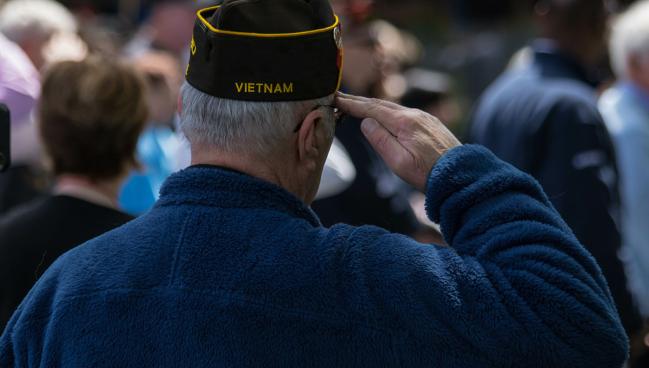
The Maintaining Internal Systems and Strengthening Integrated Outside Networks (MISSION) Act, enacted in 2018 to allow US veterans more freedom in accessing healthcare, has had mixed success, according to a new analysis of Veterans Affairs (VA) data. While travel times have grown shorter for patients who live farther from VA hospitals, MACE rates after PCI and CABG have increased for these individuals in recent years.
Researchers surmise that the care received at non-VA hospitals, while more convenient for rural-dwelling patients, might not include the same quality of follow-up that VA facilities provide in terms of medication administration and postprocedural check-ins with cardiologists.
“I think it’s laudable to think about how to deliver care in a way that’s most successful to the veterans, but the bottom line is sometimes the best of intentions don’t necessarily lead to the results that you might expect,” study co-author Jay Giri, MD, MPH (University of Pennsylvania Perelman School of Medicine and Corporal Michael J. Crescenz Veterans Affairs Medical Center, Philadelphia), told TCTMD.
Seven years ago, the MISSION Act was passed with the goal of improving the healthcare of veterans across the board. It allows for reimbursement of services provided at community hospitals when received by veterans who live more than an hour’s drive from a VA hospital.
Care being delivered at the VA is being clearly quarterbacked and guided by your VA team. Jay Giri
The study of more than 100,000 veterans, published last week in JAMA with first author Jingyi Wu, MS (Center for Healthcare Evaluation, Research, and Promotion/Corporal Michael J. Crescenz Veterans Affairs Medical Center), showed that travel times for patients who live far from VA centers dropped by as much as half an hour after the MISSION Act took effect, but outcomes following PCI and CABG worsened.
“It means that they’re probably not being taken care of as well as they would have been taken care of at a VA that’s familiar with the challenges of the VA patients, which are multisystem disease, senior-age men, often, and that they can have concomitant problems with other illnesses and substance involvement occasionally,” Morton Kern, MD (University of California, Irvine, and VA Long Beach Healthcare System), who was not involved in the study, told TCTMD. “There’s untold factors that produce this worse outcome, but it’s not a novel observation.”
Prior studies have shown that, for example, elective PCI is riskier for veterans when it’s performed at a non-VA center. Also, VA hospitals in general outperform community hospitals for cardiovascular care.
The main factor at play here is likely “the attention to detail of the veteran patient” that the VA can provide, Kern said. “We have redundant care in terms of nurse practitioners and licensed practitioners, extenders, physicians, medical students, residents, and so on. And often the community hospitals don’t have that redundancy. So they may be missing something.”
Giri agreed. “I’m dubious of the fact that they had bad procedural care [at community centers],” he said, adding that he’s noticed a lack of follow-up communication anecdotally among patients who seek care outside of the VA. “I would see patients actually who would show up and they would’ve not refilled their antiplatelet therapy after 30 days.”
And once patients leave the VA for procedures, their VA physicians can’t routinely access their electronic medical records for follow-up like they would if they’d stayed in the system, Giri noted.
Travel Times Down, MACE Up
For the study, the researchers included more than 100,000 US veterans receiving nonurgent PCI (n = 43,000; mean age 69 years; 98% male), CABG (n = 23,301; mean age 69 years; 98% male), or aortic valve replacement (AVR; n = 14,682; mean age 74 years; 98% male) between October 2016 and September 2022.
In a difference-in-difference analysis, they found that after the MISSION Act was implemented, mean PCI travel time increased by 1.3 minutes for those who live within a 60-minute drive of a VA hospital (near patients) and decreased by 29.2 minutes for those who live farther away (far patients; P < 0.001). Likewise for CABG and AVR, mean travel times increased by 9.4 and 10 minutes, respectively, for near patients and decreased by 18.1 and 23 minutes for far patients (both P < 0.001).
However, during the same time periods before and after MISSION, mean MACE rates decreased by 0.5 and 6.5 percentage points for the near patients undergoing PCI and CABG, respectively, but increased by 2.3 and 1.6 percentage points for the far patients undergoing those respective procedures (P < 0.001 for both).
There were no statistically significant differences in MACE rates observed following AVR before and after MISSION implementation regardless of where patients live. Giri said this was likely because AVR technique and technology improved incrementally throughout the study period, whereas approaches to CABG and PCI remained relatively stable and made for a cleaner comparison.
They’re probably not being taken care of as well as they would have been taken care of at a VA that’s familiar with the challenges of the VA patients. Morton Kern
It’s important to remember that “community care is benefiting from being able to care for these VA patients financially,” Giri highlighted. “Community care hospitals are chomping at the bit to take on these kinds of cases.”
But, he continued, “there’s nobody evaluating whether these hospitals really are taking care of everything and the unfortunate thing for patients is they’re not equipped necessarily to ask” the right questions to ensure proper follow-up.
As such, Giri advises his patients to stay within the VA whenever possible. “We have evidence to say that their outcomes are going to be superior if they remain within the care of the integrated VA system,” he said. “The key concept to emphasize is that the care being delivered at the VA is being clearly quarterbacked and guided by your VA team, and that’s where I think the community care falls apart.”
Kern agreed. “The data does show the VA does a good job,” he said. “I think sending money out of the VA for convenience is a challenging concept, and that certainly privatization of the VA doesn’t make any sense when such good care is already delivered, unless you want lesser care in the community hospitals. Now major good community hospitals will be equal to VA hospitals, so that was also demonstrated. But there’s a lot of rural hospitals or other hospitals in cities that don’t match up. So it’s a blind service. Everybody who picks a hospital that’s not the VA is going to get an unknown quantity.”

Yael L. Maxwell is Senior Medical Journalist for TCTMD and Section Editor of TCTMD's Fellows Forum. She served as the inaugural…
Read Full BioSources
Wu J, Kanter GP, Wagner TH, et al. Impact of the MISSION act on quality and outcomes of major cardiovascular procedures among veterans. JAMA. 2025;Epub ahead of print.
Disclosures
- The study was based on work supported by the Department of Veterans Affairs, Veterans Health Administration, Office of Research and Development, VA Health Systems Research Portfolio.
- Giri reports receiving personal fees from Inari Medical, Boston Scientific, Endovascular Engineering, and Edwards Lifesciences.
- Kern and Wu report no relevant conflicts of interest.
Related News



Faisal Bakaeen