Oral PCSK9 Inhibitor Bests Other Nonstatin Therapies for LDL-Lowering
In the CORALreef AddOn study, roughly 80% of high-risk patients achieved an LDL target of less than 55 mg/dL by 8 weeks.

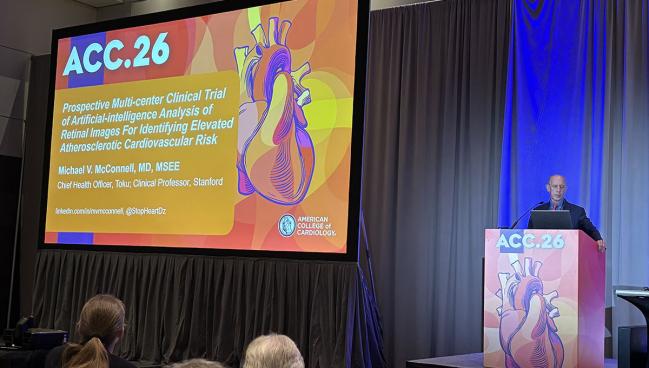
NEW ORLEANS, LA—A comparison of multiple add-ons to statin therapy has shown that the oral PCSK9 inhibitor enlicitide (Merck) outperformed several different nonstatin combinations when it came to reducing LDL cholesterol levels and getting more patients to treatment goal, according to results from the phase III CORALreef AddOn trial.
Treatment with enlicitide reduced LDL-cholesterol levels by nearly 65% from baseline in high-risk patients and those with a history of major atherosclerotic cardiovascular disease (ASCVD). By comparison, reductions were smaller with bempedoic acid (6.3%), ezetimibe (27.8%), and ezetimibe plus bempedoic acid (36.5%), Alberico Catapano, MD, PhD (University of Milan, Italy), reported this week at the American College of Cardiology 2026 Scientific Session.
“Most patients fail to meet the [LDL] goal recommended in the guidelines,” said Catapano during an Investigative Horizons session. “The injectable PCSK9 monoclonal antibodies offer very significant reductions in LDL and also a reduction in cardiovascular events, but for several reasons are underutilized.”
It’s hoped that development of an oral agent, he added, might improve the uptake of treatment. “The one thing that we’ve learned over time is that the more choices you have, the better off the patient is,” said Catapano.
The CORALreef AddOn study, which was published simultaneously in JACC, included 301 patients (mean age 64.4 years; 37.2% female) with a history of ASCVD and LDL-cholesterol levels ≥ 55 mg/dL or were at intermediate-to-high risk for ASCVD and had LDL levels ≥ 70 mg/dL. In total, 101 patients were randomized to enlicitide 20 mg, 50 to bempedoic acid 180 mg, 50 to ezetimibe 10 mg, and 100 to a combination of bempedoic 180 mg and ezetimibe 10 mg. All patients were on background statin therapy, with roughly half receiving high-intensity statins. At baseline, the mean LDL level was 91.6 mg/dL.
From baseline to day 56, enlicitide resulted in significantly larger reductions in LDL cholesterol, apolipoprotein B, and non-HDL cholesterol. Additionally, lipoprotein(a) levels were reduced by 26.2% with enlicitide compared with increases in patients treated with bempedoic acid (both alone and in combination with ezetimibe). In the CORALreef Lipids study, which included nearly 3,000 patients, a similar degree of LDL-lowering was observed over 24 and 52 weeks.
Significantly more patients treated with enlicitide achieved an LDL-cholesterol level of less than 70 mg/dL (and a reduction of 50% or more from baseline): 81.2% versus 2.0% with bempedoic acid, 8.0% with ezetimibe, and 22.0% with ezetimibe and bempedoic acid (P < 0.001 for enlicitide vs all others). Similarly, 78.2% of patients treated with enlicitide achieved a target of less than 55 mg/dL (and a reduction of 50% or more from baseline), which was significantly more than those treated with the other nonstatin therapies (P < 0.001 for all comparisons).
There was no significant difference in adverse events across therapy arms, and discontinuations due to adverse events were uncommon: 2% with enlicitide, 4% with bempedoic acid, none with ezetimibe, and 4% with bempedoic acid and ezetimibe.
Amit Khera, MD (UT Southwestern Medical Center, Dallas, TX), the discussant following the presentation, said the just-published US dyslipidemia guidelines have introduced new stringent targets for LDL cholesterol, with physicians advised to lower levels to less than 70 and 55 mg/dL in high-risk and very-high-risk patients, respectively.
Khera pointed out that the reduction with bempedoic acid in this study was just 6% but that data from CLEAR Outcomes suggest it should have been closer to 20%. Catapano said the researchers have no clear answer why the reduction was so small, noting that there was a 36% reduction in LDL cholesterol in those treated with bempedoic acid and ezetimibe, “which is exactly what we would have expected.” He suggested the smaller-than-anticipated reduction in LDL with bempedoic acid alone might simply be a play of chance.
There is a large cardiovascular outcomes study underway to determine if enlicitide reduces hard clinical events. The CORALreef Outcomes study, which is evaluating enlicitide in patients with or at high risk for ASCVD, has recently completed enrollment of more than 14,500 patients, although results aren’t expected for several years.

Michael O’Riordan is the Managing Editor for TCTMD. He completed his undergraduate degrees at Queen’s University in Kingston, ON, and…
Read Full BioSources
Catapano AL, Mikhailova E, Navar AM, Oral PCSK9 inhibitor enlicitide versus oral non-statin therapies: a phase 3 randomized clinical trial. JACC. 2026;Epub ahead of print.
Disclosures
- Catapano reports grants from Viatris, Ultragenyx, Chiesi, and Amarin, as well as personal fees from Amarin, Amgen, AstraZeneca, Chiesi, Daiichi Sankyo, Eli Lilly, Esperion, Ionis Pharmaceutical, Medscape, Menarini, MSD, NewAmsterdam Pharma, Novartis, Novo Nordisk, Regeneron, Recordati, Sanofi, Ultragenyx, and Viatris.
Related News



Comments