Prophylactic Pacemakers After TAVI Provide Little Benefit: PROMOTE
Implanting pacemakers in those who meet criteria for prophylactic use appears to be overtreating some patients.

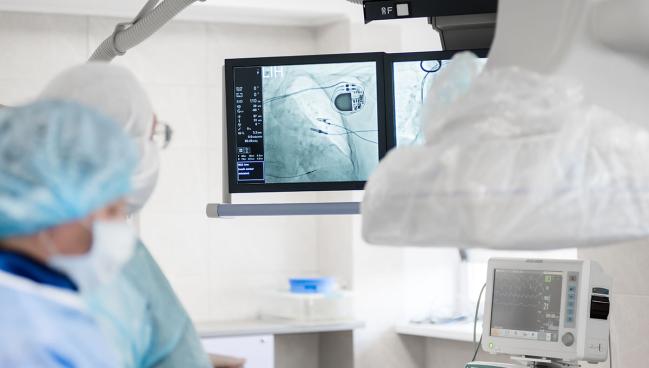
Implanting a permanent pacemaker after TAVI for prophylactic reasons is not associated with better clinical outcomes when compared with patients with conduction disturbances and a clear indication for the device, according to a new analysis.
Those who received a prophylactic pacemaker also had a very low pacing burden at 30 days.
These results, say investigators, challenge the current paradigm of implanting a pacemaker in higher-risk patients without a strong indication for the device, such as those with active ECG changes or those with new-onset persistent left bundle branch block (LBBB) or first-degree atrioventricular block (AVB).
“In general, when you have such a low use of the pacemaker capabilities, you have to question the indication,” senior investigator Josep Rodés-Cabau, MD, PhD (Laval University/Quebec Heart & Lung Institute, Canada), told TCTMD. “These pacemakers were implanted in a preventive manner and at least some of them, or many of them, would represent overtreatment.”
Conduction disturbances after TAVI, even with the use of newer-generation devices, remain a thorn in the side of physicians who treat patients with symptomatic severe aortic stenosis. The rate of permanent pacemaker implantation varies from center to center and device to device, but recent data from the American College of Cardiology/Society of Thoracic Surgeons TVT Registry suggest it hovers around 11%.
Patients with ECG changes after TAVI, specifically those without high-degree or complete AVB, are challenging because they don’t have a definitive indication for a pacemaker, but they may be at risk for life-threatening bradyarrhythmias, said Rodés-Cabau. New-onset persistent LBBB has been shown to be associated with an increased risk of sudden cardiac death, especially when the QRS duration exceeds 160 ms.
In a 2019 consensus document, experts from multiple specialties developed an algorithm for managing conduction disturbances in patients after TAVI, a strategy later validated in the PROMOTE study with 2,110 patients. As part of the consensus statement, physicians were advised to consider implanting a permanent pacemaker prophylactically in patients with active ECG changes (enlarged QRS with a daily PR or QRS interval increase ≥ 20 ms on two consecutive days) or those with new-onset persistent LBBB with QRS > 150 ms or first-degree AVB with PR > 240 ms on day two after TAVI.
Low Pacing Burden, But Not Zero
For the current study, which was published in JACC: Clinical Electrophysiology, researchers wanted to determine the incidence and outcomes of those who received a prophylactic permanent pacemaker in the PROMOTE trial. Of the 329 patients who received a pacemaker by 30 days, 24% were implanted with a device for prophylactic reasons. The majority (90%) who received a prophylactic pacemaker did so because they developed new-onset persistent LBBB, which was associated with first-degree AVB in 74% of cases.
At 30 days, there was no difference in clinical outcomes between those who received a device for prophylactic and nonprophylactic reasons. When the devices were interrogated at 30 days, the ventricular pacing percentage was 2% in the prophylactic group and 73% in those with a nonprophylactic pacemaker indication (P < 0.001). More than 42% of patients in the prophylactic group had a pacing percentage less than 1% compared with 14.5% of those with a nonprophylactic indication for a pacemaker (P < 0.001).
Right now, investigators can’t say that implanting the permanent pacemaker prophylactically didn’t do any good because there were some patients who required pacing.
“It’s not zero use of the pacemaker,” said Rodés-Cabau. “There is still some percentage of these patients where the pacemaker was used for a very short period. In many patients, the pacing [percentage] was less than 1% and that is extremely low. You could argue, honestly, that maybe the pacemaker was implanted for nothing, at least at 30 days.”
Investigators are still following patients, and the 1-year results will be presented and published next year. While it’s possible the ventricular pacing rate will increase over time, it’s in the days and weeks after TAVI when the majority of arrhythmias would be expected, said Rodés-Cabau.
Value of EP Studies
Of the 80 patients with a prophylactic permanent pacemaker, 26 had an electrophysiological (EP) study performed a median of 8 days after TAVI. Those with an EP study had a longer delay between receiving the pacemaker versus those without an EP study, as well as a longer hospital stay, but the pacing burden was similar in both groups. For patients without a strong indication for a pacemaker, the EP study didn’t help identify patients who would benefit from the device, said Rodés-Cabau.
Given the risks of sudden cardiac death, Rodés-Cabau said it’s difficult to determine which patients without a clear indication for a permanent pacemaker might benefit. Some centers will implant the device in patients meeting prophylactic criteria while others will not.
“Depending on the electrophysiologist you talk to, it’ll be different,” he said. “It’s a complex issue because the problem is that you’re not dealing with a conduction abnormality that doesn’t move. It evolves. Some patients recover but others do not. This is why the predictive value of the electrophysiological study is probably lower than in other circumstances.”
Compounding the challenge is that TAVI has moved towards quicker discharge from the hospital than in the past. With a longer hospitalization, telemetry monitoring gave physicians time to detect and identify potential issues, but now patients are often going home the next day, or in some cases, the same day.
The researchers say that further studies are needed to identify “predictors of delayed life-threatening arrhythmias” and to help home in on those who would benefit from a permanent pacemaker.

Michael O’Riordan is the Managing Editor for TCTMD. He completed his undergraduate degrees at Queen’s University in Kingston, ON, and…
Read Full BioSources
Fischer Q, Nombela-Franco L, Muntané-Carol G, et al. Prophylactic permanent pacemaker implantation after transcatheter aortic valve replacement. JACC Clin Electrophysiol. 2025;Epub ahead of print.
Disclosures
- Rodés-Cabau has received institutional research grants and speaker/consultant fees from Edwards Lifesciences and Medtronic.
Related News


Comments