SMART-DECISION: Stopping Beta-blockers Post-MI Safe in Stable Patients
The results run counter to ABYSS but align with other data showing beta-blockers shouldn’t continue indefinitely after MI.

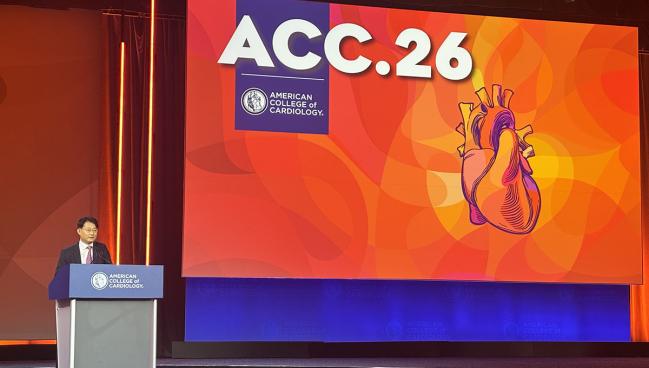
NEW ORLEANS, LA—Taking stabilized patients off long-term beta-blocker therapy after MI without evidence of heart failure or left ventricular dysfunction does not result in any adverse clinical consequences, according to the results of the SMART-DECISION trial.
SMART-DECISION, presented today at the American College of Cardiology 2026 Scientific Session, is the first randomized, controlled trial to show that stopping beta-blockers after MI is safe, but investigators say this isn’t the end of the story in light of another randomized trial that suggested there was a risk to stopping treatment.
“This is not definitive,” senior investigator Joo-Yong Hahn, MD, PhD (Samsung Medical Center, Seoul, Republic of Korea), told TCTMD. “Ours is only the first trial to demonstrate the safety of discontinuing beta-blockers in stable post-MI patients. We need more evidence.”
The SMART-DECISION trial, which was published simultaneously in the New England Journal of Medicine, showed that stopping beta-blockers more than 4.7 years after the index MI was noninferior to continuing with treatment for the three-point primary endpoint of death, MI, or hospitalization for heart failure (HF) in stabilized patients.
Martha Gulati, MD (Houston Methodist, TX), who wasn’t involved in the study, said that physicians typically have kept patients on beta-blockers indefinitely after the index MI, yet many patients are quick to ask when they can stop the medication.
“These studies are changing our thinking,” she told TCTMD. “Does everyone need to be on a beta-blocker a year after the MI when they are stable and doing well? The patients with heart failure are obviously a different category if they have extensive damage, but I think this study is really making us question if we need to keep all patients on [beta-blockers].”
Met Noninferiority Margin
The US guidelines recommend starting beta-blockers in ACS patients with STEMI (class I recommendation) and in NSTE ACS patients without impaired systolic function (class IIa recommendation). However, the US guidelines for the management of chronic coronary disease, which were updated in 2023, state that it’s reasonable to reassess the need for long-term beta-blocker use in post-MI patients for reducing MACE (class II recommendation).
While beta-blockers remain standard care for patients with HF and reduced ejection fraction, their continued role in post-MI patients has been challenged for many years. Most of the trials supporting beta-blocker use in MI patients were conducted before the modern era of coronary reperfusion, better revascularization techniques, and improved pharmacology. For years, a raft of evidence, including from several observational studies, registries, and meta-analyses, showed that beta-blocker therapy might be unnecessary long-term in post-MI patients with normal LV function.
The ABYSS trial, however, took many by surprise when researchers showed that stopping beta-blocker therapy in patients several years after their MI was not noninferior to continuing with treatment. Researchers later showed that stopping the medication led to “swift and sustained” increases in heart rate and blood pressure.
Ours is only the first trial to demonstrate the safety of discontinuing beta-blockers in stable post-MI patients. We need more evidence. Joo-Yong Hahn
In light of ABYSS, the SMART-DECISION investigators conducted a similar trial in 2,540 stable patients (mean age 63 years; 12.8% women) who had been receiving beta-blockers for at least 1 year after an MI and randomized them to continued beta-blocker therapy or to discontinuation. The median time from the index MI to randomization was 4.7 years. Patients with ongoing treatment for HF, those with reduced ejection, and those with atrial fibrillation were excluded from the trial.
After a median follow-up of 3.1 years, the primary endpoint of death from any cause, recurrent MI, or hospitalization for HF occurred in 7.2% of patients randomized to discontinuation of beta-blocker therapy and 9.0% of those in the continuation group (HR 0.80; 95% CI 0.57-1.13). The study met the predefined noninferiority margin of 1.4 for the upper bound of the confidence interval. The results were consistent across multiple subgroups, including those stratified by systolic blood pressure, heart rate, and time since MI.
An exploratory endpoint of death from any cause, MI, stroke, or hospitalization for cardiovascular reasons—the same endpoint used in the ABYSS trial—occurred in 11.0% of patients who stopped beta-blockers and 14.5% of those who continued treatment.
Differences With ABYSS
Speaking with the media, Nicole Bhave, MD (University of Michigan Medical School, Ann Arbor), said that patients discharged from the hospital after MI or those seen in clinic for their first visit can be overwhelmed with the number of medications they need to take.
“At subsequent visits, it’s always an opportunity to revisit [and ask] can we reduce this pill burden? This study demonstrated in a more definitive fashion than the ABYSS study that yes, at 1 year, it is safe in patients with normal ejection fraction and no atrial fibrillation to stop that beta-blocker,” she commented.
To TCTMD, Hahn said there are “substantial” differences between SMART-DECISION and ABYSS which may explain the different findings. For one, the ABYSS investigators included hospital admissions for cardiovascular causes, an endpoint their group didn’t believe was suitable for the open-label design as it’s more susceptible to physician discretion than hard clinical endpoints, such as mortality and MI.
“Secondly, background secondary prevention appears to be more intensive in our trial,” said Hahn. “For example, ezetimibe was more frequently used in the SMART-DECISION trial than in the ABYSS trial and the LDL cholesterol achieved was lower in our trial than in ABYSS. We also used a P2Y12 inhibitor, clopidogrel, rather than aspirin monotherapy.”
Does everyone need to be on a beta-blocker a year after the MI when they are stable and doing well? Martha Gulati
Finally, said Hahn, the timing of beta-blocker discontinuation differed in the two trials. In SMART-DECISION, patients came off the medication 4.7 years after the MI compared with 2.9 years in ABYSS.
Patrick O’Gara, MD (Brigham and Women’s Hospital, Boston, MA), the discussant following the late-breaking presentation, questioned the selection of HF hospitalizations as part of the three-point MACE endpoint in SMART-DECISION, however, adding that he wouldn’t expect too many such events in this stable population.
Hahn said that in his clinical practice, stable MI patients had been sticking with beta-blocker therapy long-term, adding that that decision can be revisited in light of the new data. “Now we can reconsider and communicate with the patient regarding the discontinuation of a beta-blocker based on our results.” Patients are pleased to decrease their pill count, he added, noting that beta-blockers are not a cheap medication in South Korea. “From a socioeconomic point of view, it’s better,” he said.
Gulati said that it will be necessary to think about the appropriate patients who can come off beta-blockers, noting that some have been stable and tolerating the drugs for many years. For people who might be reporting fatigue, for example, these data support consideration of stopping the medications, she said.
She added that stopping beta-blockers should be done carefully to prevent the onset of hypertension.
SMART-DECISION can’t pinpoint the right time to withdraw beta-blockers. However, Hahn believes that stopping after 1 year would be a reasonable strategy in select patients without another indication for the drug. His group is planning to pool individual patient-level data from ABYSS and SMART-DECISION to get a better sense of the existing evidence, he said.

Michael O’Riordan is the Managing Editor for TCTMD. He completed his undergraduate degrees at Queen’s University in Kingston, ON, and…
Read Full BioSources
Choi K-H, Kang D, Kim W, et al. Discontinuation of beta-blocker therapy after myocardial infarction. N Engl J Med. 2026;Epub ahead of print.
Disclosures
- Hahn reports grant support from Abbott, Biotronik, Biosensors International, Boston Scientific, Daiichi Sankyo, Donga-ST, Hanmi Pharmaceutical, Medtronic, and the National Evidence-based Healthcare Collaborating Agency.
Related News



Comments