COVID-19: TCTMD’s Daily Dispatch for April Week 2
We’re curating a list of COVID-19 research and other useful content, and updating it daily.


TCTMD reporter Todd Neale is keeping up on breaking news and peer-reviewed research related to COVID-19 and will update daily. If you have something to share, tell us. All of our COVID-19 coverage can be found on our COVID-19 Hub.
April 16, 2021
 Surging COVID-19 numbers are putting pressure on the Olympic Games set to be held in Tokyo this summer, although the president of the Tokyo games said cancellation isn’t being considered, Reuters reports. The Japanese government expanded “quasi-emergency” measures to 10 regions, which include Tokyo and Osaka. A news poll revealed that nearly two-thirds of Japanese respondents want the Olympics cancelled or postponed (again).
KHN reports on an interesting phenomenon that is starting to emerge as COVID-19 vaccination programs unfold—some people with “long COVID” are seeing their lingering symptoms ease or go away completely after getting their shots. “The notion that a vaccine aimed at preventing the disease may also treat it has sparked optimism among patients, and scientists who study the post-illness syndrome are taking a close look at these stories.”
Sinovac’s CoronaVac COVID-19 vaccine was 67% effective against symptomatic infection in a real-world study including 10.5 million vaccinated and unvaccinated people, according to a report from the Chilean government. A Reuters story notes that the Chinese-made vaccine was 85% effective at preventing hospitalizations and 80% effective at preventing death.
A study of young adults in the Lancet Respiratory Medicine finds that young adults with evidence of a past SARS-CoV-2 infection have about one-fifth the risk of a subsequent infection compared with seronegative individuals. That indicates that “although antibodies induced by initial infection are largely protective, they do not guarantee effective SARS-CoV-2 neutralization activity or immunity against subsequent infection,” the authors say.
Merck announced Thursday that it is discontinuing development of a therapy called MK-7110 for the treatment of hospitalized patients with COVID-19, citing the amount of research remaining, “technical, clinical, and regulatory uncertainties,” and the availability of other drugs already available for this population. The company said it would instead “focus its pandemic efforts on advancing molnupiravir and on producing Johnson & Johnson’s COVID-19 vaccine.” Regarding the antiviral molnupiravir, Merck said that a study in hospitalized patients with COVID-19 will be stopped based on futility, but a phase III study in outpatients will continue.
 Pfizer CEO Albert Bourla said a third dose of the Pfizer/BioNTech COVID-19 vaccine will likely be needed within 12 months of being fully vaccinated with the initial two doses, CNBC reports. He also said it’s possible an annual shot will be necessary. All of that needs to be confirmed, and “the variants will play a key role,” he said.
The latest evidence shows that schools can open safely in the midst of COVID-19 as long as the appropriate precautions are taken, according to a story in Scientific American. “Experts have expressed increasing concern over the downsides that prolonged virtual instruction might pose for academic and social development in children—especially kids in disadvantaged communities who were already struggling before the pandemic,” the story reads. “Now, more than a year after schools around the country first shut down, many experts agree they can remain open safely if they implement measures such as mask wearing, physical distancing, and good ventilation.”
Consistent with some prior research, a research letter in JAMA suggests that nursing home residents who have previously been infected with SARS-CoV-2 may only need one dose of the Pfizer/BioNTech vaccine to attain sufficient antibody levels. “Measuring S-protein IgG antibody levels just before the second vaccine dose could be useful in determining whether a second dose is required in individuals whose infection history is unknown,” the researchers say, adding that the approach could limit adverse events and conserve vaccine doses.
Overall, emergency department visits were 25% lower in December 2020 to January 2021 compared with the same time period a year earlier, a smaller reduction than was seen earlier in the pandemic, according to a study in Morbidity and Mortality Weekly Report. The proportion of patients seeking care for mental and behavioral health-related issues, however, was higher, especially in pediatric patients. “Efforts to ensure public understanding of the importance of seeking guidance and emergency care for acute and mental or behavioral health conditions are necessary,” the authors advise.
 A proof-of-concept study in PLOS ONE suggests that dogs can be trained to sniff out SARS-CoV-2 in urine and saliva samples. “A unique odor associated with SARS-CoV-2 infection present in human urine, as well as saliva, provides impetus for the development of odor-based screening, either by electronic, chemical, or biological sensing methods,” the authors say.
April 15, 2021
 More than 1 million Europeans have now died from COVID-19, according to an official from the World Health Organization (WHO), who said the situation there remains “serious” with about 1.6 million new cases being reported each week. “The comments by Dr. Hans Kluge on Thursday aimed to emphasize that Europe must keep up its guard with social distancing and speed up vaccinations as virus variants drive new infections to record levels in some nations,” the Associated Press reports.
The Advisory Committee on Immunization Practices (ACIP), which provides guidance to the US Centers for Disease Control and Prevention (CDC), yesterday delayed its decision on the Janssen COVID-19 vaccine from Johnson & Johnson, STAT reports. Several members of the panel said they need more data to weigh the risks and benefits of the vaccine amid reports of rare blood clots (cerebral venous sinus thrombosis). What that means is that the pause in use of the vaccine in the US will continue. CNBC reports that the Biden administration is working to boost production of vaccines from Pfizer/BioNTech and Moderna to help fill any gaps created by the temporary suspension.
The US Food and Drug Administration (FDA) has put up a page of frequently asked questions about the Janssen vaccine, saying that the pause in use of the vaccine has been done “out of an abundance of caution.”
A preprint study from University of Oxford researchers puts all of this discussion about the risk of blood clots in perspective, demonstrating that the risk of cerebral venous sinus thrombosis is about eight to 10 times higher with COVID-19 itself than with any of the vaccines designed to combat it, according to a press release. And compared with the background level in the general population, the risk of COVID-19-related clots is about 100 times higher. The study also shows that the rare blood clots occur at similar frequencies after the AstraZeneca/Oxford vaccine (about 5 per 1 million after the first dose) and either of the mRNA vaccines from Pfizer/BioNTech or Moderna (about 4 in 1 million). “The COVID-19 risk is higher than we see with the current vaccines, even for those under 30—something that should be taken into account when considering the balances between risks and benefits for vaccination,” one of the study authors said.
The American Heart Association (AHA) released a statement addressing the blood clotting issue, which includes a list of symptoms to look for. But the group of physician leaders highlighted the rarity of the event: “These events are so uncommon that they only appeared after clinical trials concluded, when millions of people had been vaccinated, unlike the thousands in the original vaccine trials. We await the findings and updated guidance from the CDC and FDA urgent review of cerebral venous sinus thrombosis associated with the Johnson & Johnson (Janssen) COVID-19 vaccine, expected next week.” And they urge everyone get a COVID-19 vaccine as soon as they can.
 Drug overdose deaths in Ohio roughly tracked with aspects of the COVID-19 response during the first 7 months of the pandemic, researchers report in JAMA Network Open. There was an initial spike after the declaration of the national public health emergency in March 2020, which brought state and local lockdowns and led to a high state unemployment rate. By the end of the summer, when restrictions had eased and the unemployment rate had come down, overdose deaths returned to baseline levels. “Still unknown is whether and how the pandemic caused this spike in fatal overdoses, and why overdose deaths returned to baseline levels after rising sharply at the start of the pandemic,” the authors write.
A research letter in the New England Journal of Medicine suggests that after a single dose of vaccine, the antibody response against SARS-CoV-2 is greater in people who had previously been infected with the virus than in previously uninfected people. “The most remarkable finding of this study was the significantly lower neutralizing antibody titer after administration of a second dose of vaccine in previously uninfected patients than the titer after only a single dose of vaccine in previously infected participants,” the researchers say. “It is unclear how the neutralizing antibody titers influence the ability of the host to transmit the virus.”
A modeling study in Morbidity and Mortality Weekly Report suggests that exposure to SARS-CoV-2 on airplanes could be reduced by 23% to 57% if middle seats are left vacant, compared with full occupancy. “These data suggest that increasing physical distance between passengers and lowering passenger density could help reduce potential COVID-19 exposures during air travel,” the authors say, noting that the study addresses exposure and not transmission per se.
About 5,800 people who have been fully vaccinated against COVID-19 have become infected with the virus, the CDC told CNN. About 7% of those required hospitalization, with 74 people dying. That’s out of about 77 million Americans who have been fully vaccinated. Infections in vaccinated people are not unexpected, as the shots—though highly protective—are not 100% effective.
 The far-reaching impacts of the pandemic are highlighted by a problem in Sweden, where a shortage of donor sperm for assisted pregnancy is halting inseminations and dramatically increasing wait times. “We’re running out of sperm. We’ve never had so few donors as during the last year,” the head of hospital reproduction unit told Reuters.
April 14, 2021
Denmark becomes the first country to permanently stop using the AstraZeneca vaccine, over concerns about rare blood clotshttps://t.co/10NJ1lusfr
— BBC Breaking News (@BBCBreaking) April 14, 2021
Taking it a step further than countries that have suspended use of the AstraZeneca/Oxford vaccine following reports of rare blood clots in people who have received the shot, Denmark has become the first country to completely abandon it, BBC News reports. “Director General Soren Brostrom said it had been a ‘difficult decision’ but Denmark had other vaccines available and the epidemic there was currently under control.”
In the United States, the Advisory Committee on Immunization Practices (ACIP), which provides guidance to the Centers for Disease Control and Prevention (CDC), will meet Wednesday afternoon to discuss the potential risk of thromboembolic events with the Janssen COVID-19 vaccine from Johnson & Johnson, a day after US regulators paused its use.
The European Medicines Agency (EMA) said it continues to look into the reports of blood clots associated with the Janssen vaccine and the AstraZeneca/Oxford vaccine. The agency expects to issue a recommendation regarding the Janssen shot next week, but noted that it believes the benefits of both vaccines continue to outweigh any potential risk of side effects.
STAT’s Matthew Herper explores how a COVID-19 vaccine might cause rare blood clots. He notes that two recent papers showed that the issue affected people with high levels of antibodies to platelet factor 4, “the same types of antibodies reported, infrequently, after treatment with heparin. That doesn’t explain why a vaccine is causing the immune system to produce those antibodies, or whether other vaccines might do the same. But it provides a first step toward explaining the side effect, which experts say is extremely rare, and to looking into whether the same types of rare clots could occur with other shots.”
 Earlier this week, the European Society of Cardiology (ESC) launched a COVID-19 vaccine information page for heart patients, which addresses several frequently asked questions. Of note, the ESC says it’s important for all patients with CV conditions to get vaccinated since they’re at greater risk for dying from COVID-19.
In more-positive vaccine news, Moderna said Tuesday that continuing follow-up in the phase III COVE trial shows that its vaccine remains more than 90% effective against all COVID-19 cases and greater than 95% effective against severe disease about 6 months after administration of the second dose. The company also said its trial in adolescents ages 12 to 17 is fully enrolled and its trial in younger children is currently enrolling.
For the first time during the pandemic, Canada this week overtook the United States in new COVID-19 cases per capita, Bloomberg reports. There have been about 22 new cases recorded per 100,000 people over the past week. Hardest hit is Ontario, where only emergency surgeries are being performed across most of the province as ICUs fill up with COVID-19 patients.
Twenty-seven European Union countries agreed Wednesday to adopt a system of COVID-19 travel passes to assist in welcoming tourists back this summer, Reuters reports. “The certificates would allow those vaccinated, recovered from COVID-19, or with negative test results to travel more easily in the EU, where restrictions on movement have weighed heavily on the travel and tourist industry for over a year.” The European Parliament still needs to give its approval to the proposal.
 Bad news for the sedentary population: a large study in the British Journal of Sports Medicine shows that physical inactivity is associated with a greater risk of severe COVID-19 outcomes. Consistent inactivity was tied to increased odds of hospitalization, admission to the ICU, and death compared with either consistently getting the recommended amount of exercise or doing some physical activity. “I continue to believe that exercise is medicine that everyone should take—especially in this era of COVID-19,” one of the study authors said in a press release.
Following reassuring data showing that suicide deaths actually declined in the US last year, a study of 21 high-income or upper-middle-income countries—published in the Lancet Psychiatry—showed no signs that risk of suicide increased in any area between April and July 2020, with decreases observed in 12 countries or areas. The authors caution, however, that “we need to remain vigilant and be poised to respond if the situation changes as the longer-term mental health and economic effects of the pandemic unfold.”
April 13, 2021
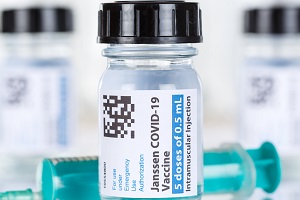 All eyes have been on the potential blood clot risk with the AstraZeneca/Oxford COVID-19 vaccine recently, but another shot is now in the spotlight, roiling the worldwide rollout. US regulators have paused use of the Janssen COVID-19 vaccine from Johnson & Johnson while they investigate reports of rare blood clots occurring after vaccination in six women younger than 50, Reuters reports. Johnson & Johnson also said it would delay rollout of its vaccine in Europe; the European Medicines Agency (EMA) said last week it was already looking into the potential risk of thromboembolic events with the shot.
The Johnson & Johnson issues threaten to slow a US vaccination effort that saw a record number of shots administered over the weekend. According to CIDRAP News, there were more than 4 million doses given on Saturday, with the daily average now over 3 million.
Yesterday, officials from the World Health Organization (WHO) said COVID-19 cases had increased worldwide for the seventh week in a row, despite the fact that about 780 million vaccine doses have been administered so far, CIDRAP News reports. At a briefing, WHO Director-General Tedros Adhanom Ghebreyesus, PhD, said, “Make no mistake, vaccines are a vital and powerful tool. But they are not the only tool.”
 In an interview with BBC Radio 4, Anthony Fauci, MD, director of the National Institute of Allergy and Infectious Diseases (NIAID), said herd immunity is an “elusive concept,” with no definitive percentage of the population that needs to be vaccinated or recovered from infection to reach it (he has previously estimated 70% to 85%), and that a return to normal life will be gradual as more and more people get their shots.
Data from a preprint study suggest the SARS-CoV-2 variant first detected in South Africa—B.1.351—may elude protection from the Pfizer/BioNTech vaccine, Reuters reports. The story notes that the variant is not prevalent in Israel, where the study took place, and that the research has not yet been peer reviewed.
A study in the Lancet Infectious Diseases provides some reassuring news about the B.1.1.7 variant first detected in the United Kingdom. Though the variant more easily spreads, it was not associated an increase in severe disease or death compared with other strains, as has been suggested by some prior research. A separate study in the Lancet Public Health did not find evidence that the variant alters symptoms or the odds of experiencing “long COVID.”
AstraZeneca’s diabetes medication dapagliflozin (Farxiga) failed to prevent organ dysfunction or all-cause mortality, or to induce a positive change in clinical status, in patients hospitalized with COVID-19 with risk factors for developing serious complications, the company announced yesterday. Full results from the phase III DARE-19 trial will be presented at the virtual American College of Cardiology (ACC) Scientific Session in May.
 A research letter in JAMA indicates that breastfeeding women secrete SARS-CoV-2-specific antibodies in breast milk for 6 weeks after vaccination and that the antibodies have strong neutralizing effects. That suggests “a potential protective effect against infection in the infant,” the authors say.
Surgical patients with COVID-19 die in the hospital about twice as frequently as those without COVID-19 (14.8% vs 7.1%), though the complication rate and length of stay do not significantly differ between groups, according to a study in JAMA Network Open. Hospital-acquired conditions and patient safety indicators were more common in the COVID-19 group. “As the COVID-19 pandemic continues and surges, we need to balance patients’ surgical needs with COVID-19-specific risks in the setting of a strained healthcare system,” the authors say.
April 12, 2021
 A Chinese official said the country’s homegrown vaccines offer suboptimal protection against SARS-CoV-2, noting that mixing them is a strategy being considered to increase effectiveness, the Associated Press reports. “We will solve the issue that current vaccines don’t have very high protection rates,” Gao Fu, PhD, director of the Chinese Center for Disease Control and Prevention, said at a conference over the weekend. “It’s now under consideration whether we should use different vaccines from different technical lines for the immunization process.” In an interview with the Global Times, however, Gao sought to clarify his remarks, saying that media reports of his statements were “a complete misunderstanding.”
On Monday, Regeneron released positive results from phase III trials of its antibody cocktail made up of casirivimab and imdevimab. When used for the treatment of asymptomatic patients recently infected with SARS-CoV-2, it reduced progression to symptomatic COVID-19. When administered to household contacts exposed to SARS-CoV-2, the cocktail reduced the risk of developing symptomatic infection by 81%. Based on the results of the latter trial, Regeneron will request an expansion of the emergency use authorization granted by the US Food and Drug Administration (FDA) in November 2020 to include prevention of COVID-19 in appropriate populations.
England entered another phase in its path to reopening its economy on Monday, with shops, pubs, and hairdressers welcoming back customers after 3 months of lockdown, Reuters reports. “After imposing the most onerous restrictions in Britain’s peacetime history, Prime Minister Boris Johnson said the reopening was a ‘major step’ towards freedom but urged people to behave responsibly as the coronavirus was still a threat.” Travel restrictions remain in place, with Heathrow Airport, Britain’s biggest airport, reporting that passenger numbers were down 83% in March compared with the same month last year. The United Kingdom has administered nearly 40 million COVID-19 vaccine doses so far.
 An expert panel in India, which recently overtook Brazil as the country with the second highest number of confirmed COVID-19 cases after the United States, has recommended emergency approval of Russia’s Sputnik V vaccine, Reuters reports. It would be the third COVID-19 vaccine available in the country if ultimately approved. Despite the surge in infections, hundreds of thousands of Hindu devotees gathered Monday to take a holy bath in the Ganges river.
Some additional CV society meetings for 2021 are moving forward with plans to be at least partly in-person. The Heart Failure Society of America (HFSA) announced last week that its meeting in September will be held using a hybrid format combining virtual elements and sessions on-site in Denver, CO. And the Heart Rhythm Society (HRS) will start providing virtual offerings on June 30 ahead of in-person activities in Boston, MA, at the end of July.
On Friday, Pfizer and BioNTech asked the FDA to clear their COVID-19 vaccine for use in adolescents ages 12 to 15, Politico reports. That comes about a week after the companies announced top-line results of a phase III trial showing that the vaccine was 100% effective and well tolerated in that age group.
Consistent with prior research, a study in JAMA Network Open shows that about one-third (31.1%) of pediatric patients hospitalized with COVID-19 had a severe form of the disease (requiring treatment in an ICU or step-down unit; requiring use of mechanical ventilation; or resulting in death). Those with chronic conditions, younger children, and boys were more likely to develop severe disease.
Two papers in Morbidity and Mortality Weekly Report provides insights into how race and ethnicity are playing into the pandemic in the United States. One shows that compared with white individuals, those who were Hispanic, American Indian or Alaska Native, or Black had higher rates of visits to the emergency department in the last quarter of 2020. The other shows that the proportion of hospitalized patients with COVID-19 was highest for Hispanic or Latino patients; racial/ethnic disparities diminished over the course of the pandemic but remained at the end of 2020.
 Rutgers University in New Jersey was the first university to say that it would require students to be vaccinated against COVID-19 before returning in the fall, but the list is now growing, with more than a dozen colleges following suit, NPR reports. The list includes Duke University, the University of Notre Dame, and two Ivy League universities, Brown and Cornell.


Todd Neale is the Associate News Editor for TCTMD and a Senior Medical Journalist. He got his start in journalism at …
Read Full BioRelated News

Comments