COVID-19: TCTMD’s Daily Dispatch for June Week 1
We’re curating a list of COVID-19 research and other useful content, and updating it daily.

TCTMD reporter Todd Neale is keeping up on breaking news and peer-reviewed research related to COVID-19 and will update daily. If you have something to share, tell us. All of our COVID-19 coverage can be found on our COVID-19 Hub.
June 4, 2021
The Pfizer/BioNTech vaccine may be considerably less effective against the “Delta” variant of SARS-CoV-2 than it was against the original “Alpha” strain, researchers report in a research letter in the Lancet. Even after two shots, the mRNA vaccine produced an antibody response that was more than five times weaker against the Delta strain (B.1.617.2) first detected in India and now surging in other parts of the world, including the UK. Protection was even lower with a single shot of the vaccine. The study also showed that elderly people and time since first vaccination were associated with decreased antibody activity. A booster shot may be required, investigators say.
A story in the Financial Times, however, explaining the Lancet study, quotes immunologist and infectious disease expert Eleanor Riley, PhD, who pointed out that antibody response is not the only factor that dictates vaccine effectiveness. “These data cannot tell us whether the vaccine will be any less effective at preventing severe disease, hospitalization, and death,” she told the Times. “We need to wait for the actual data on these outcomes. . . . There are reasons to be optimistic on this score, as other immune responses—such as T cells—also contribute to protection against severe disease and these may be less affected by the mutations that affect antibody neutralization.”
NBC News provided a grim reminder that the pandemic “is not over” in the United States, even as case counts decline. “As of Thursday evening, the country had seen at least 600,040 COVID-19 deaths, according to a count of reports by NBC News. More than 33.4 million cases have been recorded in the US.”
Across Africa, meanwhile, the abrupt surge in cases is being characterized as a “continental third wave,” the World Health Organization (WHO) said yesterday, “a portent of deeper trouble for a continent whose immunization drives have been crippled by shortfalls in funding and vaccine doses,” the New York Times reports.
 A news article in Nature explains the new labelling system for variants of concern, which were officially renamed using the Greek alphabet by the WHO on May 31, 2021, in the hopes of quelling confusion and avoiding “geographical stigmas.” A handy table collates the WHO label, the Pango lineage, the GISAID clade, the Nextstrain clade, the date of designation, the earliest documented sample, and yes, the country of origin. The Greek names “are not intended to replace scientific labels, but will serve as a handy shorthand for policymakers, the public, and other non-experts who are increasingly losing track of different variant names,” the article notes. A forthcoming paper in Nature Microbiology promises further details. Whether the terms will actually be used remains an open question. No word yet on whether there’s pushback from fraternities, sororities, or late-season hurricanes.
After an initial decline in hospitalizations among adolescents with confirmed COVID-19 in early 2021, numbers rose significantly in March and April, numbers from the Coronavirus Disease 2019-Associated Hospitalization Surveillance Network (COVID-NET) confirm. “COVID-19 adolescent hospitalization rates from COVID-NET peaked at 2.1 per 100,000 in early January 2021, declined to 0.6 in mid-March, and rose to 1.3 in April,” researchers write in Morbidity and Mortality Weekly Report. “Among hospitalized adolescents, nearly one third required intensive care unit admission, and 5% required invasive mechanical ventilation; no associated deaths occurred.”
A new “patient page” in JAMA Pediatrics details which vaccines are currently available for children in the United States and the safety data supporting their use, as well as other tactics parents can use to keep their kids safe. Nearly 4 million US children had been infected with COVID-19 as of May 2021, they note.
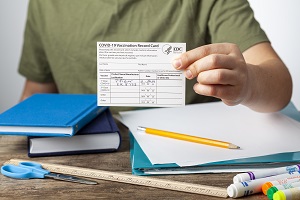 BestColleges.com is keeping a running tally of US colleges and universities that require students to be vaccinated before attending in-person classes next fall, a number now in the range of 350. But as a BMJ feature notes, the policies are heterogenous and there are “conflicting interpretations of the legality” of mandating vaccinations, particularly since all three vaccines being used in the United States still only hold emergency use authorization and have not been formally cleared.
TCTMD Managing Editor Shelley Wood contributed today’s Dispatch.
June 3, 2021
 The United States is promising to share excess vaccine doses with other parts of the globe, starting with an initial 25 million earmarked for countries in Latin America and the Caribbean, South and Southeast Asia, and Africa, as well as the Palestinian territories, Gaza, and the West Bank, the New York Times reports. It will also lift the Defense Production Act’s “priority rating” for three vaccine makers—AstraZeneca, Novovax and Sanofi—which requires US-made products to be used stateside before being shipped abroad. No vaccines made by these companies are currently approved for use in the United States. Other plans to boost vaccine supply around the world are also afoot.
Researchers writing in JAMA Network Open have been tracing the COVID-19 contract tracers and have reached a gloomy dead end: “In this surveillance-based, cross-sectional study, two of three individuals with COVID-19 were either not reached for interview or named no contacts when interviewed. A mean of 0.7 contacts were reached by telephone by public health authorities, and only 0.5 contacts per case were monitored, a lower rate than needed to overcome the estimated global SARS-CoV-2 reproductive number.”
 Also in JAMA Network Open, a study that set out to assess whether electronic health records can be used to track pregnancy and birth rates during COVID-19 concluded that births initially declined in the first phase of COVID-19, but a bump is expected in the summer of 2021. The analysis supports the notion that “pregnancy episode volume changes can be monitored and birth rates projected in real-time during major societal events,” investigators say.
Statins have repeatedly been floated as an option for treatment or prevention in the setting of COVID-19. Rita Rubin, writing in JAMA, sums the evidence to date.
The US Food and Drug Administration (FDA) has updated its web page summarizing the impact of emerging SARS-CoV-2 mutations on COVID-19 tests available in the United States. Today’s update is focused on the Accula SARS-CoV-2 test (Mesa Biotech), alerting operators that performance of the test may be affected due to a genetic mutation at positions 28877-28878 (AG to TC) in patient samples.
There were only five thromboembolic events among the first 288,368 people who received the Johnson & Johnson Ad26.COV2.S vaccine in South Africa, a research letter in the New England Journal of Medicine notes, yielding a rate of 1.7 events per 100,000 participants. All occurred in people with known risk factors for thromboembolism.
International Olympic Committee (IOC) officials insist the Tokyo games are still going ahead as planned, but with just 50 days before the games kick off, 10,000 of 80,000 unpaid volunteers have quit, the Associated Press reports. “Organizers said some dropped out because of worries about COVID-19. Few volunteers are expected to be vaccinated since most will have no contact with athletes or other key personnel. Only about 2-3% of Japan’s general population has been fully vaccinated. . . . Conversely, the IOC expects at least 80% of athletes and residents of the Olympic Village to be fully vaccinated.”
Meanwhile, a letter in the Lancet explores the reasons for Japan’s slow rollout, putting the blame on a sluggish regulatory approval process, delays in vaccine importation, and “a vaccine rollout system . . . insufficient for achieving mass vaccination.”
 First lottery sweepstakes and free tuition—now Americans are being offered free beer if they get vaccinated. The White House has partnered with Anheuser-Busch to offer free beers if the country reaches its goal of getting 70% of adults at least one COVID-19 vaccine shot by July 4. “Almost prohibition in reverse,” says CNN.
“Adults 21-plus will simply upload a picture of themselves in their favorite place to grab a beer, whether with friends at their favorite local bar and restaurant or with family in their very own backyard, at MyCooler.com/Beer to enter to receive a beer on A-B,” beer conglomerate Anheuser-Busch explains.
Also in the cards: a trip to a black Barbershop could get you a vaccine at no extra cost, as well as free day care while you’re getting the shot.
TCTMD Managing Editor Shelley Wood contributed today’s Dispatch.
June 2, 2021
Case numbers are stabilizing or trending downwards in a number of Western nations, but the reverse is true in many parts of the globe, the New York Times reports. Malaysia, Argentina, and Nepal are experiencing the worst outbreaks of the pandemic; Thailand, Taiwan, and South Africa have put new lockdowns in place; and “scores are dying daily in Paraguay and Uruguay, which now have the highest reported fatality rates per person in the world.”
Reassuring numbers from the Kaiser Permanente Northern California integrated healthcare system suggest that the 41% drop seen in acute MI and stroke alerts in the first wave of COVID-19 recovered over the next few months. Moreover, despite larger increases in COVID-19 hospitalizations during the summer and winter surges, no similar declines in MI were seen. A “modest” but significant decline was seen for stroke alerts during the summer COVID-19 peak, but no significant decline was seen during the winter surge. “These patterns may reflect changing patient attitudes during the COVID-19 pandemic or the success of health system and public health campaigns to reassure patients about the safety of seeking emergency care when needed,” investigators write in JAMA.
Also in JAMA, a viewpoint explores the divide that separates vaccine hesitancy from “vaccine apathy,” noting that people in the latter group “have yet to make the psychological investment required to be described as hesitant.” As such, different strategies are warranted for reaching this group, which spans different socioeconomic groups and ages. “In the next wave of vaccine promotion, attention to low-involvement populations (the ‘vaccine-apathetic’) and the development of specific vaccine-promotion messaging to help overcome vaccine apathy may be a critical element for achieving national vaccination goals,” the authors write.
 There’s growing concern about the efficacy of one-dose vaccination in protecting against the B.1.617.2 variant, which originated in India. Last week, Public Health England released results from its study of single- and double-dose efficacy concluding that both the Pfizer/BioNTech and AstraZeneca vaccines were only 33% effective against the strain following a single dose, with efficacy rising to 88% and 66%, respectively, 2 weeks after the second dose. The paper has only been published as a preprint. Several countries, including India, the United Kingdom, and Canada have considered or adopted a delayed second-dose approach in order to stretch limited supplies, but are now rethinking the strategy, the Independent reports. Medical officers in Canada released a joint statement today urging people to get their second doses “as soon as possible,” Reuters reports. Canadian advisors have also announced that Canadians can “mix and match” doses, getting either of the mRNA vaccines for their second dose, regardless of what type of vaccine they got for their first.
The mix-and-match advice is based on the CombivacS study from Spain, and reactogenicity and safety data from the Com-COV trial in the UK. Com-COV immunity results are expected later this month.
Forget sniffer dogs: electronic noses (eNoses) are machines that mimic animal olfaction to make diagnoses from body odor and can be deployed at scale to snuffle out COVID-19, researchers report in PLOS ONE. For the study, an eNose was placed at a COVID-19 drive-through testing station. “We applied a deep-learning classifier to the eNose measurements, and achieved real-time detection of SARS-CoV-2 infection at a level significantly better than chance, for both symptomatic and nonsymptomatic participants,” they report.
In JAMA Psychiatry, a viewpoint reviews the barriers and solutions to increasing uptake of COVID-19 vaccinations in people with serious mental illness. “One solution,” the authors write, “may be to embed vaccination clinics within mental health services, although none have been evaluated to date and to our knowledge.”
 Eight hundred and sixty-six pages of emails from Anthony Fauci, MD, director of the National Institute of Allergy and Infectious Diseases, obtained by the Washington Post through the Freedom of Information Act, offer a window into the earliest months of the pandemic. “The emails show that he was inundated with correspondence from colleagues, hospital administrators, foreign governments, and random strangers—about 1,000 messages a day, he says at one point—writing to seek his advice, solicit his help, or simply offer encouragement,” the Post summarizes. “I saw some news (hope it is fake) that [you] are being attacked by some people,” George Gao, director of the Chinese Center for Disease Control and Prevention, wrote to Fauci in April 2020. “Thank you for your kind note,” Fauci replied a few days later. “All is well despite some crazy people in this world.”
The drop in urban crime rates in 27 cities across 23 countries in the Americas, Europe, the Middle East, and Asia was “substantial” during the most-stringent phase of COVID-19 lockdowns, researchers report in Nature Human Behavior. Assault, burglary, robbery, theft, and vehicle theft were all down; homicide was the only category that didn’t see a dip, possibly because these crimes are dominated by domestic and gang violence.
June 1, 2021
 Europe’s “digital green certificate,” which confirms someone as having been fully vaccinated, recovered from the virus, or testing negative within the last 72 hours, went online today in some European Union (EU) countries. The aim is to facilitate safe travel between EU countries whose economies have suffered as a result of reduced tourism from their neighbors. “Bulgaria, the Czech Republic, Denmark, Germany, Greece, Croatia, and Poland made the certificates available to their citizens as of Tuesday and are accepting them for visitors,” the New York Times reports. “The European Commission, the bloc’s administrative branch, said the system would be in use for all 27 EU countries as of July 1.”
The European Medicines Agency (EMA) has given the green light to additional manufacturing and filling lines at Pfizer’s vaccine manufacturing site in Puurs, Belgium, enabling the company to ramp up production. “The recommendation . . . is expected to have a significant and immediate impact on the supply of Comirnaty, the COVID-19 vaccine developed by BioNTech and Pfizer, in the European Union,” a press release states.
Europe’s vaccination campaign has slowly picked up the pace in recent weeks, but many countries—particularly those in Eastern Europe—are lagging behind, the Economist notes. The UK, however, has hit an extraordinary milestone: for the first time since the start of the pandemic, the country recorded zero deaths yesterday, the BBC reports.
Deaths were higher than expected among patients with end-stage renal disease (ESRD) during the first 7 months of the pandemic, new data in Morbidity and Mortality Weekly Report confirm. As compared with numbers modelled using data from the 4 years prior, anywhere from 6,953 to 10,316 excess deaths were reported among the population of 798,611 ESRD patients receiving care at Medicare-certified dialysis facilities and kidney transplant centers across the United States.
An in-depth review published in Nature of SARS-CoV-2 variants, spike mutations, and “immune escape” tracks how variants have evolved as the human population’s immune profile has changed. “There is emerging evidence of reduced neutralization of some SARS-CoV-2 variants by postvaccination serum; however, a greater understanding of correlates of protection is required to evaluate how this may impact vaccine effectiveness,” investigators write. Staying ahead of new variants, particularly those that develop along novel mutational pathways not the focus of current vaccines, will require international collaboration and open sharing of data, they conclude.
 In a Nature Medicine news feature, Mike May, PhD, describes how the unanticipated success of mRNA vaccines in COVID-19 may throw open the door to a host of new treatments for other infectious diseases, as well as for cancers. “When the broad range of vaccines against COVID-19 were being tested in clinical trials, only a few experts expected the unproven technology of mRNA to be the star,” he writes.
A mathematical modelling study that aimed to analyze different levels of vaccination in combination with different nonpharmaceutical interventions (NPIs) confirms what many jurisdictions have learned the hard way: if NPIs—such as lockdowns, facemasks, and school closures—are removed before vaccination rates have ramped up, then deaths, hospitalizations, and infections will rise. Moreover, “as NPIs are removed, higher vaccination coverage with less efficacious vaccines can contribute to a larger reduction in risk of SARS-CoV-2 infection compared with more efficacious vaccines at lower coverage,” authors write in JAMA Network Open. “These findings highlight the need for well-resourced and coordinated efforts to achieve high vaccine coverage and continued adherence to NPIs before many prepandemic activities can be resumed.”
Mask-wearing cuts infections, but people need to remove them to eat: not surprisingly, earlier analyses show that indoor dining increases COVID-19 case rates. As restaurants reopen in many parts of the globe, members of the Centers for Disease Control and Prevention (CDC) COVID-19 Response Team lay out their suggestions for restaurants trying safely offer on-premises dining. “The goal is to control the COVID-19 pandemic as quickly as possible, to save lives, to help people get back to school and work safely, and to return to the many things they enjoy, such as eating at restaurants,” they write in JAMA.
 A growing number of COVID-19 “long-haulers” are developing postural orthostatic tachycardia syndrome, or POTS. As Cindy Loose reports on KHN.org, POTS, a disorder of the autonomic nervous system affecting heart rate, blood pressure, and vein contractions that assist blood flow, affected an estimated 3 million Americans prior to the pandemic. Now a handful of clinics and the 150 doctors in the United States recognized as specialists in treating the syndrome are being overwhelmed with patients, most of whom also have chronic fatigue.
Researchers have shown, once again, that increased vitamin D levels are not protective against COVID-19. In a mendelian randomization study using the genetic variants of 4,134 individuals with COVID-19 and 1,284,876 without COVID-19, a genetic predisposition for higher vitamin D levels was not associated with less-severe disease outcomes in people who contracted SARS-CoV-2. “Vitamin D supplementation as a public health measure to improve outcomes is not supported by this study,” authors write in PLOS Medicine. “Most importantly, our results suggest that investment in other therapeutic or preventative avenues should be prioritized for COVID-19 randomized clinical trials".
TCTMD Managing Editor Shelley Wood contributed today’s Dispatch.
May 31, 2021
The latest survey results from the Kaiser Family Foundation indicate that vaccinations are ticking steadily upwards in the United States, with 62% of US adults reporting they’ve had at least one dose, up from 56% in April. Moreover, the proportion of people saying they will “wait and see” about getting a vaccine has dropped from 15% to 12%, while the number of people saying “only if required (7%)” or “definitely not (13%)” remains static. “Overall adult vaccination rates could reach 70% over the next several months, with 4% saying they want the vaccine as soon as possible,” a synopsis states on KFF.org.
It’s a very different situation around the world, however. More than 1.84 billion vaccination shots have been administered around the globe. That’s nearly one for every four people, the New York Times vaccination tracker shows, “but there is already a stark gap between vaccination programs in different countries, with some yet to report a single dose.”
 The widening global vaccine gap is a “scandalous inequity” that will end up prolonging the pandemic for everyone, World Health Organization (WHO) Director-General Tedros Adhanom Ghebreyesus warned the WHO annual assembly last week, as noted in the Dispatch. Just 10 countries have used up more than 75% of the world’s vaccines. A Toronto Star article explores the mix of elation and guilt that citizens in the few highly-vaccinated countries are grappling with.
Even in wealthier countries, disparities are stark, as a new study in the Annals of the American Association of Geographers makes clear. Using data from millions of mobile phone users in the United States, researchers demonstrated that people living in deprived, less affluent neighborhoods were less likely to spend time indoors during strict lockdowns, usually because they couldn’t afford to, or because they had jobs where working from home was not possible.
June 21, 2021 is the date proposed for lifting COVID-19 lockdowns in the United Kingdom, but some scientists are pushing back, the Guardian notes. As case counts tick up, passing 3,300, and the Indian B.1.617.2 variant spreads, scientists are warning that the UK’s third wave may only now be starting.
TCTMD has additional details about the COLCORONA trial results, published last week in the Lancet Respiratory Medicine. As we reported in the Dispatch last week, the trial missed its primary endpoint but succeeded in patients with a confirmed diagnosis on PCR-testing. “Our study showed that colchicine reduces the occurrence of the primary endpoint of death or hospitalization by 25% in community-treated patients with PCR-confirmed COVID-19,” Jean-Claude Tardif, MD (Montreal Heart Institute, Canada), told TCTMD. “We believe that a number needed to treat (NNT) of 70 is acceptable in the context of a pandemic, for a drug like colchicine that is inexpensive, safe, and widely available.” That NNT was even lower among people over aged 70, as well as those with diabetes or with cardiovascular disease. The findings also held up in an analysis that considered all hospitalizations and deaths.
A randomized, controlled, open-label trial designed to test the feasibility of holding an indoor concert concludes that people willing to undergo same-day PCR screening and wear N95 masks in an adequately ventilated theatre were no more likely to develop COVID-19 than a control group of people who went about their normal daily activities, but did not attend the concert. Full results from the Spanish study were published in the Lancet Infectious Diseases. The University of Minnesota CIDRAP website delves into the details.
COVID-19 was anticipated to have deleterious effects on access to and use of contraceptive services among women in four countries in sub-Saharan Africa. At least in the earliest stages of the pandemic, those fears were not born out, investigators write in Lancet Global Health.
 All over the world, dogs are being trained to sniff out SARS-CoV-2 infection in humans, with “impressive,” results, a New York Times article reports. “For dogs, the smell is obvious, just like grilled meat for us,” Dr. Kaywalee Chatdarong, deputy dean of research and innovation for the faculty of veterinary science at Chulalongkorn University in Bangkok, is quoted in the Times. The goal is for dogs to be able to detect infections in crowded spaces such as transportation hubs and stadiums, the article notes.
TCTMD Managing Editor Shelley Wood contributed today's Dispatch.


Todd Neale is the Associate News Editor for TCTMD and a Senior Medical Journalist. He got his start in journalism at …
Read Full BioRelated News

Comments