Frail Patients Stand to Gain Most From Cardiac Rehab
Researchers hope the survival gains seen with rehab will encourage more referrals following cardiovascular procedures.


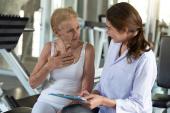
Frail patients who undergo coronary revascularization or aortic valve replacement derive significant benefit when referred for cardiac rehabilitation, according to a large analysis of Medicare beneficiaries.
When compared with patients who did not attend cardiac rehab, there was a larger absolute reduction in all-cause mortality at 1 year associated with rehab in the frailest patients than in the more-robust group, Tyler Bauer, MD (University of Michigan, Ann Arbor), and colleagues report in a paper published recently in Circulation: Cardiovascular Quality and Outcomes.
“My hope is that these findings will encourage us to think a little more openly about who we refer to cardiac rehab and not be necessarily biased against patients because they’re more frail,” senior investigator Michael P. Thompson, PhD (University of Michigan), told TCTMD. “We talk to a lot of cardiac rehab professionals, and their general opinion is: ‘Send us everybody and we’ll figure out whether or not they’re a good fit.’”
Cardiac rehabilitation, in general, is underutilized in the US population even though there are class 1A recommendations to use it after surgical or percutaneous coronary revascularization and TAVI or SAVR. Rehab is associated with improved clinical outcomes, exercise tolerance, and health-related quality of life, but less than one-third of eligible patients attend a single session, the researchers point out. In an analysis of commercially insured adults, less than 25% were enrolled in cardiac rehab after a qualifying cardiovascular procedure.
Thompson said there is some “controversy” around the use of cardiac rehabilitation in frail patients.
“When we talk to physicians about why they don’t send certain patients, at least anecdotally, we hear a lot of, ‘These patients can’t tolerate it. Person X just had a TAVR and is 84 years old. I don’t think cardiac rehab would be good for them, or maybe it’s a bit too much,’” he said. “There is a little bit of hesitancy for older and frail patients because I think there’s a mismatch between what they think cardiac rehab is and what it actually is.”
The core components of cardiac rehab include patient assessment, nutritional counseling, weight management/body composition, risk factor management, and psychosocial support, in addition to aerobic and strength training and counseling around exercise, according to a 2024 scientific statement from the American Heart Association and the American Association of Cardiovascular and Pulmonary Rehabilitation.
Get Them in the Door
The study included 501,049 Medicare beneficiaries (mean age 75.9 years; 37% female) who underwent PCI (54.3%), CABG (23%), TAVI (13.4%), CABG plug SAVR (5.5%), and SAVR (3.9%) between 2016 and 2018. Frailty was assessed using a claims-based frailty index (CFI), with patients stratified into quartiles where Q1 represented patients with the lowest level of frailty and Q4 the highest. Cardiac rehabilitation use was defined as attending at least one session within 1 year after discharge.
The overall uptake of cardiac rehab was 37.7%. Patients who underwent percutaneous procedures used cardiac rehab less compared with those treated surgically (30% for both TAVI and PCI versus 55% after CABG, 56% after SAVR, and 52% after CABG/SAVR).
Nearly half (49.7%) of patients in Q1 took part in the program compared with 23.7% of those in Q4. Less-frail patients also started rehab sooner and were more likely to complete more than 36 sessions. Greater frailty was associated with a higher risk of all-cause mortality at 1 year: 16.9% in Q4 and 2.5% in Q1. All-cause mortality also was higher in patients who didn’t take part in the rehab program, regardless of frailty score.
When stratified by CFI quartiles, those in Q1 who attended rehab had a 2.7% lower risk of mortality at 1 year compared with nonusers. For the frailest patients in Q4, the difference in mortality between rehab attendees and nonusers was 14.3% (P < 0.001 for difference between Q1 and Q4). An inverse-probability-weighted analysis confirmed the larger absolute treatment effect in frailer patients who utilized cardiac rehab: 1.7% difference in all-cause mortality between users and nonusers in Q1 versus 9.2% difference between users and nonusers in Q4 (P < 0.001). These results were confirmed in multivariable and propensity score-matched analyses.
To TCTMD, Thompson said the findings reflected the hypothesis going into the analysis: frailer patients are less likely to be referred for cardiac rehabilitation but stand to gain the most. However, the magnitude of the difference was surprising, especially since the frailest patients (Q4) who completed cardiac rehabilitation had adjusted 1-year mortality rates similar to the least frail patients (Q1) who didn’t attend the program.
Thompson said that when frail patients were referred for rehab, they took part in roughly the same number of sessions as patients who were less frail. For example, those in Q1 attended an average of 26.6 sessions compared with 23.1 for those in Q4, and these figures are in line with the national average.
“It seems that once you get them there, they do attend fairly well, and they continue to participate, which is really encouraging,” said Thompson. “It gives people a sense that the challenge may be getting them in the door, but once there, they actually attend pretty regularly.”
Given the lack of infrastructure to support all eligible patients for cardiac rehabilitation, it may be important to prioritize high-risk patients who stand to gain the most from it, say the researchers. While efforts to expand rehab are needed, these results suggest that frail patients might be one such subgroup, they add.

Michael O’Riordan is the Managing Editor for TCTMD. He completed his undergraduate degrees at Queen’s University in Kingston, ON, and…
Read Full BioSources
Bauer TM, Hou H, Fleigner M, et al. Association between cardiac rehabilitation and 1-year mortality by frailty level in Medicare beneficiaries. Circ Cardiovasc Qual Outcomes. 2025;18:e012009.
Disclosures
- Thompson reports research funding from the Agency for Healthcare Research and Quality and Blue Cross Blue Shield of Michigan.
- Bauer reports no relevant conflicts of interest.
Related News

Comments