New Dietary Guidelines for Americans Get Mixed Review From Cardiology Community
Some experts questioned advice around protein, dairy, and more but said there are some positive aspects here, too.

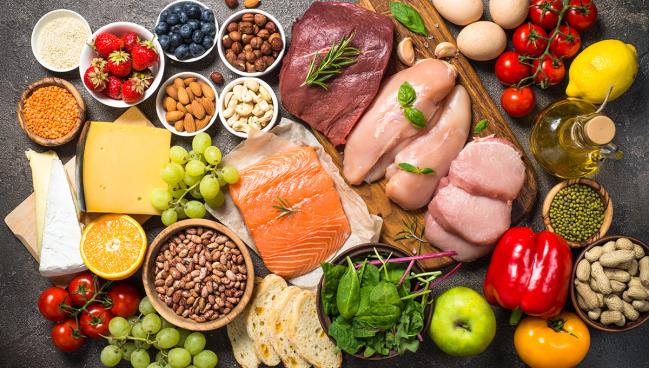
The new Dietary Guidelines for Americans, which are updated every 5 years, came out last week. While members of the US cardiology and nutrition communities point to some positive aspects, they also cited some areas deviating from conventional recommendations.
The latest iteration is pared down compared with previous documents, coming in at just 10 pages; the 2020-2025 and 2015-2020 versions, for comparison, had 164 and 144 pages, respectively. And it’s introduced with a simple message: “eat real food.”
“American households must prioritize diets built on whole, nutrient-dense foods—protein, dairy, vegetables, fruits, healthy fats, and whole grains,” Robert F. Kennedy, Jr, secretary of the US Department of Health and Human Services (HHS), and Brooke L. Rollins, secretary of the US Department of Agriculture, write in an introduction. “Paired with a dramatic reduction in highly processed foods laden with refined carbohydrates, added sugars, excess sodium, unhealthy fats, and chemical additives, this approach can change the health trajectory for so many Americans.”
The simplified document also advises Americans to limit alcohol consumption to improve overall health and gives individualized recommendations for infants, children, and adolescents, young adults, pregnant and lactating women, older adults, people with chronic diseases, and vegetarians and vegans.
The American Heart Association (AHA) and the American College of Cardiology (ACC) each released statements welcoming the new guidelines, highlighting areas of agreement while also identifying aspects that are not fully consistent with recommendations from their guideline on the primary prevention of CVD, such as advice to eat protein from animal sources (along with plant sources) and consume full-fat dairy.
Agreements and Discrepancies
Despite the controversy around Kennedy as the secretary of HHS—he is not a physician and has long been critical of the medical establishment—experts who spoke with TCTMD pointed to many positives in the new document, including advice to maintain the right energy balance; focus on minimally processed foods and limit highly processed products; limit added sugars and salt; support gut health; replace refined grains with whole grains; eat a variety of vegetables and fruits; and aim to keep saturated fat to less than 10% of total daily calories while eating healthy fats.
Amit Khera, MD (UT Southwestern Medical Center, Dallas, TX), a preventive cardiologist and chair of the AHA’s advocacy coordinating committee, said, “We know that nutrition is foundational to health . . . so to see this focus on nutrition is welcome.”
Starting with the science, it seems to be that plant-based proteins have more health benefits. Amit Khera
There is a lot more overlap between the new dietary guidelines and existing recommendations from professional societies than there are discrepancies, he told TCTMD.
Still, despite that overlap, some aspects of the new guidelines, including the advice around protein consumption, have been criticized. There’s some uncertainty around the relationship between protein and cardiovascular health, Khera said, adding that the language regarding protein sources in the document raises concerns. The document lists animal sources of protein ahead of those from plants.
“This is where there might be slightly [a] difference of opinion or a different approach. I think the AHA’s approach is thinking about starting with plant-based sources and with looking at patterns,” Khera said, noting that evidence generally supports the benefits of dietary patterns with a heavier emphasis on plant- versus animal-based protein. “Starting with the science, it seems to be that plant-based proteins have more health benefits.”
Lawrence Appel, MD (Johns Hopkins Bloomberg School of Public Health, Baltimore, MD), a member of the Scientific Advisory Committee for the 2005-2010 and 2010-2015 versions of the Dietary Guidelines for Americans, also emphasized the importance of evidence-based guidelines, telling TCTMD he questioned the push for more protein.
“I’m struggling to understand how they came up with the recommendation to substantially increase protein intake,” said Appel, adding that “insufficient protein intake is not a public health concern” and the directive might even have unintended consequences for certain groups, including patients with chronic kidney disease.
“Meat and dairy products are high in protein and phosphorus which can accelerate the decline in kidney function,” he explained. “For this reason, dietitians recommend vegetable-based proteins, which have a desirable amino acid profile compared to the amino acid profile of animal protein. So there could be some danger to people who have kidney disease.”
Kim Allan Williams Sr, MD (University of Louisville, KY), a past president of the ACC, focused his critique on the emphasis on eating animal protein, noting that President Donald Trump issued an executive order in May calling for a strong scientific basis for all federal policies and decision-making.
“From our understanding of peer-reviewed published literature, that’s not what happened with this particular dietary guideline,” Williams told TCTMD, emphasizing that the scientific evidence supports plant-based diets for decreasing CVD, cancer, and other diseases, as well as mortality.
“The literature is very clear that diets that are rich in whole grains, fruits, vegetables, legumes, nuts, and seeds and low in red and processed meat, saturated fat, and added sugars are foundational to health,” he said. “And if we undo that with a lot of beef tallow, a lot of red meat, that actually will worsen our health, which is far worse than other countries with a similar amount of healthcare expenditures.”
The section on dairy in the new guidance has garnered attention, too. It states that “when consuming dairy, include full-fat dairy with no added sugars.” Khera noted that when looking at dietary patterns, those that include more low-fat and fat-free dairy come with less consumption of saturated fat and “may have additional benefits in that regard.”
Another area of discrepancy is in how the new guidelines handle discussions of sodium. Though the government still recommends limited sodium intake, there are statements in support of flavoring foods with salt, spices, and herbs “if preferred.”
Meat and dairy products are high in protein and phosphorus which can accelerate the decline in kidney function. Lawrence Appel
“We remind ourselves that 70% of the sodium we all consume comes from things we don’t even make because we eat all our food from groceries and restaurants. We definitely don’t need to be adding salt to our food, because we already get so much in everything we eat currently,” Khera said. “But to take it full circle, let’s go back to the areas of agreement or where there’s enthusiasm. [And that] is the idea of eating whole foods and preparing them yourselves. That’s a big part of this. And if you do that, you’re really not going to get a lot of sodium.”
Though the dietary guidelines recommend keeping saturated fat consumption low and incorporating healthy fats, experts questioned the details of that advice.
Appel noted that when saturated fat is reduced, it’s important to consider what’s going to replace it. Clinical trials and observational studies have shown that polyunsaturated fats, which can be found in the seed oils that have recently been vilified, are actually beneficial, but they weren’t emphasized in the new dietary guidelines. “Downstream, that will have an adverse impact.”
Alice Lichtenstein, DSc (Tufts University Jean Mayer USDA Human Nutrition Research Center on Aging, Boston, MA), disagreed with the guidelines for listing olive oil as a source high in essential fatty acids while ignoring better sources like soybean and canola oils and encouraging use of butter and beef tallow. Adhering to advice to consume more meats and whole-fat dairy, which are both very high in saturated fat, would make it difficult to keep saturated fats to less than 10% of total calories, she said.
What’s Missing
Appel raised some other issues, saying, “In terms of a focus on cardiovascular health, I think you need to think about what wasn’t mentioned as well as what was mentioned.”
Hypertension and blood pressure, for example, are not referenced at all in the new document. “One of the principal driving forces for prior dietary guidelines has been lowering blood pressure and controlling hypertension, with a prominent emphasis on reducing salt intake and adhering to healthy dietary patterns to reduce blood pressure,” Appel said.
In addition, there is no discussion of cost or health equity, which are key contextual issues to consider, he said, noting the high cost of beef and milk compared with other protein sources. “How to help low-income people to eat well and follow dietary guidelines is a really important issue,” Appel added.
And similar to prior versions of the Dietary Guidelines for Americans, implementation of the recommendations does not get any attention.
“Dietary guidelines provide recommendations for healthy eating, but they don’t provide guidance on implementation, which is critical to improving the diets of the US population,” Appel said. “Implementation requires understanding the impediments to healthy eating, which are often structural. For example, it’s easy to say, ‘Eat more fruits and vegetables,’ but there is not enough arable land available in the United States for everyone to eat five fruits and vegetables per day. Those are the kind of issues that have to be dealt with in order for things to change.”
Khera stressed the importance of implementation as well. “Even though people have known for decades to eat well, we just don’t do it,” he said. “And so this is a call to arms about focusing on nutrition and if the administration puts some teeth behind that and really tries to encourage the population, I think there could be a lot of great implementation that can be done.”
The release of the new dietary guidelines has gotten people’s attention, and “I think there’s a positive to that in that people are focusing on nutrition,” Khera said. “There are some areas we’ll have to work through . . . and certainly as time goes forward those will be ironed out together. But I do think this is a great call to action in terms of nutrition and health.”

Todd Neale is the Associate News Editor for TCTMD and a Senior Medical Journalist. He got his start in journalism at …
Read Full BioSources
US Department of Health and Human Services, US Department of Agriculture. Dietary Guidelines for Americans, 2025-2030. Published on: January 7, 2026. Accessed on: January 12, 2026.
Related News



Comments