PARACHUTE-HF: Sacubitril/Valsartan Effective in Neglected Chagas Cardiomyopathy
The benefit was driven by changes in NT-proBNP, but experts hope the trial sets the stage for more studies of Chagas disease.


MADRID, Spain—Patients with heart failure caused by Chagas disease fare significantly better if they are treated with an angiotensin receptor-neprilysin inhibitor (ARNI) instead of an ACE inhibitor, according to results from PARACHUTE-HF.
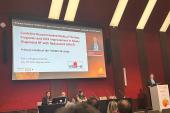
The study, which was presented during a Hot Line session at the European Society of Cardiology Congress 2025, is the first randomized trial testing different medical therapies in Chagas cardiomyopathy.
“It took too long to get here,” said study investigator Felix Ramires, MD (Hospital das Clínicas da Faculdade de Medicina/Universidade de São Paulo, Brazil), during a press conference. “This is a neglected population.”
Lead investigator Renato Lopes, MD, PhD (Duke University School of Medicine, Durham, NC), who presented the findings during the Hot Line session, said heart failure is one of the most common and feared complications of Chagas, which is a tropical parasitic disease caused by Trypanosoma cruzi. While Chagas disease is common in South America, Central America, and Mexico, affecting roughly 6 to 7 million worldwide, there are an estimated 300,000 infected people in the US.
Chagas cardiomyopathy “has a very complex pathophysiology,” said Lopes, adding that it is associated with higher hospitalization and mortality rates than HF resulting from other etiologies.
Reduces NT-proBNP
The PARACHUTE-HF trial was conducted at 83 sites in Mexico, Columbia, Argentina, and Brazil. The prospective, open-label trial compared sacubitril/valsartan (Entresto; Novartis) uptitrated to 200 mg twice daily in 462 patients against enalapril 10 mg twice daily in 460 patients. Nearly all patients were in NYHA functional class II/III, and 44% had been hospitalized for a prior HF event. The mean LVEF at baseline was 29.8%, and the median NT-proBNP concentration was 1,730 pg/mL.
At the time of randomization, patients were treated with a range of HF therapies, said Lopes. More than 90% were taking a beta-blocker, and nearly three-quarters were taking a mineralocorticoid receptor antagonist. Roughly half of patients were taking an ACE inhibitor, and one-third were on an ARB. Use of sodium-glucose cotransporter 2 (SGLT2) inhibitors was infrequent, with just 6.3% on the medications.
In this event-driven study, investigators compared the therapies using the win ratio, which is a method to test the occurrence of clinical events in the order of clinical importance. The win ratio is based on pairwise comparisons of every participant in the sacubitril/valsartan arm compared with every participant in the enalapril arm.
Treatment with the ARNI led to significantly more “wins” in the primary composite endpoint of cardiovascular mortality, time to first hospitalization for HF, and the relative change in NT-proBNP levels from baseline (stratified win ratio 1.52; 95% CI 1.28-1.82). The win was driven by the reduction in NT-proBNP levels.
Numerically, there were fewer cardiovascular deaths and HF hospitalizations in the ARNI group. NT-proBNP levels declined from 1,801 pg/mL at baseline to 1,236 pg/mL at 12 weeks, with no change seen in the enalapril group. There was a 30.6% reduction in the log(NT-proBNP) at 12 weeks among those treated with sacubitril/valsartan compared with a 5.5% reduction in the enalapril arm.
“The study was not powered for mortality or heart failure hospitalizations,” Ramires told TCTMD. “With 922 patients randomized, we did not expect much in hard endpoints. That’s why we included NT-proBNP, which we know is a good biomarker for prognosis, the severity of disease, and mortality.”
Treatment with the ARNI was well tolerated, with numerically fewer adverse events leading to drug discontinuation. Symptomatic hypotension was a little more common with sacubitril/valsartan than with enalapril (31.6% vs 27.4%).
Need for More Studies in Chagas HF
Scott Solomon, MD (Brigham and Women’s Hospital, Boston, MA), the discussant following the presentation, compared the PARACHUTE-HF results with those of PARADIGM-HF, the landmark trial that launched sacubitril/valsartan in patients who have heart failure with reduced ejection fraction (HFrEF).
In that study, the ARNI lowered the relative risk of cardiovascular death and hospitalizations for HF by 20% compared with enalapril alone, a result that led to its class 1 recommendation for use in HFrEF patients. The PARADIGM-HF trial randomized more than 8,400 patients to treatment but did include 113 patients with Chagas cardiomyopathy. In an exploratory analysis, there were trends toward lower risks of cardiovascular mortality or HF hospitalization among the Chagas patients treated with sacubitril/valsartan.
Results from PARACHUTE-HF are mostly consistent with PARADIGM-HF, Solomon said, noting that this new trial is one-tenth the size of PARADIGM-HF and underpowered for hard clinical endpoints.
“So, where do we go from here? Well, virtually every guideline-directed medical therapy for heart failure with reduced ejection infection works regardless of heart failure etiology,” he said. “It is unlikely that Chagas cardiomyopathy behaves differently.”
Lopes said PARACHUTE-HF is hopefully the start of developing more high-quality evidence for the treatment of Chagas cardiomyopathy, perhaps with SGLT2 inhibitors, for example. “[This] is clearly a first step in the right direction,” he said. “In terms of the future, there is a need for rigorously conducted clinical trials in Chagas disease to better define the cardiovascular benefit-risk profile of new treatment options for this neglected and high-risk population.”

Michael O’Riordan is the Managing Editor for TCTMD. He completed his undergraduate degrees at Queen’s University in Kingston, ON, and…
Read Full BioSources
Lopes RD. PARACHUTE-HF: randomized trial comparing sacubitril/valsartan with enalapril in patients with HFrEF caused by chronic Chagas cardiomyopathy. Presented at: ESC Congress 2025. September 1, 2025. Madrid, Spain.
Disclosures
- Lopes reports research contracts with Amgen, Bristol Myers Squibb, GlaxoSmithKline, Medtronic, Pfizer, and Sanofi-Aventis, as well as consulting fees/royalties/stocks from Pfizer, Daiichi Sankyo, Novo Nordisk, Bayer, Boehringer Ingelheim, and Bristol Myers Squibb.
- Solomon reports consulting for and/or receiving grant support from Abbott Vascular, Actelion Pharmaceuticals, Action Medical Research Akros, Alnylam Pharmaceuticals, American Regent, Amgen, Anacardio, Arena, AstraZeneca, Bayer, Bellepheron, Boehringer Ingelheim, Bristol Myers Squibb, Cardiac Dimensions, Cardior, Celladon Corporation, Corvia, Cytokinetics, Daiichi Sankyo, Dinaqor, Edgewise Therapeutics, Eidos, Eli Lilly, GlaxoSmithKline, Ionis, Johnson & Johnson, Lexicon, Merck, Mesoblast, Moderna, MyoKardia, Neurotronik, Novartis, Novo Nordisk, Quantum Genomics, Respicardia, Roche Diagnostics, Sanofi Pasteur, Sarepta Therapeutics, Tenaya, Theracos, Tremeau, us2.ai, and Valo.
Related News


Comments