COVID-19: TCTMD’s Daily Dispatch for April Week 3
We’re curating a list of COVID-19 research and other useful content, and updating it daily.


TCTMD reporter Todd Neale is keeping up on breaking news and peer-reviewed research related to COVID-19 and will update daily. If you have something to share, tell us. All of our COVID-19 coverage can be found on our COVID-19 Hub.
April 23, 2021
On Friday, the European Medicines Agency (EMA) provided an update on its deliberations regarding the safety of AstraZeneca/Oxford COVID-19 vaccine—called Vaxzevria in Europe—following reports of very rare blood clots, placing the potential risk into the context of the severity of COVID-19. “The benefits of Vaxzevria outweigh its risks in adults of all age groups,” the agency said. It provides more detailed data regarding that balance, however, in order to help nations make decisions about rollout of the vaccine. The EMA’s human medicines committee also adopted two recommendations aimed at increasing manufacturing capacity and supply for mRNA-based vaccines from Pfizer/BioNTech and Moderna.
On Friday, the Advisory Committee on Immunization Practices (ACIP), which provides guidance to the US Centers for Disease Control and Prevention (CDC), is again meeting to discuss the potential risk of blood clots associated with the Janssen COVID-19 vaccine from Johnson & Johnson. But, according to the New York Times, health officials are leaning toward resuming its use with a new warning about the rare complications. At the ACIP meeting last week, committee members indicated that they needed more information to make a decision. Politico is reporting that White House officials have “largely written off the shot” after production failures.
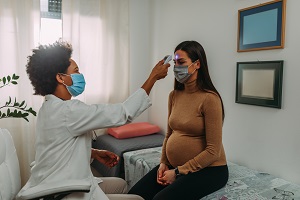 Findings from the multinational INTERCOVID study, published in JAMA Pediatrics, suggest that pregnant women and their babies face a higher risk from COVID-19 than previously thought. Women with COVID-19 had greater risks of preeclampsia/eclampsia, severe infections, ICU admission, maternal mortality, preterm birth, severe neonatal morbidity, and severe perinatal morbidity and mortality. “Fortunately, there were very few maternal deaths,” one of the researchers said in a press release. “Nevertheless, the risk of dying during pregnancy and in the postnatal period was 22 times higher in women with COVID-19 than in the noninfected pregnant women.” Another researcher said the study “strengthens the case for offering vaccination to all pregnant women.”
 Virtual training for interventional cardiologists has boomed as COVID-19 continues to limit in-person proctoring and observation, TCTMD’s Yael Maxwell reports. “The concept of virtual training and the technology to enable it did not originate as a way to meet the challenges of 2020, but the pandemic certainly allowed it to blossom,” she writes. Though training is unlikely to go back to the way it was before COVID-19, one cardiologist made a pitch for the continuing importance of personal interaction: “Video is nice, but hugging is better.”
Disturbing data examining the postacute illness period following a positive COVID-19 diagnosis hint that mortality rates remain elevated out to 6 months. Reviewing diagnoses, medication use, and laboratory abnormalities among 30-day survivors of COVID-19 among veterans included in the US Department of Veterans Affairs database, investigators writing in Nature found increased use of a wide range of medications, including opioids, and evidence of laboratory abnormalities. Bloomberg delves into the data and its implications.
Long COVID is getting more and more attention in the media. A KHN story discusses the efforts to understand the phenomenon of lingering symptoms after recovery from SARS-CoV-2 infection, as well as the uncertainties around the causes and prognosis. And a STAT story focuses on the struggles long-haulers have in getting care for their symptoms. “Medical centers across the country are opening clinics specifically for people with lingering COVID symptoms, aiming to harness the expertise of specialists ranging from pulmonologists to physical therapists to neurologists,” Allison Bond, MD, writes. “But many long COVID sufferers are located far from such a clinic, and the waitlist to be seen often is long.”
In what might be the first sign of spring to feel like spring—metaphorically speaking—STAT is reporting that Michigan, Minnesota, New Jersey, Illinois, and other states that weathered recent COVID-19 surges “appear to have turned a corner.” According to journalist Andrew Joseph, “Experts are cautious that the progress has just begun and needs to be sustained if the states want to actually achieve low levels of transmission. But they’re heartened that it appears vaccines are increasingly not just protecting individuals from COVID-19, but are starting to have broader benefits for communities.”
There are signs of progress in New York, as well, even as the state passed 2 million confirmed COVID-19 cases on Thursday, NBC New York reports, noting recent declines in hospitalizations and deaths. There were fewer than 3,570 COVID-19 hospitalizations statewide as of Thursday, the lowest total since the end of November. Also, New York City closed its last remaining field hospital this week. Mayor Bill de Blasio said, however, that mask mandates in the city will remain in place at least through the end of June.
 A UK study in Vet Record has found evidence of human-to-cat transmission of SARS-CoV-2 during the pandemic, with the cats developing mild or severe respiratory disease. “Given the ability of the new coronavirus to infect different species, it will be important to monitor for human‐to‐cat, cat‐to‐cat, and cat‐to‐human transmission,” the authors say.
A disease responsible for plumbing the depths of human misery, COVID-19 has now reached a new peak: Mount Everest base camp. The Washington Post explores why its arrival set the stage for a super-spreader event.
TCTMD Managing Editor Shelley Wood contributed part of today’s Dispatch.
April 22, 2021
COVID-19 is increasingly killing young people in Brazil, raising concerns that the global pandemic may take a similar turn, according to a story by Bloomberg News: “In March, 3,405 Brazilians aged 30 to 39 died from COVID, almost four times the number in January. Among those in their 40s, there were about 7,170 fatalities, up from 1,840, and for those 20-29, deaths jumped to 880 from 245.” Vaccinations focused on the elderly appear to explain part of the shift, but another contributor may be that young people don’t think they’re at risk. “Because they’re young and the virus first infected the elderly population, they don’t believe or don’t want to believe that it can be serious,” one Brazilian cardiologist said.
India just set an unwanted world record, recording the highest daily total of COVID-19 infections seen so far (314,835), Reuters reports. Most Indian hospitals are full, and oxygen is running out. “Some doctors advised patients to stay at home, while a crematorium in the eastern city of Muzaffarpur said it was being overwhelmed with bodies, and grieving families had to wait their turn. A crematorium east of Delhi built funeral pyres in its parking lot.”
 TCTMD’s Caitlin Cox reports on the recent study in Circulation examining cardiac involvement in US collegiate athletes, writing that “the findings should reassure athletes, coaches, and parents, as well as the medical community more widely, that the viral infection does not cause insidious damage.” And the researchers say the data, from the Outcomes Registry for Cardiac Conditions in Athletes (ORCCA), “suggest that asymptomatic or mildly symptomatic athletes that have fully recovered from SARS-CoV-2 infection may return to sport without cardiac testing.”
A news story in JAMA tackles the issue of attacks against healthcare workers in the COVID-19 era. Violence affecting this population has been on the rise for at least a decade, the story notes, but it seems to have gotten worse during the pandemic. “Anecdotally, when I talk to my colleagues and in particular the nurses and the techs, they feel like there has definitely been an uptick in the violence against them,” one professor and chair of emergency medicine said.
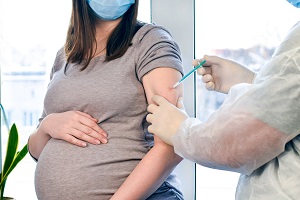 There are no obvious safety concerns when it comes to administering mRNA COVID-19 vaccines—from Pfizer/BioNTech and Moderna—to pregnant women, according to data in the New England Journal of Medicine. “Although not directly comparable, calculated proportions of adverse pregnancy and neonatal outcomes in persons vaccinated against COVID-19 who had a completed pregnancy were similar to incidences reported in studies involving pregnant women that were conducted before the COVID-19 pandemic,” the authors write. They note that additional studies are needed.
Also in NEJM, results of the phase III ENSEMBLE trial of the Janssen COVID-19 vaccine from Johnson & Johnson, which have been reported in preliminary form before, confirm efficacy of about 66% against moderate-to-severe/critical COVID-19. There were three deaths in the vaccine group (none related to COVID-19) and 16 in the placebo group (five COVID-related). Use of the vaccine remains paused in the United States as regulators evaluate reports of rare blood clots in people who received it.
In the New York Times, Kat Eschner explores the toll of the pandemic from the perspective of time—rather than lives—lost: “For the past year, experts and journalists have struggled to express what COVID-19 has taken. But health statisticians are increasingly using a calculation called years of life lost, which counts how much time the victims could have lived if they hadn’t died. They say it can help us determine which communities have lost the most and prioritize how to recover.”
🐋 We've received many questions about the blue whale's bandage: It's real. It was installed yesterday by Trenton from the Exhibition department! It's 6 feet long & 2 feet wide.
— American Museum of Natural History (@AMNH) April 20, 2021
Come see it for yourself! Register for a vaccine today: https://t.co/smuMuIshDy#NYCVaccineForAll pic.twitter.com/8ZoihfXp4w
The demand for COVID-19 vaccine appears to be waning among Americans, with an 11% decline in vaccinations over the past week, the Washington Post reports. That’s the biggest drop since February, when winter storms wreaked havoc on vaccine sites and deliveries, and it comes at a time when all US adults are now eligible to receive the shots. The pause in the use of the Janssen vaccine likely played a role in the decline. Different incentives are being offered to get people to vaccination sites. President Joe Biden has been pushing vaccinations and has promised tax credits for employers who provide paid time off for employees to get their shots and recover from them. Politico delves into other efforts from the Biden administration to increase uptake.
Perhaps a trip to the museum will help some people overcome their hesitancy. Starting tomorrow, New York City residents will be able to get their shots on the lower level of the American Museum of Natural History’s Milstein Hall of Ocean Life, underneath the blue whale model measuring 94 feet in length. Anyone vaccinated there will receive a voucher for a free future visit for up to four people.
April 21, 2021
 Rollout of Johnson & Johnson’s Janssen COVID-19 vaccine is resuming in Europe after the European Medicines Agency (EMA) determined that the benefits of the shot outweigh the risk of very rare blood clots possibly associated with the vaccine, Reuters reports. Use of the vaccine is still on pause in the United States as regulators there continue to examine adverse event reports. The Advisory Committee on Immunization Practices (ACIP), which provides guidance to the US Centers for Disease Control & Prevention (CDC), will meet again Friday to discuss the J&J vaccine.
Exacerbating an already dire COVID-19 situation in India, an oxygen disruption has killed 22 patients who were on ventilators in Zakir Hussain Hospital in Nashik, a city in hard-hit Maharashtra state, the Associated Press reports. As a whole, India reported a record 295,041 daily COVID-19 cases, while the daily death toll topped 2,000 for the first time.
STAT’s Helen Branswell asked more than two dozen virologists, epidemiologists, immunologists, and evolutionary biologists what key questions about SARS-CoV-2 and COVID-19 remain, even after all we’ve learned over the past 16 months or so. “There was surprising diversity in the questions, though many cluster around certain themes, such as the nature of immunity or the impact of viral variants,” Branswell writes. “Knowing what scientists still want to learn shows us how far we’ve come—and how far we have left to go to solve the mysteries of [SARS-CoV-2] and COVID-19.”
 German Chancellor Angela Merkel has new powers to combat the pandemic now that lawmakers approved a proposal to mandate certain restrictions—including closures and curfews—in areas where COVID-19 numbers are surging, the Associated Press reports: “The legislation to apply an ‘emergency brake’ consistently in areas with high infection rates is intended to end the patchwork of measures that has often characterized the pandemic response across highly decentralized Germany’s 16 states.”
Two papers in Morbidity and Mortality Weekly Report examine SARS-CoV-2 infections in skilled nursing facilities in the US. One detailed 22 possible breakthrough infections among fully vaccinated residents and staff members, two-thirds of whom were asymptomatic. There were two COVID-19-related hospitalizations and one death. The other examined an outbreak at a facility in Kentucky associated with the R.1 variant of the virus, which had not been detected in the state previously. Unvaccinated residents and staff members were much more likely to be infected, with the results indicating that the vaccination with the Pfizer/BioNTech shot was about 87% protective against symptomatic illness.
Survival among COVID-19 patients treated with extracorporeal membrane oxygenation (ECMO) was strongly tied to a center’s prior experience in venovenous ECMO, according to a French study published in the Lancet Respiratory Medicine. “Early ECMO management in centers with a high venovenous ECMO case volume should be advocated, by applying centralization and regulation of ECMO indications, which should also help to prevent a shortage of resources,” the authors say.
Michigan, which had over 6,600 cases yesterday, remains the current epicenter of US COVID-19 activity, but Pennsylvania and New Jersey are close behind, CIDRAP news reports. Pennsylvania has averaged more than 5,000 cases per day over the last week, with New Jersey averaging more than 3,200 daily cases after a spike in March.
 Hawaii is set to start relaxing travel restrictions for people who are vaccinated, starting with inter-island travelers, according to the Washington Post: “Starting May 11, state residents who were vaccinated in Hawaii will be able to bypass coronavirus testing requirements when they travel between islands, as long as at least 14 days have passed since their final shot. For vaccinated citizens of Hawaii who previously had to get tested to travel to other parts of the state, this means doing business or seeing family will be much easier.” Restrictions will ease for other travelers, including those coming from the continental US and overseas, at a later date.
As of 2 days ago, anyone 16-years or older is eligible for vaccination across the United States.
April 20, 2021
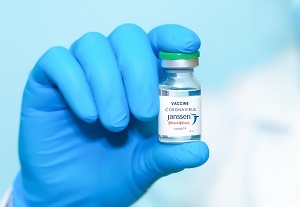 The safety committee of the European Medicines Agency (EMA) has concluded that there is a “possible link to very rare cases of unusual blood clots with low blood platelets” associated with the Janssen COVID-19 vaccine from Johnson & Johnson, that a warning should be added to the product information, and that the events should be listed as very rare side effects. All cases reviewed by the agency occurred in people younger than 60 within 3 weeks of vaccination, mostly affecting women. The overall benefits of preventing COVID-19 outweigh the risks of side effects, the EMA said.
World Health Organization (WHO) Director-General Tedros Adhanom Ghebreyesus, PhD, warned Monday that the pace of the pandemic is increasing, CNN reports. “It took 9 months to reach 1 million deaths, 4 months to reach 2 million, and 3 months to reach 3 million deaths,” he said. “Big numbers can make us numb, but each one of these deaths is a tragedy for families, communities, and nations.” More than 5.2 million new cases were reported last week, the most since the beginning of the pandemic more than a year ago.
Of the roughly 84 million Americans who have been fully vaccinated against COVID-19, fewer than 6,000 (0.007%) have become infected with the virus, Rochelle Walensky, MD, director of the US Centers for Disease Control and Prevention (CDC) said. She acknowledged, however, that some cases might have been missed, CNBC reports. “Although this number is from 43 states and territories and likely an underestimate, it still makes a really important point, these vaccines are working. Of the nearly 6,000 cases, approximately 30% had no symptoms at all,” Walensky said.
To deal with a worsening COVID-19 situation, India will open up vaccine eligibility to anyone over the age of 18 on May 1, BBC News reports. Supply is a concern, however, as the government said last week it had only 27 million doses, which is enough for about 9 days at current rates of vaccination.
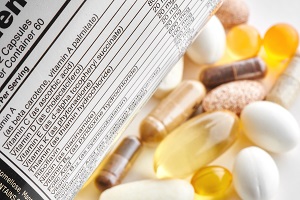 An analysis of users of the COVID-19 Symptom Study app, published in BMJ Nutrition, Prevention & Health, suggests that people who take probiotics, omega-3 fatty acids, multivitamins, or vitamin D have lower risks of SARS-CoV-2 infection. No such associations were seen for vitamin C, zinc, or garlic supplements. The relationships were seen in women across age and BMI groups, but not in men. The researchers conclude that randomized trials are needed to confirm any potential effects. Of note, as reported in the Dispatch back in mid-February 2021, a small, randomized, clinical trial of a single, high-dose of Vitamin D to prevent worsening disease in patients hospitalized for COVID-19 showed no benefit to supplementation.
Initial findings from the North American COVID-19 Myocardial Infarction Registry have been published in the Journal of the American College of Cardiology. Among STEMI patients, those who had confirmed COVID-19 were more likely to belong to a racial/ethnic minority group and to have diabetes compared to patients with suspected COVID-19 or historical controls. They were more likely to present with cardiogenic shock, and less likely to undergo invasive angiography compared with controls. Primary PCI was performed in 71% of COVID-19-positive patients, who had a higher rate of in-hospital death, stroke, recurrent MI, or repeat unplanned revascularization (36%) compared with those with suspected COVID-19 (13%) and historical controls (5%). Further NACMI updates will be released at the upcoming, virtual SCAI meeting.
University of Oxford researchers have launched a human challenge trial to study the immune response to COVID-19 in people who have already recovered from a previous SARS-CoV-2 infection. Volunteers will be re-exposed to the virus—the original strain first detected in Wuhan, China—in carefully controlled conditions. “When we re-infect these participants, we will know exactly how their immune system has reacted to the first COVID infection, exactly when the second infection occurs, and exactly how much virus they got,” the chief investigator of the study said in a press release. “As well as enhancing our basic understanding, this may help us to design tests that can accurately predict whether people are protected.”
SARS-CoV-2 can damage the brain without infecting it, according to an autopsy study published recently in Brain. “Researchers at Columbia University say that they found no signs of virus inside the patients' brain cells but saw many brain abnormalities that could explain the confusion and delirium seen in some patients with severe coronavirus and the lingering ‘brain fog’ in those with mild disease,” CIDRAP News reports.
 The US Department of State is strengthening its recommendations against international travel due to “unprecedented risks” to travelers, advising Americans to reconsider all trips abroad in an advisory released Monday. The updates will place about 80% of countries around the world at Level 4: Do Not Travel. As noted by the Associated Press, the US hasn’t had a global advisory warning against international travel since August, when it was revoked by President Donald Trump.
April 19, 2021
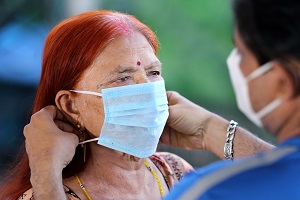 On Monday night, New Delhi initiated a 1-week lockdown “to prevent the collapse of the Indian capital’s health system, which authorities said had been pushed to its limit amid an explosive surge in coronavirus cases,” according to the Associated Press. A biostatistician who has been tracking infections in India said the virus is now spreading at a faster rate than at any other point during the pandemic.
It’s now being widely reported—including by NPR—that the global COVID-19 death toll has topped 3 million, after reaching 1 million in September 2020 and 2 million in January. A Reuters tally released 2 weeks ago indicated that the grim threshold was crossed on April 6, and it’s unclear why other sources had lower numbers at that time. The total according to the Johns Hopkins COVID-19 Dashboard on Monday afternoon was about 3.02 million.
Despite having one of the highest vaccination rates in the world (about 40% of the total population has received at least one dose) and maintaining strict lockdowns, Chile is experiencing surging COVID-19 case numbers, CNBC reports. Daily case numbers topped 9,000 for the first time on April 9, much higher than the peak of about 7,000 last summer. The story goes into questions about the efficacy of the Chinese-made CoronaVac vaccine (Sinovac), which has been widely used in Chile.
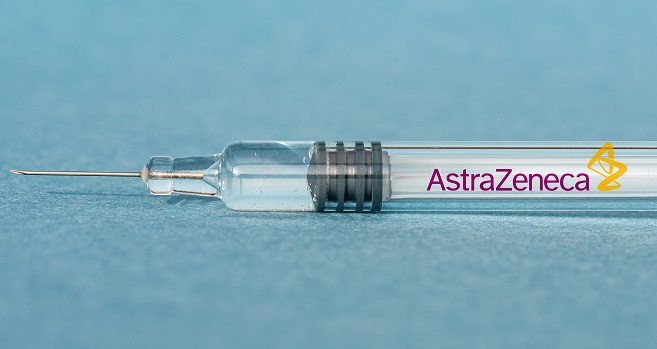 Another paper has linked blood clots after receipt of the AstraZeneca/Oxford COVID-19 vaccine to the body’s immune response, TCTMD’s Michael O’Riordan reports. The study included 22 patients who presented with acute thrombocytopenia and thrombosis, mostly cerebral venous sinus thrombosis, as well as a single patient with isolated thrombocytopenia and a hemorrhagic phenotype after vaccination. The vast majority of them—21 of the 23—tested positive for antibodies to platelet factor 4 (PF4), and this PF4-dependent syndrome was unrelated to the use of heparin. “We have identified a novel mechanism and pathophysiological basis that prompts careful consideration of treatment,” the researchers say.
More reassuring data on the impact of SARS-CoV-2 on the hearts of young competitive athletes have been published in Circulation, with researchers finding “a low prevalence of cardiac involvement and a low risk of clinical events in short term follow-up” in a cohort that includes athletes from 42 universities in the United States. Definite, probable, or possible cardiac involvement was identified in just 21 of 3,018 athletes (0.7%). Predictors of cardiac involvement included cardiopulmonary symptoms or at least one abnormal triad test (12-lead ECG, troponin, and/or transthoracic echocardiography). During a median follow-up of 113 days, there was only one adverse cardiac event, and it was deemed likely unrelated to the virus.
Rochelle Walensky, MD, director of the US Centers for Disease Control and Prevention (CDC), said Monday that the agency is reviewing additional reports of severe side effects among people who have received the Janssen COVID-19 vaccine from Johnson & Johnson, after its use was paused last week, Reuters reports. “We are encouraged that it hasn't been an overwhelming number of cases but we're looking and seeing what's come in,” she said.
 The US National Institutes of Health, as part of the ACTIV public-private partnership, will fund a phase III clinical trial to evaluate several prescription and over-the-counter medications that people can use to self-treat mild-to-moderate symptoms of COVID-19 at home. The trial will investigate a pool of up to seven drugs approved by the US Food and Drug Administration (FDA) for other conditions, with study medications or placebo pills sent to participants by mail. The NIH recently announced that enrollment in the ACTT-4 trial comparing baricitinib plus remdesivir and dexamethasone plus remdesivir for patients hospitalized with COVID-19 on supplemental oxygen has been closed after data indicated that neither is likely to be better than the other.
The FDA has revoked the emergency use authorization that had allowed the investigational monoclonal antibody bamlanivimab (Eli Lilly) to be used alone for the treatment of mild-to-moderate COVID-19. “Based on its ongoing analysis of emerging scientific data, specifically the sustained increase of SARS-CoV-2 viral variants that are resistant to bamlanivimab alone resulting in the increased risk for treatment failure, the FDA has determined that the known and potential benefits of bamlanivimab, when administered alone, no longer outweigh the known and potential risks for its authorized use.” The agency noted that there are other monoclonal antibody therapies that can be used for the same purpose, including one that combines bamlanivimab and etesevimab. Eli Lilly said it requested the revocation “due to the evolving variant landscape in the US and the full availability of bamlanivimab and etesevimab together.”
Our Asian small-clawed otters have tested positive for SARS-CoV-2, the virus that causes COVID-19. They showed mild symptoms: sneezing, runny noses, lethargy, & coughing. We’re happy to report they’re doing well & expected to recover. They’re off exhibit & being cared for. pic.twitter.com/Ig34EoZSvK
— Georgia Aquarium (@GeorgiaAquarium) April 18, 2021
A research letter in JAMA Internal Medicine explores the fitted filtration efficiency of commonly available face masks when worn alone or in various combinations. The experimental study, which involved one female and two male volunteers, showed that adding a second procedure mask improved efficiency compared with a single mask. Single cloth masks performed worse than procedure masks. Adding a procedure mask over a cloth mask increased efficiency, but the overall performance was no better than wearing a single procedure mask alone. However, putting on a procedure mask under a cloth face covering “produced marked improvements.”
Asian small-clawed otters at Georgia Aquarium in Atlanta have tested positive for SARS-CoV-2, showing symptoms that include sneezing, runny nose, lethargy, and coughing, the Atlanta Journal-Constitution reports. The animals, which likely contracted the virus from an asymptomatic employee, are receiving care off exhibit and are expected to make a full recovery.


Todd Neale is the Associate News Editor for TCTMD and a Senior Medical Journalist. He got his start in journalism at …
Read Full BioRelated News
Comments