COVID-19: TCTMD’s Daily Dispatch for August Week 3
We’re curating a list of COVID-19 research and other useful content, and updating it regularly.


Since March 2020, TCTMD reporter Todd Neale has been writing up breaking news and peer-reviewed research related to COVID-19 every weekday. In July 2021, we transitioned to Mondays, Wednesdays, and Fridays. If you have something to share, tell us. All of our COVID-19 coverage can be found on our COVID-19 Hub.
August 20, 2021
 The World Health Organization (WHO) is objecting to the plan announced this week by the Biden administration to offer COVID-19 vaccine boosters to Americans as early as September. A WHO official equated this to handing out extra life preservers to people who already have them, while others with none drown. As Yahoo! News reports, White House COVID response coordinator Jeff Zients said the US plans to give out 100 million booster shots while shipping an additional 200 million vaccine doses to other countries.
Along the same lines, an article in Science magazine highlights the consequences of “vaccine nationalism”—the stockpiling of COVID-19 vaccines by affluent countries—on disease rates in countries with low availability. The authors conclude that more sharing of vaccines “decreases overall infections and may also mitigate potential antigenic evolution.”
A report from Germany warns about the need to screening vaccinated healthcare workers for breakthrough infections. Writing in the New England Journal of Medicine, researchers say four women among over 1,100 workers at their hospital who received the Pfizer-BioNTech vaccine had breakthrough infections. While all had only mild symptoms, their viral loads were reportedly very high, with prolonged viral shedding up to 32 days after diagnosis.
Also in NEJM, National Institutes of Health (NIH) investigators have published the final results from their terminated convalescent plasma study. The multicenter RCT of patients aged 50 years or older or who have one or more risk factors for severe illness found no difference in disease progression between the placebo group and those given convalescent plasma within 1 week of COVID-19 symptom onset.
 In Detroit, the probability of patients refusing recommended emergency medical services (EMS) transport to hospitals increased from 15% in 2019 to 25% in March-June 2020. Investigators reporting in JAMA Network Open say EMS avoidance was higher in women than men, suggesting “that the pandemic exacerbated a preexisting social condition with implications for refusal among women.”
According to a new report from the Centers for Disease Control and Prevention (CDC), fully vaccinated residents of nursing homes and long-term care facilities are less protected from COVID-19 now that the Delta variant predominates. In Morbidity and Mortality World Report (MMWR), authors say efficacy of the Pfizer/BioNTech and Moderna vaccines for preventing mild or severe infection declined to 53.1% in June to early August 2021, down from 74.7% in March-May 2021.
In a separate report also published in MMWR, the CDC says two doses of an mRNA vaccine provide sustained protection against severe COVID-19 resulting in hospitalization. In a study of 1,129 adults admitted to hospitals in 18 states, vaccine effectiveness was 86% at 2 to 12 weeks after vaccination and 84% at 13 to 24 weeks, with sustained efficacy even among high-risk groups.
A targeted phone-outreach program aimed at cancer patients living in high-poverty areas and with reduced access to electronic communications shows promise for encouraging COVID-19 shots. In JAMA Oncology, the researchers say the short, informational phone calls led to confirmed vaccination in 26% of those contacted, with another 4% scheduled for vaccinations.
 The Texas Education Agency said on Thursday that it would immediately stop enforcing a ban on mask mandates in schools. The ban was put in place by Governor Greg Abbott, who tested positive for COVID-19 on Tuesday. The agency also reversed Abbott’s “no-tell” policies on COVID-19 cases in schools, saying that schools must notify their local health department if a student tests positive and notify students in the same classroom as the positive student, as well as those who share extracurricular activities with that person.
A new survey of young people ages 14 to 24 suggests that approximately three-quarters either already have been vaccinated or intend to do so. Additionally, 73% of those surveyed think the available COVID-19 vaccines are safe and effective, researchers report in JAMA Health Forum.
Today’s Dispatch was contributed by L.A. McKeown.
August 18, 2021
 On Tuesday, New Zealand’s Prime Minister Jacinda Ahern ordered a 3-day nationwide lockdown in response to a single COVID-19 case detected in Auckland (where the lockdown will last 7 days). The number of infected individuals rose to 10 on Wednesday, although that is expected to go higher, Reuters reports. “Ardern said genome sequencing had shown the Auckland case was linked to an outbreak in neighboring Australia's New South Wales state, but it was still not clear how Delta had entered the community.”
In US news, President Joe Biden’s administration is expected to recommend booster doses of COVID-19 vaccines for most Americans 8 months after their second doses, with third shots possibly beginning as early as next month (New York Times). The decision about the need for widespread use of boosters—the subject of a global debate (New York Times)—was made in response to new data from the Centers for Disease Control & Prevention (CDC) showing waning vaccine efficacy over time, particularly worrisome as the more-transmissible Delta variant spreads across the country (Politico). The US reported more than 1,000 COVID-19 deaths on Tuesday and is currently averaging 769 per day (Reuters). A STAT story details the strain being placed on health workers, deployed to COVID-19 hot spots as part of a federal emergency response team, by the deaths of largely unvaccinated patients. Federal officials have extended a requirement for travelers on airlines and public transportation to wear masks, which was set to expire on September 13, to January 18, 2022 (Associated Press).
Younger males may be “an underrecognized group at high risk for SARS-CoV-2 infection,” according to data in Annals of Internal Medicine. After accounting for differential testing by age group, researchers show that standardized infection ratios were lowest in children and people ages 70 and older and higher in adolescents and men ages 20 to 49 compared with the overall population. “Our approach highlights the likely importance of younger persons, particularly younger males, as silent drivers of virulent infection in older adults,” they say.
The United Kingdom has extended the approved use of Moderna’s vaccine to include adolescents ages 12 to 17, weeks after a similar move for the shot from Pfizer/BioNTech, Reuters reports. The latter vaccine is still the only one authorized for use in adolescents as young as 12 in the United States.
 Wondering what’s safe to do during the spike in COVID-19 cases? STAT surveyed public health experts to find out what they’re doing. “Their answers suggest that, with the highly transmissible Delta variant spreading, caution prevails. Those who know viruses best aren’t buying many movie tickets, and most aren’t eating indoors in restaurants.” Only one question received a unanimous response: asked whether they would send their unvaccinated children to school without a mask, all said no.
The proportion of US hospitals mandating COVID-19 vaccination for employment has reached 30%, increasing from zero to 1,850 in the past 4-and-a-half months, according to Becker’s Hospital Review, which maintains a regularly updated website of hospitals and health systems that have such a requirement.
Younger children appear to be more likely than older children to transmit SARS-CoV-2 in the household, a study in JAMA Pediatrics shows. Those up to 3 years old had the highest odds of spreading the virus compared with teens ages 14 to 17. An accompanying editorial urges vaccination in light of these findings: “The obvious solution to protect a household with a sick young infant or toddler is to make sure that all eligible members of the household are vaccinated. Cloaked with the protection of vaccine, household members need not fear the youngest family members with a runny nose come fall; the solution—vaccination—is now within their grasp.”
Receipt of the CoronaVac vaccine, made by the Chinese company Sinovac, is associated with an increased risk of Bell’s palsy—an additional 4.8 cases per 100,000 people vaccinated, a study in the Lancet Infectious Diseases shows. “However, the beneficial and protective effects of the inactivated COVID-19 vaccine far outweigh the risk of this generally self-limiting adverse event,” the researchers say. The association with Bell’s palsy was not statistically significant for the vaccine from Pfizer/BioNTech.
 Football games held with limited spectators during the 2020-2021 season, both at the professional and collegiate levels, were not associated with spikes in community COVID-19 cases, researchers report in JAMA Network Open. “Our study provides evidence suggesting that in-person attendance of football games with social distancing and mask use could be resumed in the 2021 to 2022 season,” they say. “However, it is worth noting that newly emerging variants of SARS-CoV-2 have less predictable implications at this point and might lead to more disruptive interruptions in the future.” CIDRAP News has more.
August 16, 2021
New South Wales, Australia’s most-populous state and home to Sydney, reported its worst day of the pandemic on Monday, with 478 new infections and seven deaths, according to the Associated Press. Restrictions tightened across the country. Of the seven new deaths, five occurred in unvaccinated individuals and the other two involved people who were only partially vaccinated. Reuters describes efforts in Sydney, which include troops and police setting up roadblocks to limit people’s movements.
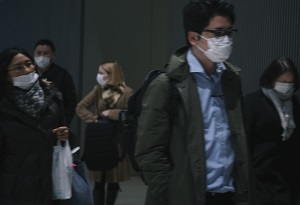 Asia continues to battle Delta-driven surges as well, with CIDRAP News noting that daily infections have exceeded 20,000 for the first time in Japan. Spikes in Thailand and South Korea have not yet peaked. In the latter country, only about 17.4% of the population is fully vaccinated.
Numbers of COVID-19 cases, hospitalizations, and deaths continue to increase in the United States, particularly in areas with greater community transmission and lower vaccination rates, Becker’s Hospital Review notes based on recent data from the US Centers for Disease Control and Prevention (CDC). The vast majority of cases (97.4%) are attributed to the Delta variant. The surging case numbers have hospitals delaying elective surgeries again, and a STAT story goes into how they’re handling it differently this time around.
Following the US Food and Drug Administration (FDA)’s authorization of third COVID-19 vaccine doses for certain groups last week, the CDC recommended additional doses of mRNA vaccines for people whose immune systems are moderately or severely compromised. The third dose should be received at least 28 days after a second dose of either the Pfizer/BioNTech or Moderna vaccine, the agency said, noting that boosters are not recommended for any other populations. The AP reports that US officials are considering the need for booster shots in other groups, possibly as early as this fall.
 Concerningly, the latest wave of infections in the US is seeing a record number of children hospitalized with COVID-19, Reuters reports. That figure reached its highest point—just over 1,900, according to the Department of Health and Human Services (HHS)—on Saturday. “This is not last year’s COVID. This one is worse and our children are the ones that are going to be affected by it the most,” a past president of the American Academy of Pediatrics (AAP) told CNN over the weekend.
Existing evidence does not “suggest that any of the COVID-19 vaccines used in the UK, or any reactions to these vaccines, increase the risk of miscarriage or stillbirth” or heighten risks of congenital anomalies or birth complications, according to an update released Monday by the Medicines and Healthcare products Regulatory Agency (MHRA). The agency also said it continues to review reports of menstrual disorders and unexpected vaginal bleeding following vaccination, but the number of reports is low and analyses completed so far don’t support a link.
The European Medicines Agency (EMA) has started an evaluation of tocilizumab for the treatment of adults hospitalized with severe COVID-19 who are already receiving corticosteroids and require supplemental oxygen or mechanical ventilation. The agency is looking at the results of four large RCTs as part of its deliberations, which are expected to be wrapped up by the middle of October unless additional information is required.
Six months after being hospitalized for COVID-19, 21% of patients in a study published in the American Heart Journal had abnormal cardiac magnetic resonance (CMR) imaging findings, although the findings were not significantly different from those detected in a group of healthy controls. Nor did CMR measures differ based on the severity of COVID-19. In addition, “cardiovascular biomarkers during COVID-19 were higher in patients with CMR pathology, but with no significant association after adjusting for confounders,” the authors note. This suggests, they say, “that preexisting subclinical myocardial disease may be more important than COVID-19 for the observed CMR pathology.”
 Cannabidiol (CBD) therapy reduced symptoms of burnout and emotional exhaustion among frontline healthcare workers during the COVID-19 pandemic, according to the results of an RCT in JAMA Network Open. Five patients, however, developed serious adverse events, including four cases of elevated liver enzymes and one case of severe pharmacodermia. “It is necessary to balance the benefits of CBD therapy with potential undesired or adverse effects,” the authors say.


Todd Neale is the Associate News Editor for TCTMD and a Senior Medical Journalist. He got his start in journalism at …
Read Full BioRelated News



Comments