COVID-19: TCTMD’s Daily Dispatch for July Week 3
We’re curating a list of COVID-19 research and other useful content, and updating it regularly.


Since March 2020, TCTMD reporter Todd Neale has been writing up breaking news and peer-reviewed research related to COVID-19 every weekday. In July 2021, we transitioned to Mondays, Wednesdays, and Fridays. If you have something to share, tell us. All of our COVID-19 coverage can be found on our COVID-19 Hub.
July 23, 2021
Surges in COVID-19 driven by the more-infectious Delta variant are getting worse in parts of Asia, particularly in the southeast part of the continent, with record numbers being seen in Indonesia, Thailand, and Myanmar, CIDRAP News reports. South Korea, too, reported a single-day high for cases (1,842). Organizers of the Tokyo Olympics, which officially kick off today, have reported 19 new COVID-19 cases, including three athletes and three residents of the Olympic village, according to USA Today; overall, four are residents of Japan and the rest are not. At least eight athletes have been ruled out of competition after testing positive in Japan.
 Elsewhere, Russia continues to deal with a “devastating third wave” of infections, according to ABC News. In addition, Pakistan has passed 1 million total cases during the pandemic, with nearly 23,000 deaths, and New Zealand has suspended its quarantine-free travel bubble with Australia for at least 8 weeks because of a growing outbreak in Sydney, the AP reports.
The Advisory Committee on Immunization Practices (ACIP), which provides guidance to the US Centers for Disease Control and Prevention (CDC), met Thursday to discuss the risk of Guillain-Barré syndrome (GBS) with the Janssen vaccine from Johnson & Johnson and the need for booster doses of the mRNA vaccines in immunocompromised adults. Members of the panel ultimately agreed that the benefits of the Janssen vaccine outweigh any potential risks of GBS, and hinted at an openness to booster doses if the US Food and Drug Administration (FDA) provides authorization for them, according to MedPage Today.
Earlier this week, Pfizer and BioNTech announced they’d reached an agreement with the South African biopharmaceutical company Biovac to “perform manufacturing and distribution activities” for their joint vaccine starting in 2022. “At full operational capacity, the annual production will exceed 100 million finished doses annually,” a press release states. “All doses will exclusively be distributed within the 55 member states that make up the African Union.”
On Friday, the European Medicines Agency (EMA) extended the authorization for the COVID-19 vaccine from Moderna to include children as young as 12 (it was previously authorized for those 18 and older), citing a study showing “a comparable antibody response in 12- to 17-year-olds to that seen in young adults aged 18 to 25 years (as measured by the level of antibodies against SARS-CoV-2).” Moderna asked US regulators for a similar extension of the indication last month, but has not yet received it.
In the United States, federal officials announced new funds to battle a rise across the country in COVID-19 case numbers, which is related to spread of the Delta variant and is mostly affecting people who have not been vaccinated, CIDRAP News reports. The latest 7-day average is 37,700 cases per day, a 53% increase from the prior average. Hospital admissions are up by 32% and deaths by 19%. Just three states—Florida, Missouri, and Texas—account for 40% of new US cases (USA Today). Particularly concerning news has come out of Los Angeles County, where an official announced that 20% of new cases identified were in vaccinated people (Newsweek). “The Delta variant is a game changer,” she said.
Age may play a role in determining vaccine efficacy with the Pfizer/BioNTech vaccine, an in vitro study hints. In an analysis that measured antibody levels among healthcare workers who ranged in age from 21 to 82 (median 50), vaccine-elicited neutralizing antibody titers in serum samples taken 2 weeks after the second vaccine dose were negatively associated with age, resulting in a diminished ability to neutralize SARS-CoV-2 in vitro, authors write in JAMA. The findings have implications for policy-making around the need for vaccine boosters, they say.
Another study underscores the need for full vaccination against COVID-19 in the face of the Delta variant. Writing in the New England Journal of Medicine, researchers report that the effectiveness of a single dose of the Pfizer/BioNTech (BNT162b2) vaccine or the Oxford/AstraZeneca (ChAdOx1 nCoV-19) vaccine was markedly less than was seen against the original SARS-CoV-2 strain. “With the BNT162b2 vaccine, the effectiveness of two doses was 93.7% (95% CI; 91.6-95.3) among persons with the Alpha variant and 88.0% (95% CI; 85.3-90.1) among those with the Delta variant. With the ChAdOx1 nCoV-19 vaccine, the effectiveness of two doses was 74.5% (95% CI; 68.4-79.4) among persons with the Alpha variant and 67.0% (95% CI; 61.3-71.8) among those with the Delta variant.”
A study in Morbidity and Mortality Weekly Report explores how other respiratory viruses have behaved during the COVID-19 pandemic, showing that “influenza viruses and human metapneumovirus circulated at historic lows through May 2021. In April 2021, respiratory syncytial virus activity increased. Common human coronaviruses, parainfluenza viruses, and respiratory adenoviruses have been increasing since January or February 2021. Rhinoviruses and enteroviruses began to increase in June 2020.”
 The COVID-19 pandemic will likely ensure that heart disease and stroke will continue to be the top killer in the United States, the American Heart Association (AHA) said in a statement this week. The announcement was prompted by provisional data released by the CDC indicating that COVID-19 is now ranked as the third-leading cause of death in the US. “Heart disease remains at the top spot and stroke remains at number five. However, the influence of COVID-19 will directly and indirectly impact rates of cardiovascular disease prevalence and deaths for years to come, AHA President Donald M. Lloyd-Jones, MD, said in the press statement.
TCTMD Managing Editor Shelley Wood contributed to today’s Dispatch.
July 21, 2021
The World Health Organization (WHO) says that new COVID cases globally are up 12% this week, driven by the highly transmissible Delta variant. “The cumulative number of cases reported globally is now over 190 million and the number of deaths exceeds 4 million,” the WHO stated in its weekly epidemiological update on COVID-19, published Tuesday.
In Australia, which managed to keep COVID-19 outbreaks mostly at bay in the first year of the pandemic, nearly half the population is now facing some form of lockdown following a surge in the Delta cases. Just 29% percent of people there have received at least one vaccine dose and 11% are fully vaccinated, according to a New York Times database.
In the United States, Delta now accounts for 83% of all sequenced cases, Centers of Disease Control and Prevention (CDC) Director Rochelle Walensky, MD, said in testimony yesterday—that’s up from 50% the first week of July, the Guardian reports. COVID-19 deaths also are spiking in the US, up by nearly 50% in the past week. States with the lowest vaccination rates are the ones seeing the biggest spikes, she noted.
 Also in the Guardian, Rome, Italy, is experiencing a fivefold increase in cases, believed to be linked to the Euro football championships held there earlier this month.
The mRNA vaccines against SARS-CoV-2 currently used in the United States are more than 95% effective at preventing confirmed infections, according to a large case-controlled Veterans Affairs health system study published in the Annals of Internal Medicine. “Researchers found that 18% of the 54,360 matched pairs of veterans who were vaccinated tested positive for SARS-CoV-2 and 32.8% tested negative,” a press release notes. “The overall vaccine effectiveness was 97.1% 7 or more days after the second dose. Effectiveness was 96.2% for the Pfizer-BioNTech BNT-162b2 vaccine and 98.2% for the Moderna mRNA-1273 vaccine.” Moreover, effectiveness was similar across age, sex, race, and comorbidity analyses, although performance against specific variants of concern wasn’t addressed; the study period was from mid-December 2020 to early March 2021.
A preprint paper published on the bioRxiv server, however, paints a grimmer picture for the Johnson & Johnson vaccine. In this analysis—not yet peer reviewed—antibodies elicited by the two mRNA vaccines (made by Pfizer/BioNTech and Moderna) elicited “modest neutralization” against the Beta, Delta, Delta plus and Lambda variants, but the responses elicited by “a significant fraction” of people vaccinated with the J&J/Janssen single-dose product “were of low neutralizing titer.” Although troubling, the results stem from lab experiments done with blood samples so “may not reflect the vaccine’s performance in the real world,” a New York Times explainer notes. “But they add to evidence that the 13 million people inoculated with the Johnson & Johnson vaccine may need to receive a second dose—ideally of one of the mRNA vaccines made by Pfizer-BioNTech or Moderna.”
 A review paper in Circulation summarizes the knowns and unknowns regarding myocarditis cases following mRNA vaccinations. Authors address potential mechanisms, diagnosis, and management, and try to quantify the actual cardiac risks of vaccination as compared with those associated with COVID-19 infection. TCTMD has the story.
Janet Woodcock, MD, the acting commissioner of the US Food and Drug Administration (FDA) testified yesterday before the US Senate Committee on Health, Education, Labor, and Pensions. In a talk entitled The Path Forward: A Federal Perspective on the COVID-19 Response, Woodcock reviewed the agency’s pandemic-era activity in the realms of biologics and vaccines; therapeutics; medical devices; food security; and inspections, compliance, and the medical supply chain.
Around the world, an estimated 1 million children have lost a parent to COVID-19, a number that increases to 1.5 when custodial grandparents or primary caregivers are included in the tally, researchers estimate in the Lancet. “Our findings highlight the urgent need to prioritize these children and invest in evidence-based programs and services to protect and support them right now and to continue to support them for many years into the future—because orphanhood does not go away,” one of the lead authors, Susan Hillis, PhD, is quoted in a press release.
The anti–interleukin-1β antibody canakinumab was no better than placebo in improving survival free from invasive mechanical ventilation at 4 weeks in hospitalized patients with COVID-19, researchers report in JAMA. The trial, conducted at 39 hospitals in Europe and the United States, randomized a total of 454 patients but ultimately came up short.
A small study published in JAMA should help to reassure couples worried about vaccine effects on fertility: among 45 men recruited to the study prior to mRNA COVID-19 vaccination, a range of sperm parameters showed no differences between samples provided prior to the first dose and approximately 70 days after the second.
Federal statistics in the United States, released Wednesday, confirm earlier reports that the COVID-19 pandemic is responsible for slashing US life expectancy by one and a half years. It’s the steepest drop seen since the Second World War, the New York Times reports, and has been particularly steep in Black and Hispanic Americans.
TCTMD Managing Editor Shelley Wood contributed today’s Dispatch.
July 19, 2021
 It’s “Freedom Day” in England, the promised milestone for lifting most COVID-19 restrictions there: that means no more compulsory masks in shops and on public transport, no more work from home guidance, and no limits on social gatherings. Nightclubs in England “threw open their doors” at midnight, the New York Times reports, even as Prime Minister Boris Johnson was forced to go into self-quarantine following a positive test by his health secretary.
Indeed, as the Guardian points out, “one in six areas in England are now reporting their highest rate of new COVID-19 cases since comparable records began last summer.” Scotland, Wales and Northern Ireland have opted not to reopen with the same broad strokes as England. Scotland, for example, has moved to its lowest level in its tiered system, but face coverings will remain mandatory in shops and on public transport for “some time to come,” the Scotsman notes.
Elsewhere, protests across France drew more than 100,000 people angered by “President Emmanuel Macron’s tough new vaccination strategy, which will restrict access to restaurants, cafes, movie theaters, long-distance trains, and more for the unvaccinated.” Singapore posted its highest daily count of new infections in nearly a year, says Reuters, and Los Angeles County has fully reinstated its indoor mask mandate as cases mount among the unvaccinated, the LA Times reports.
Surpassing the United States for the first time in vaccinations, Canada, which lagged behind for months, is reporting that 49% of its citizens are fully vaxed, while 70% have received at least one dose; those figures are 48% and 55.5% in the US, the New York Times reports.
Researchers who tested almost an entire town in Northern Italy found that nearly 100% of people who recovered from COVID-19 in February and March of 2020 maintained antibodies against the virus 9 months later, with no difference between those who has been symptomatic versus asymptomatic. In some cases, antibody levels actually increased slightly, “suggesting possible reinfections with the virus, providing a boost to the immune system,” a press release notes. Confirming other series, investigators concluded that most infections generate very few secondary cases, whereas a small minority generate large numbers of new infections. The full paper was published today in Nature Communications.
On Friday, the US Food and Drug Administration (FDA) formally accepted Pfizer/BioNTech’s Biologics License Application (BLA) for its COVID-19 vaccine in individuals 16 years of age and older, granting the application priority review with a Prescription Drug User Fee (PDUFA) goal date of January 2022. A press statement notes that the evaluation of the BLA has been ongoing and an approval before the PDUFA date is expected. The vaccine is currently available to individuals 12 and older under an emergency use authorization.
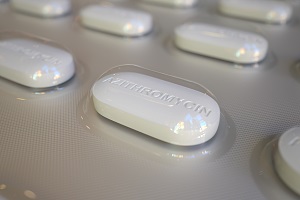 A single dose of oral azithromycin is no better than placebo at preventing symptoms of COVID-19 in nonhospitalized patients, researchers report in JAMA. The findings echo those of a similar study, reported last week in the Lancet Respiratory Medicine, and those of the RECOVERY trial, also reported earlier this year.
A “scratch-and-sniff” card requiring the user to identify the scent from eight options (lemon, grape, floral, blueberry, banana, mint, unsure, or no scent) can rapidly and effectively screen people for COVID-19, a campus-based study suggests. “A novel olfactory test alone had a sensitivity of 75% and specificity of 95.2% in detecting COVID-19 using PCR testing as the gold standard,” the authors write in JAMA Otolaryngology Head & Neck Surgery.
An analysis of COVID-19’s impact on routine childhood vaccinations for diphtheria-tetanus-pertussis and measles confirms that, beyond the already large disruptions anticipated for 2020, inoculations fell by more than 7% worldwide and more than 8 million additional children missed their doses. “Although the latest coverage trajectories point towards recovery in some regions,” the authors write in the Lancet, “a combination of lagging catch-up immunization services, continued SARS-CoV-2 transmission, and persistent gaps in vaccine coverage before the pandemic still left millions of children undervaccinated or unvaccinated against preventable diseases at the end of 2020, and these gaps are likely to extend throughout 2021.”
Ivermectin is in the news again following an article in the Guardian reporting that the drug’s efficacy in COVID-19 is in “serious doubt” after a preprint paper was withdrawn due to “ethical concerns.” In a press release, however, the Front Line COVID-19 Critical Care Alliance (FLCCA), which authored a meta-analysis that included the paper, as well as the British Ivermectin Development Group decry the Guardian’s interpretation, insisting that FLCCA’s meta-analysis concluding ivermectin to be of benefit is still valid and that the retraction of a single paper does not change those results. The broad-spectrum antiparasitic agent has fallen short of hopes in a number of studies: in late March, 2021, the World Health Organization (WHO) announced that the agent should not be used outside of clinical trials.
 SARS-CoV-2 test positivity in Nevada increased during the state’s 2020 wildfires, researchers report in the Journal of Exposure Science & Environmental Epidemiology. A time-series analysis indicates that positivity rates were highest when ambient smoke was also most intense, as measured by levels of particulate matter (PM) 2.5 µm or smaller. The findings have implications for other regions affected by air pollution levels in the same range, the authors say.
TCTMD Managing Editor Shelley Wood contributed today’s Dispatch.


Shelley Wood was the Editor-in-Chief of TCTMD and the Editorial Director at the Cardiovascular Research Foundation (CRF) from October 2015…
Read Full BioRelated News

Comments