COVID-19: TCTMD’s Daily Dispatch for May Week 3
We’re curating a list of COVID-19 research and other useful content, and updating it daily.


TCTMD reporter Todd Neale is keeping up on breaking news and peer-reviewed research related to COVID-19 and will update daily. If you have something to share, tell us. All of our COVID-19 coverage can be found on our COVID-19 Hub.
May 21, 2021
COVID-19 case numbers have dropped substantially in Europe over the past month, according to the World Health Organization (WHO), but an agency official has warned that “this progress is fragile,” the New York Times reports. The European Union recently announced that it would reopen to fully vaccinated travelers and those coming from countries with good control of the virus.
 A report from the WHO indicates that the true COVID-19 death toll—taking into account both direct and indirect deaths—may be much higher than the official counts, according to a story from Reuters. “Presenting its annual World Health Statistics report, the WHO estimated that total deaths from the COVID-19 pandemic in 2020 were at least 3 million or 1.2 million more than 1.8 million figure officially reported.”
In a related analysis taking into account both direct and indirect effects of the pandemic, there was an estimated excess of 979,000 deaths that occurred last year across 29 high-income countries, researchers report in the BMJ. All but three of the countries—Denmark, New Zealand, and Norway—were affected by the bump. Increases were greatest in the US (accounting for nearly half of the excess), Italy, England/Wales, Spain, and Poland.
Patients critically ill with COVID-19 in Africa have higher mortality compared with what has been seen in Asia, Europe, North America, and South America, with an in-hospital death rate within 30 days of admission of 48.2%, according to a study in the Lancet. Mortality was tied to insufficient critical care resources, along with various comorbidities. “It is likely that patient outcomes will continue to be severely compromised until the problems surrounding critical care resource scarcity are addressed,” the authors say.
 On Friday, Japan, which is still planning on hosting the Olympic Games in July, approved COVID-19 vaccines made by Moderna and by the University of Oxford and AstraZeneca for emergency use “in hopes of giving the developed world’s slowest vaccine rollout a much-needed shot in the arm,” according to the Japan Times. The Oxford/AstraZeneca shot will not be used right away as the government considers whether to implement age restrictions based on the potential risk of rare blood clots.
The European Medicines Agency (EMA) issued additional advice on the risk of blood clots with the Oxford/AstraZeneca vaccine, saying that the shot should not be given to anyone who had had blood clots with low platelets after receiving it; healthcare professionals should check for signs of blood clots and low platelets in people who been affected by these issues within 3 weeks of vaccination; and people who develop the problem should receive specialty care. The agency also issued advice on use of the monoclonal antibody therapy sotrovimab (VIR-7831) for the treatment of COVID-19 in adults and adolescents who don’t require supplemental oxygen therapy and who are at risk for progressing to severe disease.
Preliminary studies indicate that current COVID-19 vaccines may be less effective against a SARS-CoV-2 variant first detected in India, the head of Germany’s public health agency said Friday. “Health Minister Jens Spahn said that Germany was currently reassessing its travel recommendations for Britain, which is currently listed as a risk region because the spread of that variant there has caused concern in recent days,” Reuters reports.
Latin America is likely to receive millions of US-made COVID-19 vaccine doses in the next few weeks as the US ups its exports, Reuters reports. That comes at a good time, as “many Latin American countries have a dire need for COVID-19 vaccines as they combat outbreaks. Brazil has been one of the world’s hardest hit countries by the pandemic, reporting a total of more than 15 million cases and 400,000 deaths as of this week.”
Another study in the BMJ showed that 14% of adults younger than 66 who were infected with SARS-CoV-2 developed at least one new clinical condition that required medical care beyond the acute phase, 4.95% higher than seen in a 2020 comparator group. There were increased risks of chronic respiratory failure, cardiac arrythmia, hypercoagulability, encephalopathy, peripheral neuropathy, memory difficulties, diabetes, liver test abnormalities, myocarditis, anxiety, and fatigue.
 Another new coronavirus, this one from dogs, has made the jump into people, CIDRAP News reports based on a study in Clinical Infectious Diseases. The virus was detected in eight patients hospitalized with pneumonia during a 2017-2018 outbreak in Sarawak, Malaysia; most were children living in rural areas who frequently came into contact with domesticated animals and wildlife. “Dubbed CCoV-HuPn-2018, this new virus is the first canine coronavirus (CCoV) to ever be isolated from a human,” according to the news story. “If CCoV-HuPn-2018 is confirmed as a pathogen, it would be the eighth known coronavirus to cause infection in humans.”
May 20, 2021
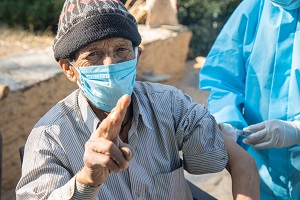 County-level vaccine administration data across 49 US states—all but Hawaii—as well as the District of Columbia confirm vast disparities between urban and rural communities. In rural communities overall, only 38.9% of people had received a first COVID-19 shot between December 14, 2020, and April 10, 2021, as compared with 45.7% in urban areas. “Public health practitioners should collaborate with healthcare providers, pharmacies, employers, faith leaders, and other community partners to identify and address barriers to COVID-19 vaccination in rural areas,” investigators write in Morbidity and Mortality Weekly Report. (MMWR).
Also in MMWR, an analysis of vaccine effectiveness in US healthcare personnel has found that single doses of Moderna and Pfizer/BioNTech vaccines appear to be 82% effective against symptomatic COVID-19, while two doses appear to be 94% effective. Those numbers come from the “test-negative” design case-control study of mRNA vaccinations ongoing in the United States, covering healthcare workers at 33 sites across 25 US states.
Voting members of the US Food and Drug Administration (FDA) Advisory Committee on Immunization Practices have published their interim recommendations for the use of the Pfizer/BioNTech vaccine in adolescents aged 12-15 years. The document follows the FDA’s decision to grant an expanded emergency use authorization for the vaccine earlier this month.
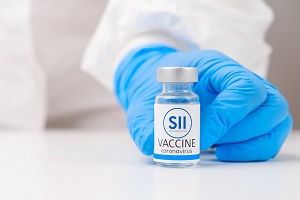 The Serum Institute of India, “a crucial manufacturing pillar in the plan to supply two billion doses of COVID-19 vaccines to low-income countries,” has warned that it likely won’t be able to ship vaccines outside the country before the end of the year,” the New York Times reports.
There’s no link between the two mRNA vaccines widely in use and sudden incident hearing loss, the Centers for Disease Control and Prevention (CDC) Vaccine Adverse Event Reporting team members report in JAMA Otolaryngology. “While the reporting period did not include other vaccines that are currently in use, we hope these findings will reassure healthcare clinicians and patients to receive all scheduled doses of the vaccination as recommended by current public health guidelines,” they write.
A letter in the New England Journal of Medicine describing nine patients with suspected vaccine-induced immune thrombotic thrombocytopenia (VITT) warns that two rapid immunoassays widely used for the diagnosis of heparin-induced thrombocytopenia may not accurately diagnose the syndrome. In their series, the STic Expert HIT and HemosIL AcuStar HIT-IgG rapid tests came back negative for all nine patients; further testing of plasma samples, however, found that seven patients had significant levels of IgG antibodies to PF4 were using PVS complex as the antigenic target. “Our results provide further support to show that rapid immunoassays should be avoided in the detection of PF4-specific antibodies in patients with suspected VITT,” authors write. “The use of a sensitive, quantitative, immunologic test is strongly recommended.”
Also in the NEJM, a study using electronic health records for 18,242 nursing home residents in 21 US states confirms that new symptomatic and asymptomatic COVID-19 infections dropped as vaccination rates increased, both among those vaccinated and the unvaccinated. Even nursing homes located in counties with the highest incidence of SARS-CoV-2 infection showed large decreases in resident infections, the authors write.
 In an email sent yesterday, the Heart Rhythm Society announced that their annual meeting will now take place “without capacity restrictions” at the Boston Convention & Exhibition Center starting July 28. “Heart Rhythm 2021 will follow all CDC guidelines while also operating under an additional set of precautions to ensure that all personal levels of comfort for indoor gatherings are accommodated,” the email stated.
TCTMD Managing Editor Shelley Wood contributed today’s Dispatch.
May 19, 2021
 New York City is “fully back in business” today: restaurants can reopen for indoor dining, businesses and theaters can operate at 100% capacity, house parties are allowed, and vaccinated people do not need to wear masks unless a business requests it. The New York Times looks at the new rules.
Halfway around the globe, however, India reported 4,529 new COVID-19 deaths in 24 hours: the highest daily toll of any country at any time during the pandemic. A whopping 267,334 new infections were recorded on Wednesday, the Hindustan Times reports.
Public health authorities in Canada have announced that citizens can now drive across the border for a COVID-19 vaccine, taking advantage of surplus stocks in the US. As CTV News reports, vaccine border-hoppers can avoid the mandatory—and pricy—quarantine on their return if they adhere to certain conditions.
The Japanese cities of Tokyo and Osaka are still under lockdown, and with only 65 days to go before the Olympic Games are scheduled to kick off of July 23rd, less than one-third of medical workers in Japan are fully vaccinated, Reuters reports. In a press conference today, International Olympic Committee (IOC) chief Thomas Bach, speaking alongside Japanese officials, pledged that the athletes, as well as the host community, won’t be at undue risk for COVID-19. Bach predicts 80% of athletes will be vaccinated or “booked for vaccination” ahead of the games.
 Vaccines rolling out in the US and Europe were approved on an emergency basis—as “emergency use authorizations” in the US and “conditional marketing authorizations” in Europe. But whether the data accumulated to date, which are now unblinded, will be enough to obtain formal regulatory approval is unclear. A feature in BMJ by senior editor Peter Doshi explores the implications.
Black, Hispanic, and Asian populations in the United States “experienced a disproportionate rise in deaths due to heart disease and cerebrovascular disease, suggesting that racial/ethnic minorities have been most impacted by the indirect effects of the pandemic,” investigators write in Circulation. Compared with 1 year prior, cerebrovascular disease deaths between March and August 2020 were significantly higher for all four groups studied, but increases for Black, Hispanic, and Asian Americans were greater than those seen in non-Hispanic whites.
COVID-19 has had unintended consequences in terms of hindering the management of chronic conditions like hypertension. As new research in the Journal of the American Heart Association makes clear, COVID-19 has especially exacerbated existing inequities in hypertension control across the United States. “Blood pressure control rates are declining, especially among communities of color and those without health insurance or access to healthcare,” write Adam Bress, PharmD, and colleagues.
Not much time to tweet but this is important
— Alasdair Munro (@apsmunro) May 19, 2021
Figures for hospitalisations and deaths for kids from COVID-19 should be treated with *extreme caution*
Incidental positive tests make up a big proportion - up to 40% in data from Californiahttps://t.co/QAQxBBx5XM
1/4
The reported number of children hospitalized with COVID-19 in California may have been “grossly inflated” with important implications for keeping schools open. As a story in New York magazine explains, two papers published in Hospital Pediatrics found that the number of young people hospitalized with COVID-19 was likely inflated by at least 40%. The discrepancies likely stem from children testing positive for asymptomatic SARS-CoV-2 infection on mandatory tests after being hospitalized for other reasons, not that they were hospitalized for COVID-19 itself, an editorial explains.
A new paper in JAMA Network Open details the factors associated with the very rare multisystem inflammatory syndrome among adults (MIS-A) with SARS-CoV-2 infection treated at a single center. In all, 15 patients out of an initial 839 who were positive for SARS-CoV-2 met criteria for the syndrome. “These data suggest that, although uncommon, MIS-A has a more heterogeneous clinical presentation than previously appreciated and is commonly underdiagnosed,” the authors conclude.
In another JAMA Network Open paper, researchers report that while people testing positive for SARS-CoV-2 tend to have lower vitamin D levels than seronegative subjects, low vitamin D in and of itself is not independently associated with the risk of infection.
Throughout the pandemic, governments around the world have turned to digital information to help track and understand the growth of the pandemic as well as for contract tracing, using everything from digital thermometers to smartphones. A new survey of US adults concludes that approval for the use of these methods is “generally low” and that political ideology and race/ethnicity influence people’s thinking. Local COVID-19 incidence and family experience with COVID-19 did not emerge as factors associated with an individual’s comfort level with digital data usage.
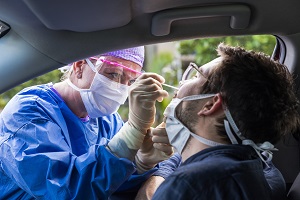 Using antibody tests to check your immunity following COVID-19 vaccination is not recommended, a US Food and Drug Administration (FDA) safety communication reminded healthcare professionals and the public today. “While a positive antibody test result can be used to help identify people who may have had a prior SARS-CoV-2 infection, more research is needed in people who have received a COVID-19 vaccination. Currently authorized SARS-CoV-2 antibody tests have not been evaluated to assess the level of protection provided by an immune response to COVID-19 vaccination.”
The agency has also updated their FAQ page for patients and consumers who have questions about antibody (serology) testing.
TCTMD managing editor Shelley Wood contributed today’s Dispatch.
May 18, 2021
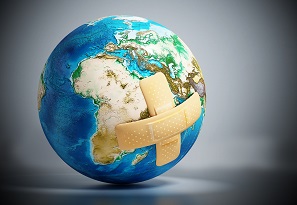 The United States has pledged to send 80 million doses of vaccines to hard-hit countries, but critics are already saying that this step is inadequate. “Donating 80 million doses of vaccines without a plan to scale up production worldwide is like putting a Band-Aid on a machete wound,” AIDS activist Gregg Gonsalves told the New York Times.
The head of the World Health Organization (WHO), Tedros Adhanom Ghebreyesus, MD, is asking G7 countries to boost vaccine production and supply the COVAX vaccine-sharing initiative with more shots ahead of schedule. That would help make up for the shortfall caused by the export disruptions in India, Reuters reports.
Research supporting or rejecting a role for convalescent plasma for COVID-19 has been decidedly mixed over the last 12 months and this past week is no exception. In the Lancet, RECOVERY investigators published the full results of their trial, after announcing back in January that they were stopping recruitment due to lack of benefit. As the paper makes clear, high-titer convalescent plasma did not improve survival or other prespecified clinical outcomes among 16,287 hospitalized patients.
By contrast, a smaller randomized trial conducted at sites in the US and Brazil, sponsored by the Global Alliance for Preventing Pandemics and published last week in the Journal for Clinical Investigation, found a significant improvement in mortality but no difference in rates of improved clinical status. That discrepancy, first author Max R. O'Donnell, MD, explains in a press release issued yesterday, may relate to the fact that patients remained hospitalized at the 28-day mark, adding: “We should not close the door prematurely on research into the therapeutic value of convalescent plasma research for severe COVID-19, particularly in the context of emerging viral variants in low- and middle-income countries.”
SARS-CoV-2 has long been understood to gain a foothold through the upper respiratory tract, but an in vitro stem cell model of adult human eyes confirms that COVID-19 can directly infect the eye’s surface cells. This supports the view that eye protection can help guard against transmission, researchers write in Cell Stem Cell. “We hope this new data results in additional measures to protect the eyes,” author Timothy Blenkinsop, PhD, is quoted in a press release. “We also intend to use these models to test approaches to prevent ocular infections.”
 A survey of people suffering from “long COVID” say their symptoms were alleviated following vaccination, according to a story in the Guardian. The analysis has not yet been peer reviewed, but according to the LongCovidSOS advocacy group, which conducted the survey in 812 people with protracted post-COVID-19 symptoms contacted via social media (mostly white, female), they have published their results to a preprint server.
Scientists say it’s time to end America’s fixation on herd immunity as a means out of the COVID-19 crisis, NPR reports. An in-depth explainer walks through the reasons why the concept is overly simplistic, ever-shifting, and ill-suited to our current situation.
Telemedicine ramped up quickly at the start of the pandemic in the United States, with uncertainty about the virus helping to drive usage, a new study makes clear. But as investigators write today in JAMA Network Open, uptake was not uniform across US counties and signs point to rural and lower-income communities being “left behind” in the shift. “To ensure telemedicine is accessible by all people in the US, interventions such as increased broadband investment in rural areas or greater reimbursement in disadvantaged communities may be needed,” the authors say.
 More palatable than a nose or throat swab, a COVID-19 “breathalyzer” has major appeal. But now some are questioning whether the SpiroNose, which analyzes chemical components of exhaled breath, has really passed the sniff test. The device, which was cleared by Dutch regulators, has been rolling out across the Netherlands and is being used to screen workers at the Eurovision Song Contest, which begins tomorrow in Rotterdam. “But soon after its premiere, 25 people who tested negative turned out to have COVID-19 after all, and Amsterdam halted its use,” an article in Science reports. “The Dutch government has decided the device itself was innocent, however, and has not withdrawn its authorization.
TCTMD Managing Editor Shelley Wood contributed today’s Dispatch.
May 17, 2021
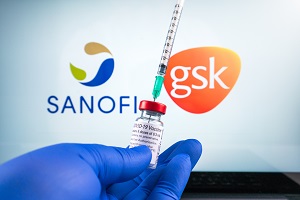 The vaccine being developed by Sanofi/GSK has demonstrated “strong immune responses” across all adult age groups being studied in their phase II trial of 722 subjects, the companies announced today. Results showed “95% to 100% seroconversion following a second injection in all age groups (18 to 95 years old) and across all doses, with acceptable tolerability and with no safety concerns,” a press release states. A phrase III trial will kick off within weeks.
There’s growing pushback against and confusion over the new, relaxed US Centers for Disease Control and Prevention (CDC) indoor mask guidance. CNN's chief medical correspondent. Sanjay Gupta, MD, said the CDC made a “critical error” that caught people off guard and left businesses unprepared. Walmart, for example, has dropped the nationwide requirement that customers wear masks, NPR reports, whereas Starbucks has said masks are “optional” for vaccinated customers, USA Today notes.
Meanwhile the largest nurses’ union in the United States has fired back at the CDC, saying in a statement that its new mandate is “not based on science, does not protect public health, and threatens the lives of patients, nurses, and other frontline workers across the country.”
In Europe, all adults over age 16 in Germany will be able to access vaccines starting June 1, the country announced today, doing away with the priority lists that had hitherto been guiding vaccinations there. Italy, meanwhile, has pushed its nightly curfew back to 11 PM, while the Netherlands is relaxing its lockdown restrictions, the Guardian reports.
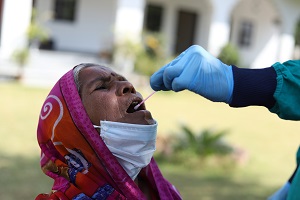 A Nature story describes how India’s neighboring countries are working to sequence viruses associated with local outbreaks to better understand their own vulnerability to the strain wreaking havoc in India. “From Sri Lanka to Nepal, scientists with limited resources are working feverishly to discover which variants are driving outbreaks,” Smriti Mallapaty writes.
The European Medicines Agency (EMA) has advised that the Pfizer/BioNTech vaccine can be stored in an unopened thawed vial at 2-8°C (that is, in a normal fridge) after being taken out of deep-freeze conditions for 1 month (31 days). That’s up from the 5 days previously recommended. “Increased flexibility in the storage and handling of the vaccine is expected to have a significant impact on planning and logistics of vaccine rollout in EU Member States,” a press release states.
In Nature Medicine, researchers have demonstrated that neutralizing antibody levels are highly predictive of immune protection against symptomatic SARS-CoV-2 infection. That’s important, they write, because having predictive models of immune protection is needed for vaccine development and to better understand the future trajectory of the pandemic.
A survey of over 120,000 respondents in 126 countries to assess how societal-level trust in science is related to vaccine confidence has confirmed what many health policy researchers likely already suspected: “In countries with a high aggregate level of trust in science, people are more likely to be confident about vaccination, over and above their individual-level scientific trust.” The data, stemming from before the COVID-19 pandemic, nevertheless makes the point that fostering “societal consensus around trust in science” may help combat vaccine hesitancy, authors write in Nature Human Behaviour.
Among 324,013 patients who developed ischemic stroke in 2020 as compared to a prior period, substantial decreases were seen in the number of patients admitted and discharged from hospitals early in the pandemic, but these returned to normal levels by July 2020. Patients treated for ischemic stroke in combination with COVID-19, however, were more likely to experience complications and death in the hospital. They were also more likely to have nonconventional vascular risk factors and to be Black or Hispanic, authors write in JAMA Network Open.
Several COVID-19-related studies were featured at the American College of Cardiology 2021 Scientific Session yesterday:
- The latest results from the ACC Well-being Survey indicate that COVID-19 has nearly doubled burnout rates among cardiologists, as TCTMD’s Yael Maxwell reports.
- Data from the ACTION trial delivered the disappointing result that therapeutic-dose anticoagulation (primarily rivaroxaban), compared with standard thromboprophylaxis, does not improve outcomes in patients hospitalized with COVID-19 who have elevated D-dimer levels. TCTMD’s Todd Neal has the story.
- INSPIRATION-S, which compared atorvastatin 20 mg/dL to placebo in hospitalized COVID-19 patients, showed the statin did not significantly reduce the risk of adjudicated venous or arterial thrombosis, treatment with ECMO, or all-cause mortality, a finding that was consistent across subgroups.
- WASE COVID, which tested machine-learning versus standard (“human”) analysis for predicting mortality in COVID-19 patients who underwent echocardiography, concluded that artificial intelligence-based algorithms for identifying changes in left ventricular ejection fraction and LV longitudinal strain have less inter-reader variability and will result in better prediction of mortality.
 The New York City Marathon, celebrating its 50th anniversary, will go ahead this November with an in-person race, albeit with 33,000 entrants instead of the regular 55,000, race organizers have announced. “Runners traveling to New York are expected to adhere to federal, state, and local health and safety guidelines, including pretravel testing and quarantine requirements,” the website explains. “Runners should be prepared to provide a negative COVID-19 test result or proof of a complete vaccination series prior to running.” There will also be a virtual option.
TCTMD Managing Editor Shelley Wood contributed today’s Dispatch


Shelley Wood was the Editor-in-Chief of TCTMD and the Editorial Director at the Cardiovascular Research Foundation (CRF) from October 2015…
Read Full BioRelated News

Comments