COVID-19: TCTMD’s Dispatch for February Week 2
We’re curating a list of COVID-19 research and other useful content, and updating it regularly.

Since March 2020, TCTMD reporter Todd Neale has been writing up breaking news and peer-reviewed research related to COVID-19 every weekday. In July 2021, we transitioned to Mondays, Wednesdays, and Fridays. If you have something to share, tell us. All of our COVID-19 coverage can be found on our COVID-19 Hub.
February 11, 2022
As TCTMD’s Caitlin Cox reports, evidence now suggests that COVID-19 infection should be considered a CV risk factor. Data from the US Department of Veterans Affairs healthcare system show that even those who experience a mild infection and have no known CV risk factors are at increased risk for cerebrovascular disorders, dysrhythmias, inflammation of the heart or pericardium, ischemic heart disease, other CV disorders, and thromboembolic disorders through 1 year.
In a similar vein, a BMJ study of Americans aged 65 and older infected with COVID-19 in 2020 finds that nearly one-third developed at least one new serious health issue in the ensuing months, ranging from respiratory failure and hypertension to memory difficulties and mental health diagnoses. The risk for new health problems was 11% higher that of an age-matched group who never had COVID-19.
 A population-based study in JAMA Pediatrics provides reassurance that getting vaccinated against COVID-19 during a pregnancy does not have a detrimental effect on offspring. Women in the study who received the Pfizer/BioNTech vaccine were no more likely than unvaccinated pregnant women to experience preterm birth or to have higher rates of all-cause neonatal hospitalizations, postneonatal hospitalizations, congenital anomalies, or infant death.
Areas with higher concentrations of primary care physicians (PCPs) have better COVID-19 vaccination rates than areas with fewer PCPs. Reporting in JAMA Network Open, researchers say the findings support expanding COVID-19 vaccine distribution to PCPs who they say “play a critical role in ensuring vaccine acceptance, especially in resource-limited and vaccine-hesitant regions, potentially through counseling and building local community trust and partnerships . . .”
 In an attempt to find out what the government is paying for the four “free” rapid COVID test kits promised to every American household, Kaiser Health News reached out to the companies awarded the contracts, the Army Contracting Command, and the Department of Defense. They found email addresses years out of date, wrong phone numbers, and voicemail problems, but no answers. Government contracts worth $10,000 or more are required to be posted to SAM.gov or FPDS.gov, but the information is not there.
Amid falling COVID-19 cases and several states announcing their intentions to do away with mask mandates, the CDC’s latest update from its COVID data tracker shows the 7-day average of daily new cases at 215,418, which is 42.8% lower than last week.
 Regardless of how many exposures they have, some people just never get COVID-19 and scientists want to know why. Reporting for AXIOS, Eileen Drage O’Reilly, spoke with scientists who say the “never COVID” population could point toward new vaccine targets or other protections. Working theories—other than luck—include cross immunity, genetics, and mucosal immunity.
A plan by the World Health Organization (WHO) to help African countries learn to make COVID-19 vaccines appears to be in trouble, according to an investigation by the BMJ. Their reporting uncovered evidence that a firm representing BioNTech claims the WHO’s plan will infringe on company patents and instead proposes shipping full mRNA production lines from Europe to Africa, staffing them with BioNTech workers, and using licensing by the European Medicines Agency (EMA) rather than local regulators.
At the time of his death, comedian Bob Saget was positive for COVID-19 on a PCR test and had an enlarged heart with a 95% blockage on one side, according to information from his autopsy that was released today, CNN and other outlets are reporting. However, the cause of the 65-year-old’s death in January was blunt head trauma, as previously concluded.
L.A. McKeown contributed today’s Dispatch.
February 9, 2022
The number of confirmed COVID-19 cases across the world has topped 400 million, according to the Johns Hopkins Coronavirus Resource Center. As the New York Times notes, that comes just a month after the tally reached 300 million: “The actual number of cases is undoubtedly higher, and probably drastically so. Many at-home rapid test results are never officially reported, and not all infected people get tested because they may lack access, have no symptoms, or choose not to.”
 As the number of COVID-19 cases continues to fall across the US, several states are removing mask mandates for schools and indoor spaces (CIDRAP News). Connecticut, Delaware, New Jersey, and Oregon have all announced plans to drop requirements for face coverings in schools, with California saying that it will end an indoor mask mandate for people who are vaccinated. New York’s indoor mask mandate will end today, too (New York Times). Rochelle Walensky, MD, director of the US Centers for Disease Control and Prevention (CDC), said Tuesday, however, that it’s too soon to change mask guidance (CNN).
A note of caution comes from the Washington Post, which points out that even though Omicron is considered a milder variant, it “has infected so many people that it has driven the number of daily deaths beyond where it was last spring, before vaccines were widely available.” People older than 75 and those who are unvaccinated or “medically vulnerable” are taking the biggest hit. “Even if on a per-case basis fewer people develop severe illness and die, when you apply a small percentage to a very large number, you get a substantial number,” one epidemiologist said.
A paper published this week in Nature Medicine delves into the long-term cardiovascular consequences of COVID-19, showing that after 30 days following infection, there continue to be increased risks of cerebrovascular disorders, dysrhythmias, ischemic and nonischemic heart disease, pericarditis, myocarditis, heart failure, and thromboembolic disease. Heightened risks were seen even among patients who were not hospitalized for the acute infection. “Our results provide evidence that the risk and 1-year burden of cardiovascular disease in survivors of acute COVID-19 are substantial,” the authors say. Stay tuned for full coverage on TCTMD.
Male sex, Black/African American race, obesity, and several pediatric complex chronic condition subcategories are associated with greater disease severity in children and teens infected with SARS-CoV-2, researchers report in JAMA Network Open. In addition, vital signs and various lab test values from the day of admission to the hospital were tied to peak disease severity. These factors “could assist with early identification of children at risk for severe disease due to SARS-CoV-2 infection,” the researchers suggest.
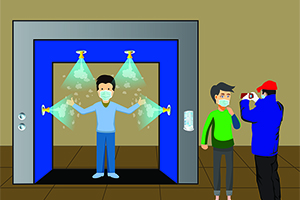 Earlier this week, the US Food and Drug Administration (FDA) announced “a policy discouraging sponsors from developing or seeking approval or authorization for the use of sanitation tunnels, which are tunnels, walkways, chambers, and similar systems, that spray humans with a mist of disinfectant or aerosolized antiseptic with the aim of preventing or treating COVID-19.” The agency cites a lack of data supporting their use and potential adverse effects from the sanitation chemicals.
SARS-CoV-2 infection is associated with an increased risk of maternal mortality/serious morbidity from obstetric complications among pregnant and postpartum patients (adjusted relative risk 1.41; 95% CI 1.23-1.61), according to a study in JAMA. The relationship was driven by COVID-19 of at least moderate severity. CIDRAP News has more.
The first research definition for long COVID in children and young people, created through the consensus of 120 experts, has been released in the Archives of Disease in Childhood. The definition, which aligns with the clinical case definition for adults from the World Health Organization (WHO), is as follows: “Post-COVID-19 condition occurs in young people with a history of confirmed SARS CoV-2 infection, with at least one persisting physical symptom for a minimum duration of 12 weeks after initial testing that cannot be explained by an alternative diagnosis. The symptoms have an impact on everyday functioning, may continue or develop after COVID-19 infection, and may fluctuate or relapse over time.”
February 7, 2022
 COVID-19 case numbers have spiked in many parts of Asia after Lunar New Year celebrations last week, the Associated Press reports. Hong Kong, Singapore, Thailand, Indonesia, Malaysia have all seen a recent rise in infections, whereas other countries—including South Korea and Vietnam—are warning of potential surges. Numbers are fluctuating in China, where officials “have imposed strict local lockdowns and mass testing, as the country kicked off the Beijing Winter Olympics last week.”
The official COVID-19 death tally has topped 900,000 in the United States, with more than 2,600 Americans dying each day, the New York Times reports. “Yet another, simultaneous reality of the pandemic offers reason for hope,” the story notes. “The number of new coronavirus infections is plummeting, falling by more than half since mid-January. Hospitalizations are also declining, a relief to stressed healthcare workers who have been treating desperately ill coronavirus patients for nearly 2 years.”
Removing all restrictions on people’s movements in “COVID-zero” regions like China could cause about 2 million deaths in a year, according to a paper published Friday in the weekly bulletin of the China Center for Disease Control and Prevention (CCDC). “Even with a global vaccination rate of 95%, if population mobility was restored to 2019 levels, the researchers estimated that all COVID-zero regions would see more than 234 million infections within a year, including 64 million symptomatic cases and 2 million deaths,” Reuters reports.
Unvaccinated people can have anti-spike antibodies detected up to 20 months after a positive COVID-19 test result, adding to prior data showing antibodies for up to 6 months, according to a research letter in JAMA. The authors caution, however, that “although evidence of natural immunity in unvaccinated healthy US adults up to 20 months after confirmed COVID-19 infection is encouraging, it is unclear how these antibody levels correlate with protection against future SARS-CoV-2 infections, particularly with emerging variants.”
 Australia announced that it will reopen its borders to vaccinated travelers later this month (Reuters). “The country had taken steps in recent months to relax border controls, like allowing in skilled migrants and quarantine-free travel arrangements—“travel bubbles”—with select countries like New Zealand. But the reopening, which takes effect on February 21, represents the first time since March 2020 that people can travel to Australia from anywhere in the world as long as they are vaccinated.”
On Friday, the Advisory Committee on Immunization Practices (ACIP) recommended use of the Moderna COVID-19 vaccine (Spikevax) in all people 18 and older after the US Food and Drug Administration (FDA) granted it full approval earlier in the week (CIDRAP News). Americans now have access to two fully approved vaccines (the shot from Pfizer/BioNTech is the other).
In patients on hemodialysis, the Moderna vaccine produces a stronger antibody response than does the Pfizer/BioNTech shot, a study in CMAJ shows. Several weeks after two-dose vaccination, the proportion of patients who achieved convalescent levels of anti-spike antibody was 95% with the former vaccine and 73% with the latter.
An Omicron-specific booster may not provide more protection against the virus than additional doses of the existing Moderna vaccine, suggests a primate study performed by US government researchers. “Study of blood from the animals showed that many of the measurable immune responses—rises in neutralizing antibody levels, for instance—were not substantially different, regardless of which booster shot they were given, STAT reports.
 The exhaustion of making decisions during the pandemic around things like travel, masking, and testing has a name, according to KHN: decision fatigue. “Faced with a stream of difficult choices about health and safety during a global pandemic, [psychologist Barry] Schwartz suggests, we may experience a unique kind of burnout that could deeply affect our brains and our mental health.”


Todd Neale is the Associate News Editor for TCTMD and a Senior Medical Journalist. He got his start in journalism at …
Read Full BioRelated News

Comments