COVID-19: TCTMD’s Dispatch for March Week 2
We’re curating a list of COVID-19 research and other useful content, and updating it regularly.

Since March 2020, TCTMD reporter Todd Neale has been writing up breaking news and peer-reviewed research related to COVID-19 every weekday. In July 2021, we transitioned to Mondays, Wednesdays, and Fridays. If you have something to share, tell us. All of our COVID-19 coverage can be found on our COVID-19 Hub.
March 11, 2022
Official counts now put the number of COVID-19 deaths worldwide at 6 million, but researchers writing in the Lancet say the true number is three times higher. “We estimate that 18.2 million (95% uncertainty interval 17.1-19.6) people died worldwide because of the COVID-19 pandemic (as measured by excess mortality)” between January 1, 2020, and December 31, 2021. Excess mortality rates were highest in Russia (374.6 excess deaths per 100,000) and Mexico (325.1 excess deaths per 100,000) and were similar in the USA and Brazil (around 171 excess deaths per 100,000).
COVID-19 cases are continuing to surge in Hong Kong, where hospital morgues are filling up so quickly that administrators are having to resort to stacking body bags in the wards of patients still being treated for active infections. “For some of the bodies, we have not been able to move them from the wards to the mortuary,” Sara Ho, chief manager of patient safety and risk management at Hong Kong’s Hospital Authority, told the New York Times. “It may cause some concerns among patients.”
A wave of new cases is also hitting more than 100 neighborhoods across China, the Times notes, including Shanghai, where new lockdowns are snapping into place.
In many other parts of the world, however, vaccine requirements and mask mandates are easing, drawing mixed responses from scientists, as a Nature news story summarizes.
We have known that recombinant events can occur, in humans or animals, with multiple circulating variants of #SARSCoV2. need to wait for experiments to determine the properties of this virus. Importance of sequencing, analytics & rapid data sharing as we deal with this pandemic https://t.co/2qmu6WS118
— Soumya Swaminathan (@doctorsoumya) March 8, 2022
The World Health Organization (WHO) has confirmed the emergence of a new variant that combines features of both Delta and Omicron, being dubbed “Deltacron” or “Deltamicron.” The recombinant strain was first confirmed at the Pasteur Institute in France, the Guardian reports, and similar strains have since been reported in Denmark, the Netherlands, and the United States. Becker’s Hospital Review provides “six things to know” about the mutation, with links to several preprint papers, one of which reports that current PCR tests may “misidentify” the variant.
The USA Today reports that it has reviewed a preprint paper not yet published to medRxiv (a pre-preprint?) reporting on the hunt for Deltacron among nearly 30,000 sequenced samples. “Researchers found two infections involving different versions of Deltacron, resulting from the combination of Delta and Omicron genetic material. Twenty other infections had both the Delta and Omicron variants, with one case having Delta, Omicron and Deltacron.”
Soumya Swaminathan, MMBS, MD, WHO Chief Scientist, tweeted that “recombinant events” are not unexpected, but that further research will be needed to fully understand the implications.
The WHO has also issued new interim guidance for the use of self-testing by individuals, with antigen tests, as a means of protecting themselves and others. The guidance “also includes implementation considerations that can guide decisions on whether, and how, to adopt self-testing in different contexts, including the populations being prioritized; the disease prevalence in that population; and the impact on accessibility of testing, healthcare services, and result reporting.”
 An analysis of children and adolescents ages 5 to 15 years who underwent weekly SARS-CoV-2 testing shows that one-half of all infections were asymptomatic. “Two doses of Pfizer/BioNTech COVID-19 vaccine reduced the risk of Omicron infection by 31% among children aged 5-11 years and by 59% among persons aged 12-15 years,” investigators write in Morbidity and Mortality Weekly Report. “Fully vaccinated participants with Omicron infection spent an average of one half day less sick in bed than did unvaccinated participants with Omicron infection.”
A study of over a million students and 157,069 staff in 61 schools across nine states confirms findings reported earlier this week that those with mandatory mask rules fared better at warding off secondary transmissions than those with laxer policies. “For every 100 community-acquired cases, universally masked districts had 7.3 predicted secondary infections, while optionally masked districts had 26.4,” researchers write in Pediatrics.
Vaccine maker Moderna has said it will “never enforce its patents for COVID-19 vaccines against manufacturers that are based in or producing in 92 low- and middle-income countries, a shift for the biotechnology firm that has come under pressure to share its mRNA technology to help address global vaccine inequity,” Politico reports.
 A comprehensive review of the “changing epidemiology of COVID-19,” published in Science, reaches the gloomy conclusion that variants like Omicron, which are more transmissible because of their ability to evade natural and vaccine-induced immunity, may become the norm, like seasonal influenza, but less-severe illness is not a guarantee. “Evolutionary theory has pointed out that we should not expect evolution toward lower virulence, and the last two variants of concern have demonstrated that there is not a clear, consistent trend in SARS-CoV-2 virulence evolution,” the authors write. “Although Delta is thought to be slightly more virulent than previous variants, Omicron is less so.”
March 9, 2022
 “Tens of thousands” of daily Omicron cases in Hong Kong have produced a panic among residents that’s being blamed for empty supermarkets and a dearth of pain and fever meds at drugstores, the New York Times reports. “The anxiety gripping Hong Kong is not just about the explosion of infections, but also about what the government will do next,” writes Alexandra Stevenson. “Mixed messages from officials have left residents wondering: Will there be a lockdown? Will we be sent into isolation facilities? Will our children be taken from us if they test positive?”
Other parts of the world, however, are continuing to ease restrictions. Austria, which was the first Western country to impose a population-wide vaccine mandate in early February, is now reversing the legislation less than a week before the mandate would have come under enforcement. The decision was taken after seeing much milder illness with the Omicron variant. “After consultations with the health minister, we have decided that we will of course follow what the [expert] commission has said,” Austrian official Karoline Edtstadler is quoted in the Guardian.
Florida, meanwhile, is drawing widespread condemnation for its announcement this week that it would recommend against COVID-19 vaccines for healthy kids. “It's deeply disturbing that there are politicians peddling conspiracy theories out there and casting doubt on vaccinations when it is our best tool against the virus and the best tool to prevent even teenagers from being hospitalized," White House spokeswoman Jen Psaki is quoted by Reuters. An editorial in the Washington Post was blunter still: “Vaccines work for children. Ignore the nonsense spoken in Florida.”
 The Coalition for Epidemic Preparedness Innovations (CEPI), a global partnership between a range of public, private, philanthropic, and civil society organizations has pledged up to $42 million to develop a vaccine that could provide “broad protection against SARS-CoV-2 as well as other betacoronaviruses including severe acute respiratory syndrome and Middle East respiratory syndrome,” the BMJ reports. The announcement was made yesterday at the Global Pandemic Preparedness Summit in London, England, co-hosted by the UK government. A whopping $1.5 billion has been pledged to kickstart CEPI’s more ambitious “100 Days Mission” that would allow for vaccines to be developed and scaled up within 100 days, allowing for new potential pandemics to be swiftly contained.
A study of viral load and antibody response among children and adults testing positive on PCR tests but with mild or no symptoms indicates that children are roughly half as likely to demonstrate seroconversion—indicative of a strong immunoglobulin G (IgG) response—during the acute and convalescent phases of the infection. That’s despite viral load being roughly similar, the authors note. “Our findings also indicate that serological findings may be a less reliable marker of prior SARS-CoV-2 infection, particularly in children. Reduced likelihood of seroconversion may mean that children are less protected against SARS-CoV-2 infections in the long term compared with adults.” Of note, however, this analysis was conducted on patients infected with the original/ancestral virus circulating in 2020 and seroconversion rates might be expected to be greater with the variants that have produced higher viral loads, investigators write in JAMA Network Open.
Corticosteroids were the first drugs to demonstrate a benefit in COVID-19, with the RECOVERY trial showing that use of dexamethasone for 10 days, or until discharged, reduced mortality in severely ill patients requiring mechanical ventilation or oxygen. Now, in a new study addressing the use of the corticosteroids among patients receiving less than 10 days of therapy during hospitalization, continuing the drug after discharge did not have an impact on readmissions or mortality. The findings “raise questions regarding the prevailing practice of continuing corticosteroid therapy at discharge despite guideline recommendations,” authors write in JAMA Network Open.
Rural communities in the United States are much less likely to be vaccinated against COVID-19 than urban ones, and this gap has only widened over the past year, researchers write in Morbidity and Mortality Weekly Report. In April 2021, just 39% of residents in rural counties had received a first vaccine dose against SARS-CoV-2 as compared with 46% of people in urban ones. That difference had “more than doubled” by January 2022, researchers say, reaching 59% and 75% respectively. Noting that rural communities have also borne the brunt of higher COVID-19 infections and mortality, “addressing barriers to vaccination in rural areas is critical to achieving vaccine equity, reducing disparities, and decreasing COVID-19–related illness and death in the United States,” the study authors conclude.
Also in MMWR, a study of mask use among school-age children in Arkansas between August and October 2021, shows that teachers, staff, and students had a 23% lower incidence of COVID-19 in schools with mandatory masking as compared with schools with “mask optional” policies.
A modeling study in the Lancet Public Health attempts to quantify the value of maintaining face mask use until sufficient vaccine coverage is achieved, and how long that would be needed. “We found substantial value in continuing face mask wearing 2 to 10 weeks beyond the achievement of target vaccination coverage thresholds to reduce residual SAR-CoV-2 transmission,” the authors write. Moreover, doing so was not only cost-effective but also cost-saving, by staggering amounts. “If the USA were to achieve a 90% [vaccine] coverage by May 1, 2022, simulations show that face mask use would avert $13.3 billion (12.5-14.1) in societal costs and $2.4 billion (2.2-2.5) in third-party payer costs, as well as 6.29 million (6.27-6.30) cases, 136,700 (135,700-137,800) hospital admissions and treatment, and 16,000 (15,700-16,100) deaths,” they write. Savings were still impressive, though lower, with lesser amounts of vaccine coverage.
 News outlets worldwide picked up on a Nature paper reported in Monday’s Dispatch linking COVID-19 infections—even mild ones—with subsequent brain damage. Now a Nature News and Views article offers some context, concluding “the work sets an example for the high standards required in large longitudinal neuroimaging studies.” Cardiologist Eric Topol, MD, also tackles the topic in an opinion piece in the Guardian.
March 7, 2022
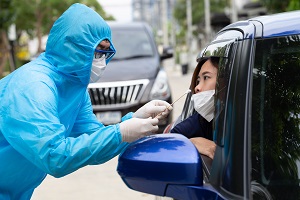 The global death toll from COVID-19 has surpassed 6 million, although public health experts believe this is a “vast undercount,” the New York Times reports.
While infections are declining in many parts of the world, daily case counts of symptomatic COVID-19 in mainland China have climbed to their highest number since March 2020 due to Omicron transmissions, Reuters reports, although no new deaths were reported Sunday. And New Zealand, which staved off the pandemic better than most other nations for the better part of 2 years, is finally seeing numbers spike. Several members of the country’s parliament are among the 17,522 new cases there, the New Zealand Herald reported today.
A Danish study published to the medRxiv preprint server last Friday indicates that almost one-third of people who contracted COVID-19 experience lingering symptoms 6 to 12 months later. “The questionnaire-based study suggested that the most commonly reported long-term symptoms were changes in sense of smell and taste, as well as fatigue,” a Reuters story summarizes.
More than two dozen internationally recognized epidemiologists, pharmacologists, virologists, immunologists, and health policy experts have released a “road map” for existing with COVID-19 in the United States. “Eliminating COVID is not a realistic goal. Instead, the nation must plan to mitigate its effects, prepare for variants, and build towards a next normal,” a statement says. STAT’s Helen Branswell provides an explainer, noting: “Its publication comes at a critical time, when the combination of declining case counts, deep-seated COVID fatigue, and a dangerous and unprovoked war instigated by a nuclear power threaten to push control of the virus and planning for future pandemics to the far back burner.”
 An early-access publication in Nature offers some of the most concrete evidence to date that even mild SARS-CoV-2 infection can damage the brain. The study involved 401 patients who tested positive for COVID-19 after previously undergoing multimodal imaging of the brain, who then underwent a second brain scan after recovery from COVID-19 (an average of 141 days later). Findings were compared with patients who had not contracted COVID-19. Imaging confirmed that people who’d had COVID had larger reductions in brain volumes overall and scored worse on cognitive tests than those who had not fallen ill. Parts of the brain responsible for the sense of smell were the most commonly affected. As USA Today reported: “The 15 participants who were sick enough with COVID-19 to require hospitalization showed the most brain changes, but even those who had much milder disease showed differences, the study found. The oldest participants had more changes on average than younger ones.”
Also in Nature, a whole genome sequencing study of nearly 7,500 critically-ill patients and 48,400 noninfected controls has identified a range of genes that “significantly predispose to critical COVID-19.” Several of these may be “druggable targets,” they note. “Our results are broadly consistent with a multicomponent model of COVID-19 pathophysiology, in which at least two distinct mechanisms can predispose to life-threatening disease: failure to control viral replication, or an enhanced tendency towards pulmonary inflammation and intravascular coagulation.”
Children and adolescents in sub-Saharan Africa who contract SARS-CoV-2 appear to face much higher rates of morbidity and mortality than those seen in other parts of the globe. In particular, children under 1 year, as well as those with hypertension, chronic lung disease, or hematologic disorders, appeared to be at the highest risk, while HIV infection did not appear to be linked to worse outcomes. Targeting these younger patients for vaccination, when vaccines have been in short supply, may be warranted as supplies ramp up, investigators write in JAMA Pediatrics.
More than half of patients living with congenital heart defects (CHDs) who were hospitalized after contracting COVID-19 required ICU-level care, with 24% requiring invasive mechanical ventilation, numbers from a large, US healthcare database suggest. Fully 11.2% died during hospitalization, a high number given that nearly 13% were between the ages of 1 and 17. “Targeted strategies to increase awareness of CHD as a risk factor for critical COVID-19 illness and emphasize the critical importance of prevention of COVID-19 illness for people with CHD and their families through vaccination, masking, and physical distancing are needed,” researchers write in Circulation.
 Queen Elizabeth II, age 95, met with Canadian Prime Minister Justin Trudeau today—her first in-person engagement since testing positive for COVID-19 in late February. “I can tell you that in my conversation with her this morning she was as insightful and perspicacious as ever,” Trudeau told the Associated Press.


Todd Neale is the Associate News Editor for TCTMD and a Senior Medical Journalist. He got his start in journalism at …
Read Full BioRelated News


Comments