COVID-19: TCTMD’s Dispatch for March Week 4
We’re curating a list of COVID-19 research and other useful content, and updating it regularly.


Since March 2020, TCTMD reporter Todd Neale has been writing up breaking news and peer-reviewed research related to COVID-19 every weekday. In July 2021, we transitioned to Mondays, Wednesdays, and Fridays. If you have something to share, tell us. All of our COVID-19 coverage can be found on our COVID-19 Hub.
March 25, 2022
 Experts are concerned about how the US is going to detect the next COVID-19 surge, according to a story from the Associated Press. “Despite disease monitoring improvements over the last 2 years, they say, some recent developments don’t bode well,” Mike Stobbe writes, pointing to the rise in use of at-home tests, a reduction in laboratories looking for new variants, a greater focus on hospitalizations rather than case numbers, a patchwork wastewater surveillance system, and declining government funds for vaccines, treatments, and testing. “We’re not in a great situation,” one researcher said.
According to data from the New York Times, COVID-19 case numbers have risen in 10 US states and the District of Columbia over the past 2 weeks, despite a decline when looking at the country as a whole (Becker’s Hospital Review). The biggest increases were seen in New York (44%) and Kentucky (35%). “If we maintain our preparedness, an increase in cases does not need to be a cause for alarm like it once was,” Jeff Zients, White House COVID-19 response coordinator, said in a March 23 media briefing. “We know what tools we need to fight the virus. Unfortunately, because of congressional action, we’re at risk of not having these tools readily available.”
Shanghai’s “slicing and gridding” approach to combatting SARS-CoV-2 outbreaks—which involves screening individual neighborhoods rather than locking down the city as a whole—is being scrutinized as cases surge (Reuters). A Shanghai official “said there were signs the city’s methods were bringing COVID under control and if the proportion of new cases outside locked-down districts continued to drop, an ‘inflection point’ in the outbreak would come soon.”
A growing body of evidence suggests that COVID-19 vaccination not only keeps people out of the hospital and cuts the risks of dying, but also may reduce the likelihood of long COVID symptoms if infected, as detailed by NPR. “It may not eradicate the symptoms of long COVID, but the protective effect seems to be very strong,” says one long COVID researcher.
Adherence to prone positioning among noncritically ill COVID-19 patients with hypoxemia is poor, according to the results of the COVID-PRONE trial, which were published this week in the BMJ. Moreover, the strategy didn’t reduce a composite of in-hospital death, mechanical ventilation, or worsening respiratory failure. CIDRAP News has more details.
 TCTMD has a full story on a JAMA study previously mentioned in the Dispatch that shows rates of myocarditis remain low following administration of a third dose of the COVID-19 vaccine from Pfizer/BioNTech in members of the Israeli military, with the possibility of even lower rates than were seen after the initial two-dose series. Overall, there were seven vaccine-associated cases observed within 2 weeks of administration of the booster dose, for an incidence of 3.17 per 100,000 vaccines after the first week and 5.55 per 100,000 after 2 weeks. Clinical course was mild in all cases. “I’m not saying that it’s nice to have myocarditis, but in general we didn’t see limitation caused by the disease,” the lead author told TCTMD. And when compared to the risks of long COVID and other consequences of COVID-19 itself, including myocarditis, she added, getting vaccinated is “a relatively reasonable risk to take.”
Underscoring the importance of booster doses, randomized trial results in the New England Journal of Medicine showed that a third dose of Pfizer/BioNTech vaccine administered a median of 10.8 months after completion of the initial series provided 95.3% efficacy against COVID-19 compared with two doses during a median follow-up of 2.5 months. “No new safety signals were identified, and no cases of myocarditis or pericarditis were reported,” the researchers report.
Last week, Politico reported that some hospitals were asking patients and visitors to remove N95 masks and instead wear surgical masks, citing guidance from the US Centers for Disease Control and Prevention (CDC). But on Thursday, the CDC updated its guidance, with Politico noting that the agency now states that “while facilities can continue to offer patients surgical masks, facilities ‘should allow the use of a clean mask or respirator with higher level protection by people who chose that option based on their individual preference.’”
COVID-19 vaccination during pregnancy, primarily with the mRNA-based vaccines in the second or third trimester, was not associated with adverse peripartum outcomes in two studies published in JAMA—one conducted in Sweden and Norway and the other in Ontario, Canada. The findings “are reassuring, especially for pregnant individuals with access to mRNA vaccines in their second or third trimester,” according to an accompanying editorial. “However, the question remains whether the evidence from these two studies will convince those who remain unvaccinated to receive a COVID-19 vaccine during pregnancy.”
 In 2020, NFL games held with fans in the stadium did not have an apparent effect on the spread of COVID-19 in the surrounding communities, researchers report in PNAS. “This suggests that, for the 2020 NFL season, the benefits of providing a tightly controlled outdoor spectating environment—including masking and distancing requirements—counterbalanced the risks associated with opening,” they conclude. CIDRAP News has more.
The human medicines committee of the European Medicines Agency (EMA) has recommended marketing authorization for AstraZeneca’s Evusheld—a combination of two monoclonal antibodies, tixagevimab and cilgavimab—for the prevention of COVID-19 in adults and adolescents ages 12 and older before exposure to SARS-CoV-2. The US Food and Drug Administration (FDA) granted an emergency use authorization for its use back in December.
March 23, 2022
Higher-income countries with the best hospitals and robust public health policies, able to implement social distancing measures and ramp up vaccination campaigns swiftly, might be expected to fare better during COVID-19. But in some parts of the world, the opposite has proved true. In Africa, this apparent dichotomy has emerged as an enduring “mystery” in the pandemic, Stephanie Nolen writes for the New York Times. “The coronavirus was expected to devastate the continent, but higher-income and better-prepared countries appear to have fared far worse. . . . If COVID has in fact done less damage here, why is that? If it has been just as vicious, how have we missed it?”
The Omicron BA.2 variant now accounts for 70% of infections in the United States, according to analyses by genomics company Helix, the Washington Post reports. Just yesterday, the US Centers for Disease Control and Prevention (CDC) announced that BA.2 likely accounted for 35% of infections nationally, but according to the Post, the Helix numbers are more up-to-date, with samples from a broader range of sources.
The BA.2 surge is putting “significant” pressure on the National Health System in “virtually every area of England, the chief medical officer has warned, with hospitalizations likely to continue increasing at least until April,” the Guardian reports.
Also in the Guardian: dire predictions that long COVID is creating a “generation affected by disability,” according to Danny Altmann, an immunologist at Imperial College London. “It’s kind of an anathema to me that we’ve kind of thrown in the towel on control of Omicron wave infections and have said, ‘It’s endemic, and we don’t care anymore, because it’s very benign,’” Altmann is quoted. “It just isn’t. And there are new people joining the long COVID support groups all the time with their disabilities. It’s really not OK, and it’s heartbreaking.”
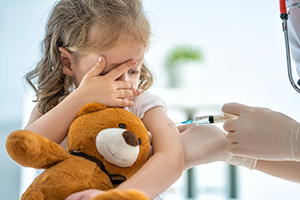 Moderna will be seeking emergency use authorization for a reduced dose of its mRNA vaccine for children 6 months to 5 years, the company announced today, along with top-line results from a phase II/III study in this age group. “This interim analysis showed a robust neutralizing antibody response in both age groups after a 25-µg two-dose primary series of mRNA-1273 along with a favorable safety profile,” a press release states. And while it was not a primary endpoint of the trial, investigators noted statistically significant vaccine efficacy during the Omicron surge that was “consistent” with the lower effectiveness seen in adults when this strain became dominant.
Pfizer, meanwhile, announced it would be selling up to 4 million doses of its Paxlovid pill for severe COVID-19 to low- and middle-income countries as part of an agreement with UNICEF, the global relief organization. “Some upper-middle-income countries in Africa are also included in the deal, Pfizer said, and the company expects supply to be available in April and continue throughout the year,” Bloomberg reports.
Vaccine manufacturers around the globe now have the capacity to produce more vaccine doses than the world could possibly use, Helen Branswell writes for STAT. That’s “more than 12 billion doses a year,” she notes. “For a number of existing manufacturers, purchases have plateaued.” For would-be newcomers, their plans to bring vaccines forward have been mothballed unless there’s a compelling reason to think their product offers an advantage over those already approved for use.
Saliva tests are significantly more sensitive for detecting early infection with SARS-CoV-2, most notably in asymptomatic and presymptomatic subjects, confirms a study in Microbiology Spectrum, a journal of the American Society for Microbiology. “The findings have implications for improving public acceptance of COVID-19 testing, reducing the cost of mass COVID-19 screening and improving the safety of healthcare workers who conduct testing,” a press release explains.
 It’s unlikely that adding an antiplatelet agent to anticoagulation will increase the number of organ support-free days in critically ill patients with COVID-19, according to the results of the REMAP-CAP trial. As the lead investigator told TCTMD’s Todd Neale, however, it’s possible that survival in the first 90 days might be improved by an antiplatelet, particularly in patients not already taking concurrent therapeutic-dose anticoagulation. The results were published in JAMA yesterday.
March 21, 2022
 Shanghai Disneyland shut its doors today in the face of China’s rising Omicron cases. “Any decision on a reopening date would be made after consulting with the local authorities,” the New York Times reports. “Shanghai Disneyland closed as the virus spread throughout China in early 2020 and reopened in May that year.” Over the weekend, China announced its first two deaths from the virus in over a year.
The US Food and Drug Administration has announced it will convene an advisory panel on April 6 to discuss the country’s strategy for booster shots and the process for selecting specific strains of the SARS-CoV-2 virus deemed to warrant a dedicated COVID-19 vaccine. “As we prepare for future needs to address COVID-19, prevention in the form of vaccines remains our best defense against the disease and any potentially severe consequences,” Peter Marks, MD, PhD, director of the FDA’s Center for Biologics Evaluation and Research, said in a press release. “Now is the time to discuss the need for future boosters as we aim to move forward safely, with COVID-19 becoming a virus like others such as influenza that we prepare for, protect against, and treat.” Representatives from the US Centers for Disease Control and Prevention (CDC) and the National Institutes of Health (NIH) will participate in the panel meeting.
Meanwhile, in the UK, the National Health Service announced it will begin offering a second booster to people living in England who are over 75 years old, anyone over 12 who is immunocompromised, and anyone living in a nursing home. The ideal window is 6 months after the first booster shot, the NHS said, referring to the shot as a “Spring COVID booster.”
In January 2022, unvaccinated adults and those who got their primary vaccine series, but no booster or additional dose, “were 12 and three times as likely to be hospitalized, respectively, as were adults who received booster or additional doses,” researchers report in Morbidity and Mortality Weekly Report. “Hospitalization rates among non-Hispanic Black adults increased more than rates in other racial/ethnic groups.”
Ivermectin may have been roundly discredited as a therapy for COVID-19, but it is a first-line treatment for strongyloidiasis, the intestinal infection caused by the called Strongyloides stercoralis roundworm. While the larvae can live and reproduce without causing symptoms, hyperinfection and invasion of other organs can be life-threatening, particularly in people with compromised immune systems. Whether the presence of roundworm has any impact on the ability of ivermectin to be effective in COVID-19 was thus the question tackled by researchers in JAMA Network Open. In a meta-analysis taking into account the regional prevalence of strongyloidiasis, authors concluded that strongyloidiasis prevalence was found to interact with the relative risk of mortality for ivermectin as a treatment for COVID-19, but “no evidence was found to suggest ivermectin has any role in preventing mortality among patients with COVID-19 in regions where strongyloidiasis was not endemic.”
SARS-CoV-2 infection among women in the Kaiser Permanente Northern California health system was associated with increased risk of severe maternal morbidity, preterm birth, and venous thromboembolism, researchers write in JAMA Internal Medicine. “The study findings inform clinicians and patients about the risk of perinatal complications associated with SARS-CoV-2 infection in pregnancy and support vaccination of pregnant individuals and those planning conception,” they conclude.
To conserve resources for the critically ill during the pandemic, some hospitals began same-day discharge after TAVI for patients in whom such an approach was deemed suitable. TCTMD’s Michael O’Riordan reports on how patients who went home within hours of their procedures fared, and what the lessons are for structural heart programs going forward.
The risk of cerebral venous thrombosis (CVT) is much higher among patients infected with SARS-CoV-2 than among people who have received an mRNA-based COVID-19 vaccine, affirms a study out of Singapore. As TCTMD’s Todd Neale reports, the estimated incidence of this rare type of stroke within 6 weeks was 32.1 times higher among infected patients than among those who received at least one dose of mRNA vaccine, and 28.4 times higher compared with those who received two doses of vaccine. Full findings were published last week in JAMA Network Open.
A Nature news article explores the implications of a preprint paper published last week probing the nuances of increased transmissibility of the Omicron BA.2 subvariant compared to the original Omicron strain, and relative vaccine efficacy against the two. The upshot: BA.2 is likely not any worse than BA.1 and mRNA vaccines provided robust protection against both in the first few months. “But protection waned to around 10% after only 4-6 months, meaning that the vaccines prevented only 10% of the cases that would have occurred if all of the individuals had been unvaccinated,” writes Saima May Sidik. However, “protection against BA.2 did not seem to wane any faster than protection against BA.1, and a booster shot brought the protection against symptomatic infection by either subvariant back to 30-60%.”
 Boston’s famous St. Patrick’s Day parade returned Sunday for the first time since 2019. “There are smiles from ear to ear everywhere. I think people are really happy that this is back,” said Massachusetts Gov. Charlie Baker, calling it a “big reward, well earned” by a city that went through a lot during the pandemic (AP).


Todd Neale is the Associate News Editor for TCTMD and a Senior Medical Journalist. He got his start in journalism at …
Read Full BioRelated News


Comments