COVID-19: TCTMD’s Dispatch for November Week 1
We’re curating a list of COVID-19 research and other useful content, and updating it regularly.

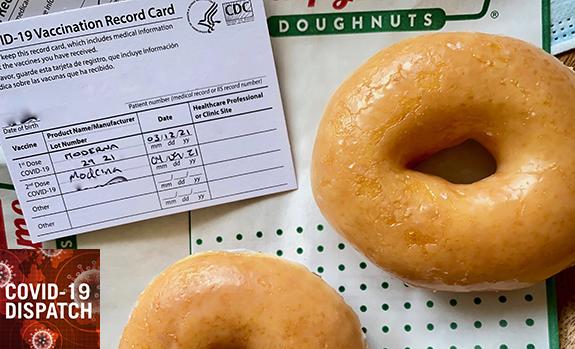
Since March 2020, TCTMD reporter Todd Neale has been writing up breaking news and peer-reviewed research related to COVID-19 every weekday. In July 2021, we transitioned to Mondays, Wednesdays, and Fridays. If you have something to share, tell us. All of our COVID-19 coverage can be found on our COVID-19 Hub.
November 5, 2021
Pfizer is having a good week—on the heels of the US Centers for Disease Control and Prevention (CDC) endorsement of COVID-19 vaccination with the Pfizer/BioNTech shot in kids ages 5-11, today the company announced positive clinical trial data for its antiviral pill, PF-07321332/ritonavir (Paxlovid). When given within 3 days of symptom onset, the medication cut the risk of hospitalization or death by 89%, the New York Times reports, noting that it seems more effective than Merck/ Ridgeback Biotherapeutics’ molnupiravir, another investigational oral antiviral.
Europe is once again the epicenter of the COVID-19 pandemic, the World Health Organization (WHO) warns. The continent could see an additional half million deaths by February 2022, WHO Europe head Hans Kluge, MD, said at a press conference, blaming insufficient vaccine uptake. "We must change our tactics, from reacting to surges of COVID-19 to preventing them from happening in the first place," the BBC quotes him as saying.
 Meanwhile in India, the Diwali holiday season is raising fears that the country may face a third wave of infections, reports the New York Times. “People have been thronging markets with little social distancing,” the story says, “and hundreds of thousands traveled around the country this week to celebrate the holiday with their family members.”
Vaccine data continue to accrue. Today in JAMA, Israeli researchers share data on the immune effects of Pfizer/BioNTech booster shots in adults aged 60 and up. Earlier reports had shown a waning of IgG neutralizing antibodies within 6 months of the vaccine’s second dose, especially for older adults, they note. Their study of 97 participants (median age 70 years) recruited from Rabin Medical Center, where they got vaccinated, found that 97% were seropositive before their third dose and all were seropositive after. Antibody titer levels rose from a median of 440 AU/mL to 25,468 AU/mL, and there was no correlation between age and IgG level.
US investigators writing in Science explore the effectiveness of various SARS-CoV-2 vaccines against two metrics, infection and death, using data from the Veterans Health Administration. Overall protection against infection dropped from 87.9% to 48.1% from February to October 2021 among all vaccine types, but the Jannsen version stood out for its lowly 13.1%. The good news: protection against death remained high in the Delta surge, when effectiveness ranged from 73.0% for Jannsen to 81.5% for Moderna and 84.3% for Pfizer/BioNTech among people < 65 years. For those aged 65 and older, vaccine effectiveness for mortality was 52.2%, 75.5%, and 70.1%, respectively.
A Lancet paper describes the impact of the United States’ initial vaccine rollout in mid-December 2020 when the elderly had the greatest odds of getting a jab. Cases declined for adults aged 65-74 and those 75 or older in comparison to younger adults less apt to be qualify for vaccination. Emergency department visits and hospital admissions also declined in the eldest groups, with a nonsignificant trend toward fewer deaths, as well.
 The advent of COVID-19 vaccination for children ages 5-11 years has renewed conversations about weighing benefits versus risks. A viewpoint in JAMA reassures parents, practitioners, and policy makers on the safety and effectiveness of the pediatric vaccine, making the case that it reduce school disruptions. However, William J. Moss, MD, MPH (Johns Hopkins Bloomberg School of Public Health, Baltimore, MD), and colleagues write: “It is premature to mandate COVID-19 vaccines as a condition of school entry for children given the limited size of pediatric trials and the need for ongoing safety monitoring. Following longer-term safety surveillance and full FDA licensure, cities and states will likely include COVID-19 vaccines in their list of required childhood vaccines.”
At the TCT 2021 meeting, cardiologists meeting to review the evidence on myocarditis risks post-vaccination agreed that any risks posed by vaccination are both rare, and mild. Moreover, insights gathered to date offer clear directions for further study. “We need to realize that COVID itself has myocarditis, viral infections have myocarditis, COVID vaccinations have rare myocarditis, as do vaccinations throughout history, and I’m reassured by the data,” said panelist Elazer Edelman, MD, PhD.
TCTMD News Editor Caitlin E. Cox contributed today’s Dispatch.
November 3, 2021
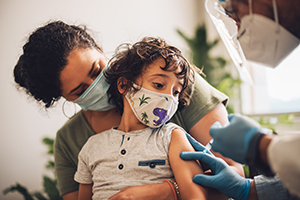 On Tuesday the US Centers for Disease Control and Prevention (CDC) issued its formal recommendation that children ages 5 to 11 be vaccinated against COVID-19, an announcement that followed Friday’s authorization by the Food and Drug Administration (FDA) of Pfizer/BioNTech’s vaccine for children as young as 5 years old. “CDC now expands vaccine recommendations to about 28 million children in the United States in this age group and allows providers to begin vaccinating them as soon as possible,” a statement reads. The vaccine is formulated to be one-third of the dose approved for children 12 and older and is intended to be given 3 weeks apart. The American Heart Association issued a statement urging all adults “and now children age 5 and older” to get vaccinated.
The European Medicines Agency (EMA) has ended its rolling review of bamlanivimab and etesevimab, two monoclonal antibodies for the treatment of COVID-19, after the manufacturer, Elli Lilly, withdrew its application. A letter explaining the company’s reasoning hints that dwindling demand for the combination drove the decision not to pursue a formal marketing authorization application. The EMA had earlier concluded that the two drugs, together, could be used for the treatment of nonsevere COVID-19; the cocktail is also authorized for emergency use in the United States.
The US National Institutes of Health (NIH) announced funding for a 4-year follow-up study of women infected with SARS-CoV-2 during pregnancy, aimed at assessing any potential long-term effects of COVID-19 on both mothers and children. “Researchers led by Torri Metz, MD, of the University of Utah School of Medicine, will seek to understand what proportion of patients with COVID-19 in pregnancy are at risk for Long COVID, whether the severity of COVID-19 in pregnancy influences the likelihood of developing Long COVID, and how the proportion of patients who develop postacute sequelae of SARS-CoV-2 infection (PASC) after COVID-19 in pregnancy compares to that of nonpregnant women who develop PASC,” the NIH explains.
A double dose of an mRNA vaccine offers some protection against COVID-19 hospitalizations in people who are immunocompromised, but that protection is not as strong as it is in immunocompetent adults, a new study confirms. Writing in Morbidity and Mortality Weekly Report, Peter J. Embi, MD, and colleagues reviewed vaccination status and immunocompetency among more than 89,000 patients with laboratory-confirmed COVID-19. Of those hospitalized, just 3.8% of patients with normal immunity were fully vaccinated, as compared with 29% of those who were immunocompromised. “Given that vaccine effectiveness is lower compared to immunocompetent patients, immunocompromised persons receiving mRNA vaccines should receive three doses and a booster 6 months after the third dose, consistent with CDC recommendations,” authors conclude.
 Incentives to get people vaccinated have ranged from lotteries to donuts to beers. STAT delves into the “remarkable range of incentives” pitched at the public in the hopes of winning over the vaccine hesitant: “While some of these ideas have stuck like spaghetti thrown against a wall, it’s not clear which are most effective.”
In JAMA, researchers report on a comparison of antibody levels following mRNA vaccination in healthcare workers with and without prior infections. As other studies have suggested, workers who had recovered from a COVID-19 infection prior to being fully vaccinated had higher spike antibody measurements than did workers who had just the two vaccine doses. Of note, a longer interval between infection and first vaccine dose appeared to enhance the response.
A second study, also in JAMA, showed that people who’d had a COVID-19 infection prior to their double dose of an mRNA vaccine were significantly less likely to have a subsequent “breakthrough” COVID-19 infection.
An analysis of cerebral venous sinus thrombosis (CVST) in Olmsted County, MN, indicates that incidence was significantly higher within the first 15 days of vaccination with the Johnson & Johnson/Janssen vaccine than during a comparator period covering 2001 to 2015. “The postvaccination CVST rate among females was higher than the prepandemic rate among females” and highest among those age 30 to 49, researchers write in JAMA Internal Medicine.
TCTMD Managing Editor Shelley Wood contributed today’s Dispatch.
November 1, 2021
The global COVID-19 death tally is now greater than 5 million, the Associated Press reports: “Together, the United States, the European Union, Britain, and Brazil—all upper-middle- or high-income countries—account for one-eighth of the world’s population but nearly half of all reported deaths. The US alone has recorded over 745,000 lives lost, more than any other nation.” One infectious disease specialist said, “This is a defining moment in our lifetime. What do we have to do to protect ourselves so we don’t get to another 5 million?”
Some world news from Reuters and the Associated Press: South Korea has eased restrictions and implemented vaccine passports as part of a “living with COVID-19” campaign; Cambodia has reopened after vaccinating about 86% of its more than 16 million residents; Tonga’s main island has gone into lockdown after its first SARS-CoV-2 case was detected; tens of thousands of visitors to Shanghai Disneyland were locked in the park until COVID-19 testing could be completed in response to just one case; and on Monday, Israel will begin allowing individual tourists to enter the country for the first time since the pandemic began.
The likelihood of becoming infected with SARS-CoV-2 is much higher among unvaccinated adults who have recovered from COVID-19 than among their peers who have been fully vaccinated with an mRNA-based shot (OR 5.49), according to a study in Morbidity and Mortality Weekly Report. This suggests that “vaccine-induced immunity was more protective than infection-induced immunity against laboratory-confirmed COVID-19,” the authors say. “All eligible persons should be vaccinated against COVID-19 as soon as possible, including unvaccinated persons previously infected with SARS-CoV-2.” CIDRAP News has more.
 The number of US COVID-19 cases is now less than half of what it was during a recent Delta-driven peak—an average of about 72,000 over the past week versus 172,500 on September 13, representing a 58% drop, CNBC reports. “Personally, I’m optimistic that this may be one of the last major surges, and the reason for that is because so many people have been vaccinated, and also because a lot of people have had COVID,” one expert said.
Novavax received an emergency use authorization for its COVID-19 vaccine from Indonesia, the first such clearance it’s received anywhere in the world, Reuters reports. According to a press release, the first-of-its-kind shot is a recombinant nanoparticle protein-based vaccine with Matrix-M adjuvant. It will be manufactured by Novavax’s partner, the Serum Institute of India (SII), and marketed by SII in Indonesia under the brand name Covovax.
Late last week, the US Food and Drug Administration (FDA) told Moderna that it will need more time to assess the company’s request for an emergency use authorization for its vaccine to be used in adolescents ages 12 to 17, Moderna announced over the weekend. The agency said it “requires additional time to evaluate recent international analyses of the risk of myocarditis after vaccination. The FDA notified Moderna that this review may not be completed before January 2022.”
On Monday, the American Heart Association released a presidential advisory on the importance of “investing to rebuild science” after the COVID-19 pandemic. “Over the last 18 months of the COVID-19 pandemic, we’ve seen remarkable scientific successes in the face of tremendous challenge. However, research laboratories everywhere have faced daily impediments that began with laboratory shutdowns, followed by the need to social distance, illness, supply chain limitations, and many other obstacles that have hit every phase and every type of research,” Elizabeth McNally, MD, PhD, chair of the writing group, said in a press release. “The pandemic has illustrated why science matters, and we must re-invest in the scientific infrastructure to rebuild science—so we are ready for the next challenges that come our way.”
 An analysis of contact and SARS-CoV-2 infections among college football players reveals no cases of in-game transmission when “rigorous and multipronged protection strategies were implemented, suggesting game play during a pandemic did not seed outbreaks across jurisdictions,” researchers report in JAMA Network Open. The investigators “illustrate that outdoor activities are safer than indoor activities and brief contact is unlikely to transmit disease, especially when occurring alongside established public health interventions that mitigate higher-risk indoor activities,” according to an accompanying commentary.


Todd Neale is the Associate News Editor for TCTMD and a Senior Medical Journalist. He got his start in journalism at …
Read Full BioRelated News
Comments