Why Interventionalists Must Work Toward Global Cardiovascular Equity
For STEMI patients, what’s on offer hinges on geography. The remedy is small, coordinated steps to build architectures of care.


I have treated hundreds of ST-elevation myocardial infarctions in the United States. The algorithms for STEMI are second nature: rapid triage, door-to-balloon metrics, cath lab activation, mechanical support if needed, and multidisciplinary aftercare. It is a system honed by decades of investment, data, accountability, and workforce development.
Yet 3 years ago, the illusion that excellence alone determines outcomes shattered for me.
On the same day that I performed primary PCI on a 92-year-old woman with STEMI in the United States, who survived and remains under my care today, my 65-year-old uncle died of the same diagnosis in Ethiopia. The difference was not anatomy, physiology, or clinical decision-making. It was access. It was geography. It was systems.
That day forced an uncomfortable realization: what happens in your home country does not stay there. It robs you, quietly and persistently, of the success you have worked your entire life to achieve in the United States.

This is not a story about guilt. It is a story about responsibility. Ultimately, it’s about creating Heart Attack Ethiopia—a lesson in what is possible when efforts are made to build long-term capacity, not just short-term fixes.
The Silent ‘Epidemiologic Transition’
While powerful nations experiment with personalized medicine, immunotherapy, and artificial intelligence (AI)-integrated remote monitoring, much of the developing world remains trapped in what is often described as an “epidemiologic transition.” In reality, this is not a transition at all—it is a collision.
Progress against neglected tropical diseases is rightly celebrated, but it now unfolds alongside rapidly rising noncommunicable diseases and trauma, creating a triple burden of disease that health systems were never designed to absorb. Infection, chronic cardiovascular disease, and injury are not sequential phases in low- and middle-income countries; they coexist, overlap, and compound one another.
This collision is not theoretical. It is visible every day in cath labs that do not exist, ambulances that arrive too late, and patients who present only when disease has already reached its most advanced—and least forgiving—stages.
Africa is often still discussed through the lens of infectious disease, maternal mortality, and malnutrition. That framing is dangerously outdated.
Across sub-Saharan Africa, cardiovascular disease now sits at the center of morbidity and mortality. Hypertension, ischemic heart disease, and stroke are rising rapidly. Rheumatic heart disease, eradicated in high-income countries, remains prevalent. Congenital heart disease goes untreated into adulthood, creating anatomies interventionalists in the West rarely encounter outside of board exams.
But the most striking difference is who these patients are.
They are younger.
They present later.
They arrive sicker.
For the interventional cardiologist, this means higher acuity, more advanced disease, and a dramatically lower margin for error. Multivessel STEMI at very young ages, severe calcific aortic stenosis in patients who never had access to early care, and end-stage cardiomyopathy in the most productive years of life are all a reality. I should tell you about the 35-year-old nurse in the second trimester of pregnancy with twins who presented in heart failure from rheumatic mitral stenosis and a valve area of 0.1 cm2!
This epidemiologic transition is happening whether systems are ready or not.
And that is precisely why the long-held myth that “Africa is not ready for advanced interventions” is so profoundly wrong. Advanced disease is already being treated; it is simply being treated late, inefficiently, and at far higher long-term cost, both human and economic.
The Ethical Tension: Skill Without Systems
For many interventionalists, global health engagement begins with short-term mission work. I understand the impulse. I have lived it.
But mission work alone creates an ethical tension that cannot be ignored:
- High-risk interventions without longitudinal follow-up
- Technology without maintenance pathways
- Heroic cases without workforce pipelines
In the absence of system-building, episodic service delivery risks creating dependency rather than capacity.
This realization shaped a hard truth for me personally: moving back to Ethiopia as a single interventional cardiologist would not change outcomes at scale. Nor would performing two or three missions a year for a waiting list of more than 15,000 patients.
The problem was never individual skill. The bottleneck was always systems.
From Loss to Architecture: Building Something That Lasts
Out of that realization and out of personal loss, my wife, Dr. Obsinet Merid, and I founded Heart Attack Ethiopia with a single nonnegotiable principle: every intervention must leave behind more capacity than it consumes.
We deliberately used mission-based work not as an endpoint, but as a scaffold for permanence.
To date, across four missions and four hospitals, our teams have performed 380 cardiac interventions, including pediatric and adult cardiac surgeries, percutaneous coronary interventions, pacemaker implantations, ablations, and the first-ever transcatheter aortic valve replacement in the country by global volunteers from four different countries—the US, Canada, the UK, and India. But the numbers are not the point, the infrastructure is.
We launched Ethiopia’s first public structured STEMI program for all-comers using a hub-and-spoke model, performing 100 primary PCIs over 9 months not by missionaries but by dedicated local sons and daughters of Ethiopia. From day one, this was not a “visiting operator” model; it was a workforce and workflow model.
We implemented:
- Real-time online cath lab consultation during and after procedures
- Biweekly multidisciplinary Zoom conferences involving physicians, nurses, technicians, administrators, and transport teams
- Continuous optimization of door-to-balloon times
- Locally owned STEMI manuals, care pathways, and patient flow maps
International faculty participated not as saviors, but as partners—mentors embedded into a living system. The result was not just lives saved, but systems created.
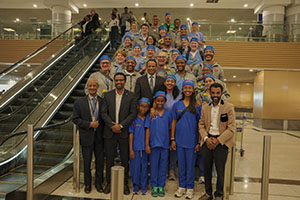 Through a tripartite partnership with the Ethiopian Ministry of Health and Amrita Hospital in Kochi, India, Heart Attack Ethiopia is on the verge of launching a comprehensive advanced cardiovascular training program for cardiac surgeons, interventional cardiologists, and cardiac anesthesia/critical care physicians and perfusionists not as a “train and drain” but “train and gain,” with a plan for post-training integration into the local workforce through a creative model.
Why This Matters to the Interventionalist Practicing in the United States
It is tempting to view global cardiovascular inequity as peripheral to a successful US-based career. That view is shortsighted.
First, workforce and system shortages, not technology, are the primary constraint to cardiovascular care in low- and middle-income countries. Skill transfer consistently outperforms episodic service delivery in long-term impact.
Second, the disease patterns emerging in Africa foreshadow the future everywhere: younger patients, complex disease, and constrained resources. These environments demand clinical judgment, adaptability, and innovation skills that sharpen, not dilute, excellence.
Third, and this is the uncomfortable part, success built in isolation is fragile. When the global burden of cardiovascular disease grows unchecked, the downstream effects are geopolitical, economic, and moral. Migration pressures, workforce brain drain, unstable health systems—all eventually intersect with Western healthcare.
Ignoring that reality does not protect our success; it erodes it.
Industry, Innovation, and a Missed Opportunity
Industry often approaches Africa cautiously, citing cost, infrastructure, and readiness. This is a strategic mistake.
There is a compelling case for:
- Tiered pricing models
- Local manufacturing and device assembly
- Training grants tied to measurable system outcomes
- Early adoption of innovation in younger patient populations
Africa is not a charity market—it is an emerging cardiovascular ecosystem with scale, urgency, and long-term growth potential. Interventionalists, uniquely positioned at the intersection of technology and outcomes, should be shaping this conversation rather than watching from the sidelines.
How fair is that?
How fair is a world where entire nations have almost no access to lifesaving cardiovascular care—where geography determines whether a heart attack is survivable or fatal?
While high- and middle-income powers experiment with personalized medicine, robotic surgery, AI-integrated care with precision medicine, much of the developing world continues to define progress primarily through the eradication of neglected tropical diseases. That progress matters—but it is no longer sufficient.
The strain posed by the epidemiological “collision,” where many challenges are unfolding simultaneously, is a reality that demands accountability within the developing world itself—particularly in Africa. External forces alone do not explain persistent fragility. Fragmentation, internal conflict, short-term political calculations, and dependence on imported solutions have all played a role.
In today’s global order, there is an unspoken but unmistakable message: if low- and middle-income countries are to rise out of poverty, they must do so together. Internal conflict is a luxury that fragile systems cannot afford. And if power must be asserted, it must ultimately be built with tools, industries, and institutions owned locally—otherwise, borrowed power will always come at the cost of long-term sovereignty.
Short-term gains frequently dismantle societies from within.
For many successful immigrants, this creates a quiet and enduring tension—the inability to fully enjoy professional achievement while knowing, intimately, what is being denied elsewhere.
I am not a very religious person, but I am certain of this: somewhere along the way, society lost moral alignment.
In 2026, it remains difficult to accept that the global community can finance wars yet fail to feed itself, educate its children, or provide basic lifesaving care—allowing borders to matter more than human life.
Still, optimism is warranted—but not naivety.
A fully just world may not emerge in our lifetime. But the ideals of humanity remain actionable. Small, coordinated actions—done consistently and collectively—can move systems, build capacity, and bend outcomes toward equity.
Silence is not neutrality.
Progress is never too small.
Bridging the Gap Is Not Altruism—It Is Alignment
The loss of my uncle remains deeply personal. But what sustains this work is not grief: it is clarity.
Survival from acute cardiovascular disease should not be determined by latitude and longitude. It should be determined by systems that work. 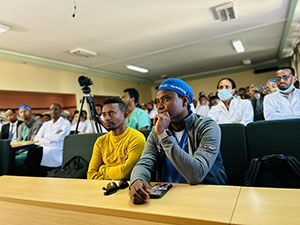
For the interventional cardiologist, global health is no longer a side project or a sabbatical interest. It is a professional frontier, one that challenges us to think beyond individual cases and toward architectures of care.
What happens in your home country will always follow you. The question is whether it follows you as unresolved loss, or as purpose translated into impact.
Going “off script” may be uncomfortable. But the old script was never designed for a world where cardiovascular disease knows no borders. And neither should we.
In my view, in 2026, the greatest unmet need in cardiovascular medicine is not innovation, it is ACCESS!

Tesfaye Telila, MD, is an interventional cardiologist based in Atlanta, GA, with a clinical focus on complex coronary intervention, cardiogenic…
Read Full Bio
Comments