COVID-19: TCTMD’s Daily Dispatch for August Week 2
We’re curating a list of COVID-19 research and other useful content, and updating it regularly.


Since March 2020, TCTMD reporter Todd Neale has been writing up breaking news and peer-reviewed research related to COVID-19 every weekday. In July 2021, we transitioned to Mondays, Wednesdays, and Fridays. If you have something to share, tell us. All of our COVID-19 coverage can be found on our COVID-19 Hub.
August 13, 2021
“A wave of vaccine mandates” is sweeping the United States, the New York Times reports, listing the local and federal announcements made in recent days. San Francisco has announced some of the country’s strictest measures on unvaccinated people, “barring them from indoor dining, bars, nightclubs, gyms, large concerts, theaters, and other events held inside.” In addition, the Department of Health and Human Services and the Department of Veterans Affairs are introducing mandatory measures, while the country’s largest teacher’s union, the National Education Association, has joined the American Federation of Teachers in supporting policies that require mandatory vaccination of teachers.
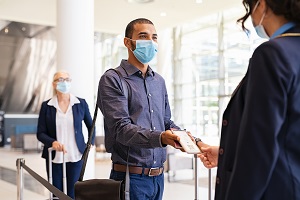 Canada announced today that all federal employees (nearly half a million) will need to be vaccinated, and that all federally regulated industries, including banks, airlines and crown corporations, will follow suit. Moreover, this fall, said Transport Minister Omar Alghabra, vaccines will be required for anyone wanting to travel by commercial airline, train, or on a marine vessel with overnight accommodations such as a cruise ship or long-distance ferry, CBC reports. “While Canada's vaccination rate is among the highest in the world—81% of all eligible Canadians have had at least one dose—Alghabra said the country "must do better."
In a surprise move, the US Supreme Court ruled that it will not block Indiana University’s requirement that students to be vaccinated against the coronavirus. In all, eight students “had sued the university, saying the requirement violated their constitutional rights to ‘bodily integrity, autonomy, and medical choice,’” according to the New York Times.
In France, where COVID-19 vaccine certificates are now in place for people wanting to dine, go to the theatre, or travel by train, police are investigating a rising number of fakes, reports the Guardian. Some physicians in France say their health service accounts have been hacked, presumably to obtain records that can then be forged.
Researchers writing in the Lancet today estimate that more than one in 10 people diagnosed with COVID-19 in the first months of the pandemic became infected after being admitted to hospital for unrelated conditions. “This proportion increased to at least 15.8% of patients with COVID-19 by the middle of May 2020, long after the peak of admissions,” they write. Improved access to tests, fewer false-negative results, and faster test turnaround times will have helped to improve hospital safety, they note, but add: “As SARS-CoV-2 is likely to persist as an endemic or seasonal virus in coming years, it is critical to use the lessons learned so far in the pandemic to minimize the burden of hospital-acquired infections, and to consider new approaches to reduce the burden further.”
Also in the Lancet, a letter penned by researchers in the United Kingdom—where policy makers are mulling booster doses for the most vulnerable—makes the case for prioritizing hemodialysis patients for a third vaccine dose, particularly those who were not previously infected with SARS-CoV-2 and have received the adenovirus-based Oxford/AstraZeneca vaccine. “Our data suggest that two doses of mRNA vaccine or a heterologous boosting strategy are likely to offer the broadest variants of concern neutralizing antibody coverage,” they write.
Earlier this week in the New England Journal of Medicine, researchers published findings on the largest cohort yet available of patients with vaccine-induced immune thrombotic thrombocytopenia (VITT) after receipt of the adenoviral-vector COVID-19 vaccine from Oxford/AstraZeneca. The series confirms that the condition mostly affects younger adults and typically arises 5 to 30 days after the first dose. TCTMD’s Todd Neale has the details.
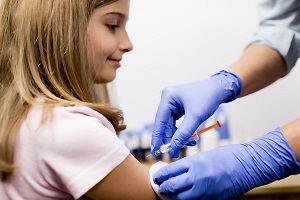 Also in the NEJM, Kashif Ali, MD, and colleagues report preliminary results from the ongoing phase II/III placebo-controlled trial of Moderna’s mRNA-1273 vaccine in adolescents aged 12-17. “The immunogenicity of mRNA-1273 in adolescents was noninferior to that in young adults in the phase III trial, with a similar safety profile,” they write. The number of documented cases of COVID-19 is too small to generate robust assessments of vaccine efficacy. However, it appears that the mRNA-1273 vaccine safely induced levels of antiviral antibodies that should be protective against SARS-CoV-2 infection.
Recipients of solid organ transplants also appear to benefit from a booster dose, according to a research letter in the NEJM announcing topline results from a randomized trial of the mRNA-1273 vaccine (Moderna) in this group. Third doses given 2 months after the second were safe, say investigators, and induced “substantially higher immunogenicity than placebo, as determined in our analysis of both primary and secondary trial end points.” An accompanying editorial fleshes out the findings.
In the United States, the Food and Drug Administration (FDA) announced it had extended emergency use authorization to third vaccine doses of the Pfizer/BioNTech and Moderna vaccines for immunocompromised people. “Other fully vaccinated individuals do not need an additional vaccine dose right now,” a press release states.
A strongly worded editorial published in the Lancet Infectious Diseases, however, offers the reminder that the World Health Organization (WHO) has issued a plea for a moratorium on booster doses. To date, only 12.6 million doses out of the 4.46 billion administered globally have gone to people in low-income countries. “The administration of a third dose is motivated by fear of the B.1.617.2 (Delta) variant, but the intensity of this fear is unfounded, as there is now evidence that vaccines licensed in high-income countries are effective enough against it,” the editorial reads. “Conversely, there is no definitive evidence if, and when, a third dose is necessary, and much-needed trials—the only context in which third-dose administration should be acceptable—are eagerly awaited. . . . Vulnerable people in high-income countries have already been prioritized; vulnerable people in low- and middle-income countries cannot wait until 2023 for their turn, and this wait is in the best interest of no one.”
A survey of US adults, published in JAMA Health Forum, indicates that rates of uninsurance rose among low-income Americans in four Southern states during the COVID-19 pandemic, while increases were more moderate in states that had Medicaid expansion, with Black and Latinx individuals seeing some protection. Other, nonfinancial barriers to care were common across states. An opinion piece weighs in on the implications.
Patients with hematologic cancers, known to have impaired humoral immunity, are especially vulnerable to COVID-19; new retrospective research indicates that vaccination does not offer sufficient protection from infection, particularly if the patient is receiving B-cell-depleting immunotherapy. “These patients may benefit from ongoing protective measures, including masks, social distancing, and screening,” investigators write in JAMA Oncology.
A JAMA patient page lays out what the different virus variants are and what the specific concerns are with the different strains, along with a handy infographic.
 In Vancouver, Canada, two Labrador retrievers, Micro and Yoki, along with one English springer spaniel by the name of Finn have been trained to sniff out COVID-19. “Earlier this month, Micro and Finn were validated for COVID-19 scent detection by a third-party reviewer and were found to have 100 per cent sensitivity and 93 per cent specificity in identifying COVID-19 in a laboratory setting,” a press release notes. “Yoki, the third dog to go through COVID-19 scent detection training, recently passed the rigorous validation process with similar results.” The ongoing project hopes to be able to add COVID-19 to their “scent detection roster” for use at airports, cruise ships, and public events.
TCTMD Managing Editor Shelley Wood contributed today’s Dispatch.
August 11, 2021
Pregnant women should be vaccinated against COVID-19, the US Centers for Disease Control and Prevention (CDC) recommends in guidance updated Wednesday: “COVID-19 vaccination is recommended for all people aged 12 years and older, including people who are pregnant, breastfeeding, trying to get pregnant now, or might become pregnant in the future.” The agency, which cited new data published as a preprint, notes that “evidence about the safety and effectiveness of COVID-19 vaccination during pregnancy has been growing. These data suggest that the benefits of receiving a COVID-19 vaccine outweigh any known or potential risks of vaccination during pregnancy.” The Associated Press has more.
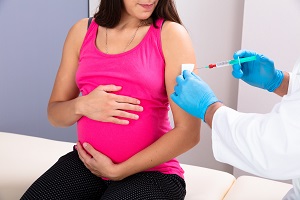 Perhaps underscoring the importance of vaccinating pregnant women, a study in JAMA Network Open shows that women who underwent childbirth with versus without COVID-19 were more likely to deliver prematurely and had increased in-hospital mortality and a greater need for intubation/ventilation and ICU care.
Hospitals in US COVID-19 hot spots are running low on nurses and other frontline workers, at least partly due to loss of workers to burnout or temporary, high-paying jobs in other states, according to the AP. Louisiana’s chief public health officer, for instance, said, “It’s a real dire situation. There’s just not enough qualified staff in the state right now to care for all these patients.” A related Bloomberg story details how Delta-driven surges are forcing US hospitals to ration ICU beds.
Elsewhere, parts of Southeast Asia—including Vietnam and Thailand, as well as Indonesia—are still dealing with high numbers of COVID-19 cases related to the Delta variant, CIDRAP News reports. In Australia, Sydney police have promised to intensify enforcement of the city’s lockdown (Reuters). Paramedics in Senegal are struggling to keep up with all of the patients with COVID-19 (Associated Press), and Cuba’s healthcare system is being strained, forcing the conversion of hotels into isolation centers and hospitals (Reuters).
Research that has not yet been peer-reviewed suggests that the vaccine from Moderna may provide better protection against the Delta variant than the shot from Pfizer/BioNTech, Reuters reports, citing studies out of the United States and Canada published on the medRxiv preprint server. Asked to comment on the results, a Pfizer spokesperson reiterated the company’s position that “a third dose booster may be needed within 6 to 12 months after full vaccination to maintain the highest levels of protection.”
 A small case series using comprehensive cardiac imaging to assess myocarditis following mRNA vaccination for COVID-19, published in JAMA Cardiology, is providing more reassurance that the phenomenon tends to resolve relatively quickly and follow a benign course. Whether any imaging markers portend longer-term problems, however, remains unclear. “I think we can be reassured [about the findings] at this point, but I wouldn’t be overly reassured,” the lead author told TCTMD’s Michael O’Riordan.
The World Health Organization (WHO) has already come out against the use of booster doses at this time: a WHO official explains why in a STAT story. Aside from the fact that people in many countries haven’t received even their first shot, there’s not strong evidence that boosters are needed, according to Kate O’Brien, the WHO’s director of immunization, vaccination, and biologics. “When we are in a position where the evidence is weak and yet people proceed with the intervention, it’s really difficult to walk back from that,” O’Brien said. “One can envision that there would be a world 5 years from now, 10 years from now where we’ve sort of backed our way into giving doses where we actually can’t fully defend the evidence on which that decision was reached.”
A review in JAMA Cardiology tackles the clinical characteristics and pharmacological management of another vaccine side effect, vaccine-induced immune thrombotic thrombocytopenia (VITT) with cerebral venous sinus thrombosis (CVST), which has been seen with the adenoviral-vector vaccines from Oxford/AstraZeneca and Johnson & Johnson. “While it seems logical to consider the use of types of vaccines (eg, mRNA-based administration) in individuals at high risk, treatment should consist of therapeutic anticoagulation mostly with nonheparin products and IV immunoglobulin,” the authors write.
 Don’t rule out eradicating COVID-19, researchers argue in a BMJ Global Health commentary, making comparisons with smallpox and polio. They assess the possibility of ridding the world of COVID-19 as slightly more feasible than for polio but much less feasible than for smallpox. https://stock.adobe.com/images/the-concept-of-protecting-the-world-from-a-pandemic-epidemic/332475797 “The main challenges are probably around achieving high vaccination coverage and the potential need to update vaccine designs,” they write. “Yet an advantage for COVID-19 eradication, over that for smallpox and polio, is that public health and social measures can complement vaccination. There is also very high global interest in COVID-19 control due to the massive scale of the health, social, and economic burden.”
August 9, 2021
US officials announced Friday that half of Americans have now been fully vaccinated against COVID-19, as “concerns over the more-transmissible Delta variant and renewed pressure to get people vaccinated have pushed vaccination levels up,” CIDRAP News reports.
 As of Monday, Americans who have received their shots can visit Canada again, the Associated Press reports. The country “is lifting its prohibition on Americans crossing the border to shop, vacation, or visit, but the United States is keeping similar restrictions in place for Canadians, part of a bumpy return to normalcy from COVID-19 travel bans.”
People in France will now have to show their COVID-19 health pass (pass sanitaire), required in certain venues since July 21, to visit restaurants, cafes, and hospitals, as well as to take long trips by train, an extension that comes after a fourth week of protests, the Guardian reports. “The government announced there would be a 1-week grace period for customers and businesses to implement the new rules before fines would be introduced for those who do not comply.”
Around the world, mental illness has been common among children and adolescents during the pandemic, with a meta-analysis in JAMA Pediatrics indicating that about 25% have clinically elevated depression symptoms and about 20% have clinically elevated anxiety symptoms. “These pooled estimates, which increased over time, are double . . . prepandemic estimates,” the authors note. “An influx of mental healthcare utilization is expected, and allocation of resources to address child and adolescent mental health concerns [is] essential.”
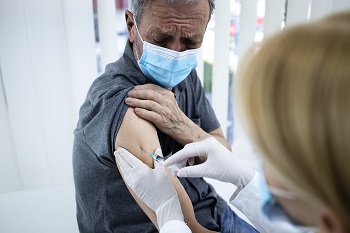 California will require COVID-19 vaccination for all healthcare workers, according to an order from the state’s Department of Public Health issued last week. Workers at healthcare facilities, including nurses, physicians, and others, must be vaccinated by the end of September. Exceptions may be made to accommodate religious beliefs and medical contraindications, although regular testing will be required for unvaccinated workers.
New data in Morbidity and Mortality Weekly Report underscores the importance of vaccination. One study showed that among people who had been infected with SARS-CoV-2 in 2020, being unvaccinated was associated with increased odds of reinfection compared with being vaccinated. Another showed that full vaccination with one of the mRNA shots was 91% to 96% effective at preventing hospitalization in Americans ages 65 and older between February and April 2021; the single-shot Janssen vaccine from Johnson & Johnson was 84% to 85% effective.
In addition, a study published in Eurosurveillance last week provides support to the idea that vaccination helps slow transmission of SARS-CoV-2 among household and other close contacts. “Our study showed that the COVID-19 vaccines not only protect the vaccinee against SARS-CoV-2 infection, but also offer protection against transmission to close contacts after completing the full schedule,” the authors write. “This finding underscores the importance of full vaccination of close contacts of vulnerable persons.” CIDRAP News has more.
That study was conducted in the Netherlands at a time when the Alpha variant (B.1.1.7) was dominant, however, so it remains unclear what the findings would look like with the Delta variant circulating. Concerningly, Public Health England (PHE) released findings Friday that suggested vaccinated people may be able to transmit the Delta variant as easily as those who have not received the shots, Reuters reports.


Todd Neale is the Associate News Editor for TCTMD and a Senior Medical Journalist. He got his start in journalism at …
Read Full BioRelated News


Comments