COVID-19: TCTMD’s Daily Dispatch for June Week 2
We’re curating a list of COVID-19 research and other useful content, and updating it daily.

TCTMD reporter Todd Neale is keeping up on breaking news and peer-reviewed research related to COVID-19 and will update daily. If you have something to share, tell us. All of our COVID-19 coverage can be found on our COVID-19 Hub.
June 11, 2021
On Friday, Group of 7 leaders—from the Canada, France, Germany, Italy, Japan, the United Kingdom, and the United States—who met in England pledged to donate at least 1 billion COVID-19 vaccine doses to struggling countries, the Associated Press reports. That includes the previously announced promise of 500 million doses by US President Joe Biden, as well as another 100 million pledged by British Prime Minister Boris Johnson.
High COVID-19 vaccine uptake appears to protect the unvaccinated, according to a study in Nature Medicine. Based in Israel, which rolled out the Pfizer/BioNTech vaccine, the analysis showed that “on average, for each 20 percentage points of individuals who are vaccinated in a given population, the positive test fraction for the unvaccinated population decreased approximately twofold.” CIDRAP News has more.
 Cerebral venous sinus thrombosis (CVST), a manifestation of vaccine-induced immune thrombotic thrombocytopenia (VITT), is much more likely to be observed in patients hospitalized with COVID-19 than in people who have received one of the adenovirus-based COVID-19 vaccines, according to new estimates published in the Journal of the American College of Cardiology. The analysis lacks details on key subgroups and doesn’t address the phenomenon of VITT, “but at least having some information would be better than making an entirely arbitrary decision without objective information,” Behnood Bikdeli, MD, told TCTMD.
Italy has decided to stop using the Oxford/AstraZeneca vaccine in people younger than 60 after a teenager who received the shot died from a rare blood clotting condition more than 2 weeks later, Reuters reports.
The safety committee of the European Medicines Agency (EMA) has recommended adding information to the label for remdesivir (Veklury) to indicate that sinus bradycardia is an adverse reaction of unknown frequency. They “concluded that a causal relationship between the use of the medicine and this adverse event is at least a reasonable possibility and recommended a change in the product information to raise awareness among healthcare professionals.”
The EMA has also advised against using the Oxford/AstraZeneca vaccine in patients with a history of the very rare, but serious, capillary leak syndrome following a review of six cases in people who received the shot—three had a prior history of the condition and one died. Most of the cases involved women and occurred within 4 days of vaccination.
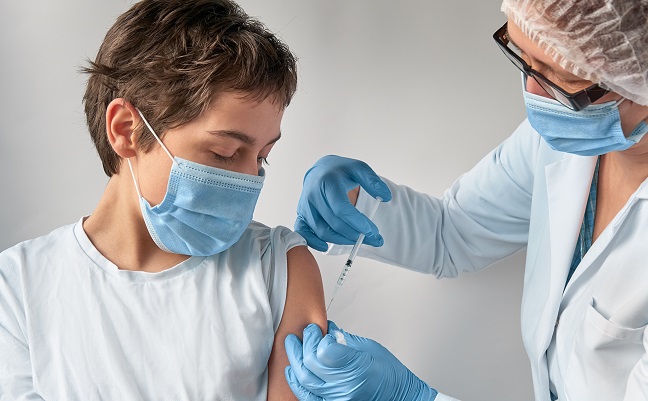 The US Centers for Disease Control and Prevention (CDC) will hold an emergency meeting of its Advisory Committee on Immunization Practices (ACIP) to discuss the higher-than-expect occurrence of myocarditis in young people following vaccination with one of the mRNA-based shots. The issue was discussed at a US Food and Drug Administration (FDA) advisory committee meeting yesterday, CBS News reports. The EMA said its review of the risk of myocarditis and pericarditis is ongoing in relation to use of both the mRNA-based and adenovirus-based vaccines.
Patients hospitalized with COVID-19 fare worse when they stop taking their antihypertensive medication, a study in Hypertension indicates. Discontinuation of ARBs, ACE inhibitors, and beta-blockers was associated with greater odds of dying compared with continuing treatment. “The observational study design prevents us from concluding causality,” the authors write. “However, this study provide association in the protective roles of ARBs, ACE inhibitors, and beta-blockers in hospitalized patients with SARS-CoV-2.”
Suicide attempts among US adolescents remained higher in February/March 2021 than during the same period in 2019, according to data in Morbidity and Mortality Weekly Report. Suspected suicide emergency department visits were 50.6% higher among girls ages 12 to 17 and 3.7% higher among boys the same age. “Suicide prevention requires a comprehensive approach that is adapted during times of infrastructure disruption, involves multisectoral partnerships, and implements evidence-based strategies to address the range of factors influencing suicide risk,” the authors write.
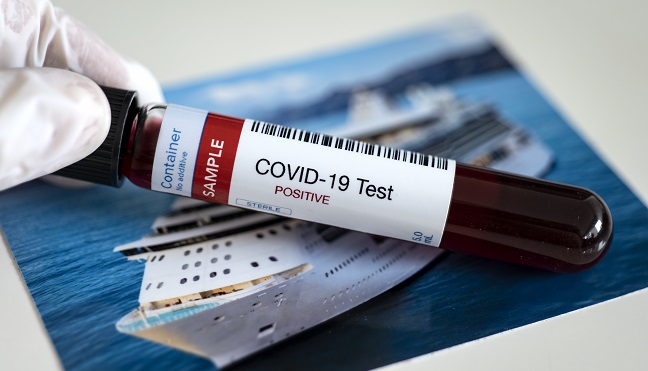 Two people on a cruise billed as the first one to include only fully vaccinated passengers tested positive for SARS-CoV-2 shortly before the ship was set to return to St. Maarten, the New York Times reports, representing a setback for a hard-hit industry starting to emerge from the pandemic. In a statement, Royal Caribbean’s Celebrity Cruises “said that the passengers tested positive during required testing before leaving the ship. The travelers are asymptomatic and are in isolation under observation by a medical team. Testing and contact tracing is in place for close contacts.”
June 10, 2021
 The Indian state of Bihar has discovered thousands of unreported COVID-19 deaths, leading to a substantial revision in its total on Wednesday (from 5,424 to 9,429) and “lending weight to suspicion that India’s overall death tally is significantly more than the official figure,” Reuters reports. India, with about 360,000 reported deaths, ranks third behind the United States (about 600,000) and Brazil (about 480,000).
The death rates for heart disease, stroke, hypertension, diabetes, and other conditions rose in the United States last year, according to data from the US Centers for Disease Control and Prevention (CDC). Some experts, the Associated Press reports, attribute the increases to patients avoiding hospitals out of fear of COVID-19 despite having symptoms that would normally warrant medical attention. “The heart disease death rate—which has been falling over the long term—rose to 167 deaths per 100,000 population from 161.5 the year before,” the story notes. “It was only the second time in 20 years that the rate had ticked up.” In 2015, the rate increased by less than 1%.
An analysis of SARS-CoV-2 samples collected in the United States, published in Morbidity and Mortality Weekly Report, shows that the Alpha variant (B.1.1.7) first detected in the United Kingdom accounted for about two-thirds of all infections by the end of April 2021, increasing from just 0.2% at the beginning of the year. The Gamma variant (P.1) first identified in Brazil made up about 5% by the end of April. Together, the results “[demonstrate] the potential for new variants to emerge and become predominant,” the authors say.
Concerns are growing about the Delta variant (B.1.617.2) that first emerged in India because it may be the most-transmissible one discovered so far, it appears to have some resistance to protection conferred by vaccination and prior infection, and there’s preliminary evidence suggesting it might cause more-severe disease. As Andrew Joseph writes in STAT, experts say the emergence of Delta makes vaccination against COVID-19 even more critical, as initial studies indicate the various shots “retain the large bulk of their effectiveness against the variant.”
 The World Health Organization’s (WHO) system for naming SARS-CoV-2 variants using the Greek alphabet has been published in Nature Microbiology, and a Nature editorial backs its adoption. “Their present solution, although not perfect, is a simple, straightforward alternative for variants that are otherwise being named after places. It will reduce the use of geographical origins as the default when referring to variants, and thus avoid an unintended stigma,” according to the editorial.
Strict restrictions have returned to parts of China, where hundreds of millions of people remain unvaccinated and SARS-CoV-2 outbreaks have started to crop up, the New York Times reports. The latest flare up—blamed on the Delta variant—has occurred in Guangzhou, where authorities have deployed mass testing and locked down neighborhoods with more than 180,000 residents.
A US Food and Drug Administration (FDA) advisory committee is meeting to discuss what data are needed to support authorization or licensure of COVID-19 vaccines in pediatric populations on Thursday. In a presentation during the meeting, a CDC official said that data from two vaccine safety monitoring systems suggest an increase in myocarditis or pericarditis cases after the second dose of mRNA-based vaccines—from Pfizer/BioNTech or Moderna—in young men, Reuters reports. “We clearly have an imbalance there,” he said. Authorities in the US and Europe have been monitoring this issue.
 The advisory committee’s discussion is not related to any specific product, but it’s occurring on the same day Moderna applied for an emergency use authorization from the FDA to allow its vaccine to be used in adolescents ages 12 to 17. The vaccine from Pfizer/BioNTech is already authorized for use down to age 12 in the US and elsewhere. Studies in younger children are ongoing.
A Scottish study in Nature Medicine explored thrombocytopenic, thromboembolic, and hemorrhagic events in people receiving their first dose of the Oxford/AstraZeneca or Pfizer/BioNTech vaccines. No signals were found for the latter, but the Oxford/AstraZeneca shot was associated with “small increased risks of idiopathic thrombocytopenic purpura, with suggestive evidence of an increased risk of arterial thromboembolic and hemorrhagic events.” Reuters has more on the rarity of the complications.
A pilot program that had all residents of Qatar returning to the country’s Hamad International Airport getting tested for SARS-CoV-2 showed that the positivity rate was significantly lower for those who were either fully vaccinated or who had documentation of prior infection than for those with no record of either, according to a study in JAMA. “Nevertheless, both vaccine immunity and natural immunity were imperfect, with breakthrough infections recorded,” the authors say. “This highlights the need to maintain PCR testing for arriving travelers.”
The US plans to buy 500 million doses of COVID-19 vaccine from Pfizer/BioNTech to donate to countries around the world, with 200 million distributed this year and the remaining distributed in the first half of 2022, the Washington Post reports. The doses will be shared by the World Health Organization (WHO)-backed COVAX initiative, with a focus on low- and middle-income countries. President Joe Biden is expected to announce the plan this week at the G7 meeting in the UK.
June 9, 2021
In contrast to declining COVID-19 numbers in the United States and elsewhere, infections are surging in Africa, where cases have risen for the fourth consecutive week, CIDRAP News reports based on data from the World Health Organization (WHO). Most cases are concentrated in a handful of countries—Eritrea, Namibia, South Africa, Uganda, and Zambia. The WHO report noted that there is only enough COVID-19 vaccine in Africa to vaccinate 1% of its population. The Associated Press delves deeper into the extreme vaccine shortage on the continent.
 On Wednesday, European Union (EU) lawmakers approved a travel certificate system that will allow for freer travel between European countries without the need for quarantines and extra testing, the Associated Press reports. Several countries have already starting using the system, which certifies that a traveler has been fully vaccinated, has recently tested negative, or has recovered from COVID-19. Of note, “people coming from outside the EU, the overwhelming majority of whom should be vaccinated to enter, will be able to get a certificate if they can convince authorities in the EU country they enter that they qualify for one.” Meanwhile, in the US, the Centers for Disease Control and Prevention (CDC) issued new travel advice for more than 120 countries, CNN reports.
A study of patients 18 and younger who developed severe COVID-19, published in JAMA Network Open, showed that more than one-quarter (28.7%) had at least one underlying condition, most commonly asthma, obesity, neurodevelopmental disorders, and certain mental health conditions (anxiety and fear-related disorders and depressive disorders). The strongest risk factors for hospitalization were type 1 diabetes and obesity, and the strongest risk factors for severe illness among those hospitalized were type 1 diabetes and cardiac/circulatory congenital anomalies. “Healthcare practitioners could consider the potential need for close observation and cautious clinical management of children with these conditions and COVID-19,” the researchers write.
The highly-transmissible Delta variant of SARS-CoV-2 (B.1.617.2), which was first detected in India, is becoming more common in the United States, now accounting for more than 6% of all infections and possibly more than 18% in some Western states, NPR reports. The strain has already become the most common one in the United Kingdom. “The good news is that the vaccines look like they can protect people against the Delta variant,” the story concludes, although adequate protection requires full vaccination. Citing the Public Health England analysis reported in last week’s Dispatch, the NPR story notes that a single dose of the Pfizer/BioNTech vaccine is just 33% effective against the Delta variant, rising to 88% after the second dose.
 Pfizer and BioNTech are moving forward with trials of their COVID-19 vaccine in children, using lower doses than are given to adults in an attempt to minimize side effects, USA Today reports: “If those trials prove safety and immune response, the companies expect to request federal authorization in September or October to provide the vaccine to children ages 5 to 11, and a little later in the fall for younger children.”
It looks like the US will fall short of President Biden’s goal to have 70% of Americans vaccinated with at least one shot by July 4, the Associated Press reports. “About 15.5 million unvaccinated adults need to receive at least one dose in the next 4 weeks for Biden to meet his goal. But the pace of new vaccinations in the US has dropped below 400,000 people per day—down from a high of nearly 2 million per day 2 months ago.” That waning interest in vaccination, in addition to concerns about rare blood clots, has left unused Johnson & Johnson (Janssen) shots piling up and nearing their expiration dates, as highlighted in a KHN story.
People consuming plant-based or pescatarian diets are less likely to have moderate-to-severe COVID-19 compared with those following other types of diets, according to a case-control study in BMJ Nutrition, Prevention & Health. Self-reported dietary habits were not associated with overall COVID-19 infection or duration. “Those who reported following plant-based diets or pescatarian diets had higher intake of vegetables, legumes, and nuts, and lower intake of poultry and red and processed meats,” the authors say. “Our results suggest that a healthy diet rich in nutrient-dense foods may be considered for protection against severe COVID-19.”
The US Food and Drug Administration (FDA) recently updated the emergency use authorization for the REGEN-COV antibody therapy consisting of casirivimab and imdevimab (Regeneron), which is used to treat mild-to-moderate COVID-19. Changes include a reduction in the authorized dose, the addition of subcutaneous injection as an alternate route of administration, and the addition of a new co-formulated product in a single vial.
Houston Methodist, which is requiring its employees to get vaccinated against COVID-19, suspended 178 workers who did not get fully vaccinated without pay for 2 weeks, the Washington Post reports. The vast majority of the hospital system’s employees—24,947—were fully vaccinated by the Monday deadline.
 The EU and the United States are preparing to jointly call for a new World Health Organization (WHO)-led study on the origins of the COVID-19 pandemic “that is free from interference,” according to a draft document seen by Reuters ahead of a summit in Brussels next week. “However,” the story notes, “EU diplomats made it clear that the EU's support to [US President Joe] Biden on the virus origins is mostly symbolic.” The Associated Press has an explainer on the US probe into how SARS-CoV-2 first emerged. The Wall Street Journal yesterday reported on a US government national laboratory document prepared in May 2020 that said the theory that the virus leaked from a laboratory in Wuhan, China, should be investigated further.
June 8, 2021
 Aspirin 150 mg/day does not reduce mortality in patients hospitalized with COVID-19 over usual care, according to results released today in a press release from the RECOVERY investigators. The rate of 28-day mortality was 17% in both study arms (P = 0.35), with consistent results across subgroups. “Although aspirin was associated with a small increase in the likelihood of being discharged alive this does not seem to be sufficient to justify its widespread use for patients hospitalized with COVID-19,” Peter Horby, MD, PhD, joint chief investigator for the trial, said in the release.
Moderna has applied to have its COVID-19 vaccine authorized for use in adolescents ages 12 to 17 in both Canada and Europe, based on positive results from its phase II/III TeenCOVE study, which were released last month. The company said it plans to apply for a similar emergency use authorization in the United States as well. The European Medicines Agency (EMA) said Tuesday that it had started evaluating Moderna’s application, a process it expects to complete in July.
The initial months of COVID-19 vaccination in the United States—when older adults were prioritized for the shots—saw greater declines in COVID-19 incidence, emergency department visits, hospital admissions, and deaths among adults 65 and older versus younger adults, according to a study in Morbidity and Mortality Weekly Report. “These age-stratified results provide ecologic evidence of the likely contribution of vaccination coverage to reducing COVID-19 outcomes,” the authors say.
 Real-world data out of Israel, published in JAMA Network Open, indicate that a first dose of the COVID-19 vaccine from Pfizer/BioNTech conferred a 51% reduction in the risk of infection 13 to 24 days after the shot compared with the initial 12 days, with 54% effectiveness against symptomatic COVID-19. The findings are consistent with results from a phase III trial.
Researchers are looking into whether the Delta variant (B.1.617.2) of SARS-CoV-2 that has been fueling a surge of COVID-19 cases in India, and has now spread to more than 60 countries, causes more-severe disease, Bloomberg reports. Indian physicians have linked the strain to hearing impairment, severe gastric upset, and blood clots leading to gangrene, which are not typically seen in COVID-19. And preliminary evidence out of the United Kingdom, which has seen a recent increase in infections with the Delta variant, suggests the variant carries a higher risk of hospitalization.
In the New York Times, Carl Zimmer delves into the findings of a preprint study that might help explain how the SARS-CoV-2 variant that first emerged in the United Kingdom (B.1.1.7)—now dubbed the Alpha variant—spread so widely across the world. The study “points to one secret to its success: Alpha disables the first line of immune defense in our bodies, giving the variant more time to multiply,” Zimmer writes.
A World Health Organization (WHO) official said Monday that high vaccination rates can help fend off the risks posed by emerging SARS-CoV-2 variants, estimating that “coverage of at least 80% is needed to significantly lower the risk that ‘imported’ coronavirus cases like those linked to new variants could spawn a cluster or a wider outbreak,” the Associated Press reports.
In the early months of the COVID-19 pandemic, clinicians and immunologists were flummoxed by signs that SARS-CoV-2 appeared to produce a late, systemic inflammatory condition in children that shared several features with Kawasaki disease. Now, in an unexpected corollary, researchers in Korea say that the incidence of true Kawasaki disease has dropped markedly during this same period, likely due to the nonpharmaceutical interventions put in place to stop the spread of COVID-19. TCTMD Managing Editor Shelley Wood has the story.
 The Canadian government is looking at June 22 as the date to begin easing COVID-19 restrictions at the US border—put in place early during the pandemic—as long as the current pace of vaccinations continues, Politico reports: “As vaccination rates rise, both national governments are under intensifying pressure to produce a reopening plan as a way to help struggling tourism industries and families who have been separated for more than a year.” Prime Minister Justin Trudeau has signaled that restrictions at the border—the world’s longest—would only be eased for fully vaccinated travelers.
On Monday night, workers at Houston Methodist protested a new policy requiring all employees to be vaccinated against COVID-19, the New York Times reports. Last month, 117 employees sued the hospital over the mandate. Guidance from the federal government says employers can require vaccinations for on-site workers. A viewpoint in JAMA argues that mandatory COVID-19 vaccination of healthcare workers is “a logical addition to institutional safety programs,” with another viewpoint delving into issues around requiring vaccinations in schools, universities, and businesses.
June 7, 2021
 Prime Minister Narendra Modi said Monday that free COVID-19 vaccines will be provided to all adults in India, an announcement that “came after weeks of criticism of a bungled vaccine rollout that has covered fewer than 5% of India's estimated adult population of 950 million,” Reuters reports. Up until now, free vaccines were offered only to elderly individuals and frontline workers, with state governments and private hospitals administering vaccines for a fee to people ages 18 to 45.
There is concern that lagging COVID-19 vaccination rates in the US South could lead to surges in case numbers over the summer, the New York Times reports. In 15 states, only about half of adults or fewer have received at least one dose, and in two of them—Alabama and Mississippi—it would take about a year to get one-dose coverage of 70% at the current pace of vaccinations.
The European Medicines Agency (EMA) is advising healthcare professionals to rely on recommendations from medical societies (with a list provided) when assessing patients for possible thrombosis with thrombocytopenia syndrome (TTS) after receipt of COVID-19 vaccines from Oxford/AstraZeneca or Johnson & Johnson (Janssen).
In an opinion piece in the Wall Street Journal, two researchers argue that science backs up the theory that SARS-CoV-2 first emerged after escaping from the Wuhan Institute of Virology in China, pointing to the genetic footprint of the virus.
Residents and staff of long-term care facilities with evidence of prior SARS-CoV-2 infection appear to be protected against reinfection for up to 10 months, according to data published in the Lancet Healthy Longevity. Risk of infection was a relative 85% lower in residents and 61% lower in staff who were antibody-positive versus antibody-negative at baseline.
CIDRAP News provides details on two meta-analyses confirming that neurologic and psychiatric conditions are common in patients with COVID-19. The first, in the Journal of Neurology, Neurosurgery & Psychiatry, shows that the most common symptoms were anosmia (43.1%), weakness (40.0%), fatigue (37.8%), and dysgeusia (37.2%). The second, in BMC Infectious Diseases, revealed central and peripheral nervous system involvement, associated with a greater risk of hospitalization, in up to 36% of cases.
 Efforts are afoot to make sure the dramatic expansion in the use of telehealth during the pandemic remains moving forward, according to a KHN story. “The broad effort reaches across the nation’s diverse healthcare system, bringing together consumer groups with health insurers, state Medicaid officials, physician organizations, and telehealth vendors. And it represents an emerging consensus that many services that once required an office visit can be provided easily and safely—and often more effectively—through a video chat, a phone call, or even an email.”
Results of the ACTION trial, presented last month at the virtual American College of Cardiology 2021 Scientific Session as reported by TCTMD, have now been published in the Lancet. The study showed that therapeutic-dose anticoagulation (mostly with rivaroxaban) did not improve clinical outcomes and increased bleeding in patients hospitalized with COVID-19 and elevated D-dimer levels compared with standard prophylactic anticoagulation.
Adults and children with COVID-19 and the multisystem inflammatory syndrome in children (MIS-C) have low plasma bioavailability of the amino acid arginine compared with healthy controls, researchers report in PNAS. “This may contribute to immune dysregulation and endothelial dysfunction in COVID-19,” they say.
 Canada will allow a cross-border travel exemption for teams participating in the National Hockey League (NHL) playoffs, after no travel was allowed across the US-Canadian border during the regular season, the Associated Press reports. “When in Canada, teams will be required to stay in a bubble and be tested daily for COVID-19, similar to the tight restrictions that allowed the NHL to stage and complete its playoffs in two hub cities last year. Teams will be assigned designated hotels and have no interaction with the public.”


Todd Neale is the Associate News Editor for TCTMD and a Senior Medical Journalist. He got his start in journalism at …
Read Full BioRelated News



Comments